
By Ben Kerrigan-
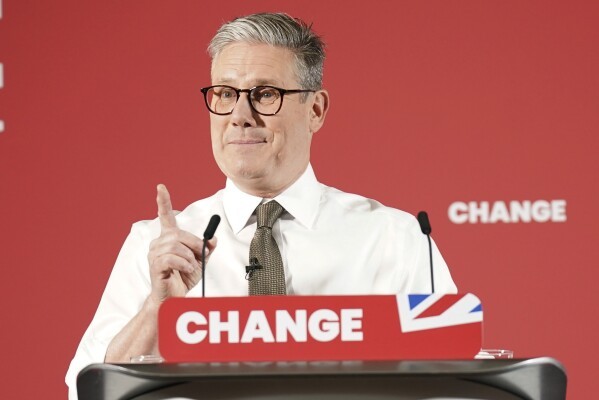
Keir Starmer’s highly anticipated address at the Labour conference in Liverpool is poised to be a pivotal moment for his leadership and the future trajectory of the party. The speech’s core message centres on a stark political contrast, forcing the British public to choose between his vision of national renewal and what he labels the politics of division.
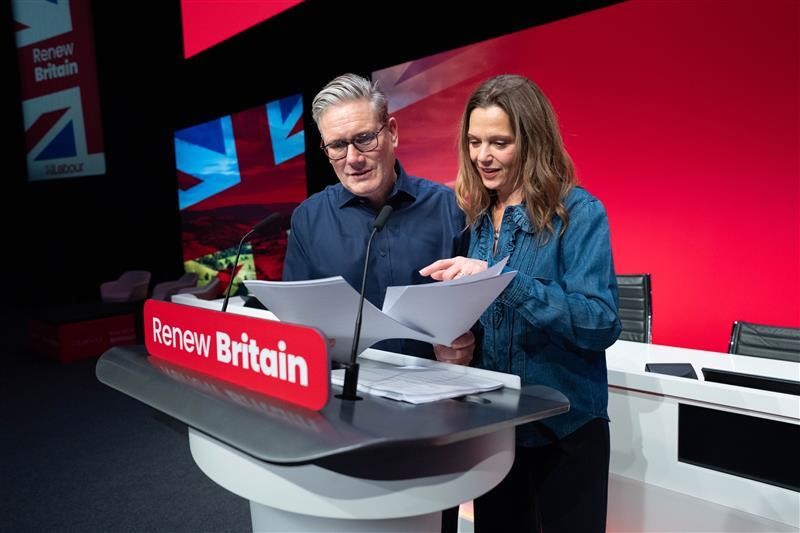
Sir Keir Starmer and his wife Victoria were photographed rehearsing the prime minister’s keynote speech earlier in the week, ahead of the address later today by 2pm UK time. Sky news.
Starmer has directly targeted Reform UK, the party led by Nigel Farage, identifying them as the principal opposition against Labour’s progressive agenda. This firm focus demonstrates how effectively the anti-establishment movement has become the chief concern for the governing party, overshadowing the traditional Conservative opposition.

AD: Capeesh Restaurant
Starmer previously articulated this crucial ultimatum in social media posts, declaring the fight is between “national division, or it’s national renewal,” adding that his deep love for the UK drives him toward tolerance and diversity.
Consequently, he passionately condemned the divisive immigration proposals promoted by Reform UK, specifically highlighting the impact their policies would have on dedicated essential workers like nurses and teachers. This strategic framing aims to present the Starmer’s Labour conference warning as a moral imperative, repositioning Labour as the champion of cohesion and practical, community-focused politics.
Furthermore, delegates gathering in Liverpool spent much of the conference reinforcing this narrative, with Welsh Secretary Jo Stevens denouncing the rival party for employing patronizing politics in Wales.

AD: Oysterian Sea Food Restaurant And Bar
Addressing the conference, Stevens warned party members that Reform UK constitutes a “serious threat” to local communities and public services across the nation. Therefore, the strategic use of Starmer’s Labour conference warning emphasizes unity over fragmentation and actively seeks to connect with voters seeking stable, common-sense governance.
Significantly, this critical messaging occurs while Starmer faces some challenging opinion poll results; however, the Prime Minister insists he is not ignoring public sentiment, stating firmly, “I’m not sticking my fingers in my ears in the slightest.” He recognizes the necessity of effective communication and acknowledges the precarious position the party currently finds itself navigating.
Beyond the immediate political battles, Starmer will pivot in his keynote speech to unveil substantial policy proposals aimed at resolving the country’s deepening domestic crises. The foremost announcement expected involves a “major overhaul” of the National Health Service, which currently struggles under the dual pressures of funding shortages and immense waiting lists.
Detailed plans for the NHS, a subject holding deep emotional and political significance for the British electorate, represent a cornerstone of Labour’s proposed national renewal project. The policy details will seek to demonstrate Labour’s capability to transform failing public services, moving beyond mere criticism of the incumbent system.
The delicate balance of authority within the party structure formed another major talking point throughout the conference proceedings. For instance, the Mayor of Greater Manchester, Andy Burnham, issued a concurrent and sobering Starmer’s Labour conference warning, urging the leadership not to “underestimate the peril” the party faces from external threats.
Burnham’s comments underscore the necessity for Labour to craft a more compelling narrative that deeply resonates with ordinary citizens, especially in the face of the emerging Reform UK challenge.
Simultaneously, high-profile figures, including the Metro Mayor of Liverpool, rallied around the Prime Minister, dismissing speculation about internal leadership contests as unproductive Westminster “title tattle.”
Crucially, the success of the conference and the impact of Starmer’s Labour conference warning hinge on convincing voters that the party can transition from being an effective opposition into a functioning, delivering government.
Australian Prime Minister Anthony Albanese, speaking at the conference, provided international context, stressing that Labour movements must prioritize governmental effectiveness over mere protest to bring about tangible change. He stated clearly that “tearing things down is easy,” while working within the system to deliver progress is fundamentally tougher.
This message aligns perfectly with the party’s desire to prove its competence and stability to a cautious electorate. Understanding the history of UK healthcare policy is essential to grasp the scale of the proposed changes.

AD: Heritage And Restaurant Lounge Bar


