

By Tony O’Reilly-
Rachel Reeves has signalled she is absolutely determined to “defy” the pessimistic forecasts predicting a multibillion-pound fiscal hole ahead of next month’s critical budget announcement. Writing in The Guardian, the Chancellor argued that the core Reeves defies gloomy Budget forecasts must not be accepted as inevitable.
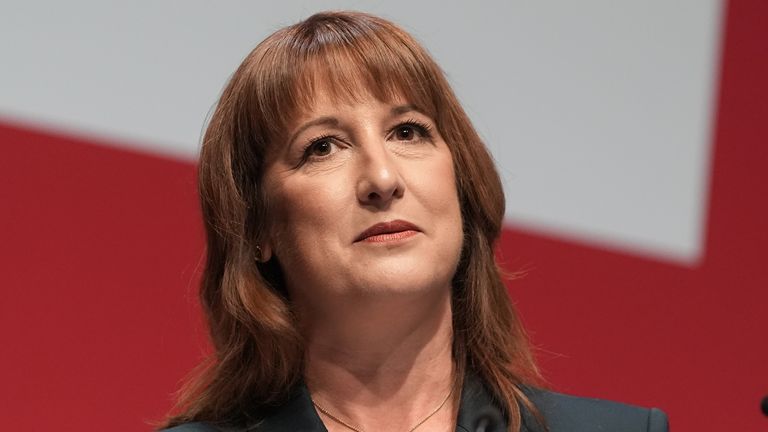
Rachel Reeves. PA file pic
She strongly asserted that the “foundations of Britain’s economy remain strong,” rejecting any claims the country is trapped in a permanent state of decline. This defiant stance comes as Treasury officials brace for anticipated downgrades to key productivity growth forecasts by the Office for Budget Responsibility (OBR).

AD: Capeesh Restaurant
Reports suggest the OBR will likely downgrade its productivity growth prediction by about 0.3 percentage points, creating massive financial pressure. Crucially, this means the Treasury anticipates collecting less tax revenue than previously expected over the coming financial years, potentially leaving a gap of up to £40 billion in the country’s finances.
Ms. Reeves wrote pointedly that she would not “pre-empt” these formal forecasts. Instead, she claimed her primary job “is not to relitigate the past or let past mistakes determine our future.” The Chancellor maintained that turning the situation around necessitates making “necessary choices today,” which will include significant decisions revealed during the budget on 26 November.
She cited five interest rate cuts, three successful trade deals with major economies, and wages finally outpacing inflation as evidence Labour has already made meaningful progress since assuming office. Successfully implementing the Reeves defies gloomy Budget forecasts strategy requires more than just hope; it demands fiscal discipline and targeted investment.

AD: Oysterian Sea Food Restaurant And Bar
Intense speculation has surrounded the possibility that Ms. Reeves may break a key manifesto pledge by raising either income tax or national insurance during the upcoming budget. Although her recent article carefully avoided directly addressing the tax issue, she acknowledged the tough reality, admitting, “our country and our economy continue to face challenges.”
She admitted explicitly, “The decisions I will take at the budget don’t come for free, and they are not easy – but they are the right, fair and necessary choices,” confirming the inevitability of painful decisions.
Sky News’s deputy political editor, Sam Coates, recently reported Ms. Reeves is unlikely to raise the basic rates of income tax or national insurance, aiming to avoid breaking a promise made to protect “working people” specifically in the budget.
This commitment places a financial boundary around the basic taxpayer. Significantly, Sky News has also obtained an internal Treasury definition of “working people” used for budgetary planning, which reportedly relates to Britons who earn less than £45,000 annually.
Consequently, this definition suggests that citizens earning higher salaries could primarily face the financial squeeze in the upcoming budget, though the Treasury has refrained from commenting directly on specific tax measures. The core challenge in achieving the Reeves defies gloomy Budget forecasts goal involves finding billions in revenue without alienating the middle class or damaging consumer confidence.
The government is expected to balance its social commitments with the harsh arithmetic of the OBR’s projected fiscal deficit. Focusing tax hikes on higher earners may be politically palatable, yet economists warn of potential economic drag.
In other critical developments, several top economists have publicly cautioned Ms. Reeves that increasing broad income tax or radically reducing public spending remain her only viable options for fundamentally balancing the nation’s books. Experts from the prestigious Institute for Fiscal Studies (IFS) particularly warned the Chancellor against choosing to hike numerous alternative taxes instead of focusing on the main levies.
They told The Independent newspaper that opting for a series of minor tax changes would inevitably “cause unnecessary amounts of economic damage” by introducing complexity. Although such an approach would technically help the Chancellor avoid breaking Labour’s explicit manifesto pledge regarding basic income tax rates, experts fear that relying on a scattergun of smaller changes would make the tax system “ever more complicated and less efficient” overall.
Implementing the Reeves defies gloomy Budget forecasts strategy via fragmented tax adjustments risks introducing serious operational bottlenecks. Economists universally prefer simple, broad-based taxes over a confusing patchwork of levies that distort economic behaviour and increase administrative costs. The pressure mounts on the Chancellor to reveal a credible, robust plan that addresses the massive fiscal black hole without undermining the long-term health of the UK economy.
Reeves must demonstrate that her government possesses the political will to make tough, yet necessary, choices to stabilize the country’s finances. The upcoming budget will define the government’s entire fiscal approach for the next few years. The success of Reeves defies gloomy Budget forecasts depends on both economic reality and political courage. .

AD: Heritage And Restaurant Lounge Bar


