
By Tim Parsons-
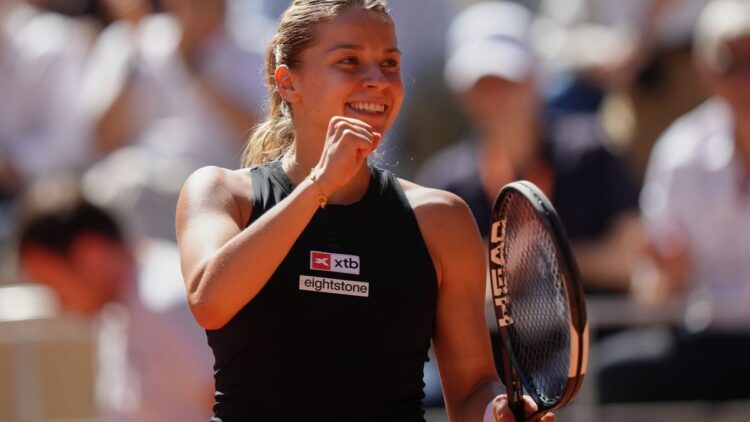
Anna Kalinskaya produced one of the most dramatic victories of this year’s French Open on Monday, battling past Anastasia Potapova in a tense super tiebreak to secure a place in her first Roland Garros quarterfinal.
The Russian’s 6-4, 2-6, 7-6 (10-7) victory on Court Suzanne-Lenglen capped nearly three hours of momentum swings, missed opportunities, and remarkable resilience from both players.

AD: Capeesh Restaurant
The match delivered exactly the kind of tension and unpredictability that has defined the women’s draw in Paris this year. With several top seeds already eliminated and defending champion Coco Gauff no longer in contention, opportunities have opened across the tournament.
Kalinskaya seized hers in unforgettable fashion, overcoming a determined challenge from Potapova, who had entered the match riding the confidence of a stunning third-round victory over Gauff.
With Kalinskaya, the result marks another significant milestone in a career that has often promised much but been interrupted by inconsistency and injuries. While she reached the quarterfinals of the Australian Open in 2024, she had never advanced this far at Roland Garros. Few observers predicted that the 22nd seed would emerge as one of the tournament’s final eight players on the Paris clay.

AD: Oysterian Sea Food Restaurant And Bar
The contest began with Potapova appearing sharper and more aggressive. The Austrian representative raced into an early lead and looked poised to dictate the match with her powerful groundstrokes.
Yet Kalinskaya gradually settled into the rhythm of the encounter, absorbing pressure before turning defence into attack. She clawed her way back into the opening set and eventually secured it 6-4, capitalizing on a series of untimely errors from her opponent. Any expectation that the opening set would break Potapova’s confidence quickly disappeared. The 28th seed responded emphatically in the second set, finding greater depth on her returns and forcing Kalinskaya into uncomfortable positions behind the baseline.
Potapova established control early and maintained it throughout the set, leveling the match at one set apiece with a convincing 6-2 scoreline. The match entered its decisive stage, both players appeared aware of the significance of the moment. A place in the French Open quarterfinals was at stake, and neither woman had previously experienced such a breakthrough in Paris. The tension was evident in the fluctuating momentum and increasingly emotional exchanges after critical points.
The third set quickly evolved into one of the most compelling contests of the tournament. Kalinskaya initially appeared to seize complete control, opening a 4-1 lead and placing herself within touching distance of victory. Her consistency from the baseline and improved serving seemed to have finally worn down Potapova. But the match was far from over.
Potapova responded with remarkable determination, winning key points under pressure and gradually erasing the deficit. She fought her way back into contention and eventually earned the opportunity to serve for the match. The pressure, however, proved overwhelming. Kalinskaya broke back, extending the contest and reviving her hopes.
The drama intensified as Potapova received another chance to close out the match later in the set. Once again, Kalinskaya refused to surrender. The Russian maintained her composure during the most critical moments, forcing errors and extending rallies until her opponent faltered. What seemed destined to become a straightforward victory for Potapova transformed into a battle of nerve and endurance.
With neither player able to establish a decisive advantage, the match moved into a super tiebreak. Even then, the twists continued. Potapova looked poised to complete her comeback, while Kalinskaya struggled to find rhythm early in the breaker. The 22nd seed delivered her best tennis when it mattered most, recovering from a 4-1 deficit and stringing together a sequence of aggressive, high-quality points.
The final moments reflected the entire match: tense, unpredictable, and fiercely contested. Kalinskaya held her nerve, closed out the tiebreak 10-7, and immediately dropped into celebration after realising she had secured the biggest Roland Garros victory of her career.
Speaking afterward, Kalinskaya admitted that reaching this stage of the tournament exceeded her own expectations. She said she would not have believed two weeks ago that she would be standing in the quarterfinals and described herself as proud while still trying to process the magnitude of the achievement.
Her comments reflected a player who arrived in Paris without significant expectations but has gradually grown in confidence with each passing round. Kalinskaya revealed that she approached the clay-court season with a more relaxed mindset, avoiding the pressure she often places on herself. That freedom appears to have translated into some of the best tennis of her career.
An Open Draw Creates New Opportunities
Kalinskaya’s victory comes during one of the most unpredictable women’s tournaments in recent memory. The draw has been transformed by a series of surprising results, including the early exits of several major contenders. Potapova herself contributed to that upheaval by eliminating defending champion Coco Gauff in a dramatic third-round encounter.
The shifting landscape has created opportunities for players seeking a breakthrough Grand Slam run. Kalinskaya now finds herself among a group of competitors suddenly able to envision a path toward the championship match.
Her next challenge will be Poland’s Maja Chwalińska, another surprise quarterfinalist who has enjoyed a remarkable tournament. Chwalińska advanced after defeating France’s Diane Parry 6-3, 6-2 in the last 16, ending home hopes in the women’s draw and sealing her first Grand Slam quarterfinal appearance.
According to reports, the 114th-ranked qualifier continued her breakthrough run in Paris without dropping a set, producing one of the standout underdog stories of this year’s French Open. Their upcoming meeting ensures that one of the tournament’s breakout contenders will progress into the semifinals.
Elsewhere in the women’s draw, Russian player Diana Shnaider also reached her first Roland Garros quarterfinal after eliminating Madison Keys, further emphasising the changing hierarchy at this year’s event. With traditional favourites falling and emerging contenders taking advantage, the women’s competition has become one of the most intriguing stories of the tournament.
However, the focus remains on the accomplishment she achieved Monday afternoon. She survived a contest that repeatedly threatened to slip away, overcame missed opportunities and pressure-filled moments, and emerged victorious in front of an appreciative Paris crowd.
The match may not ultimately decide the French Open champion, but it will likely be remembered as one of the tournament’s defining battles. In a competition increasingly characterised by unpredictability, Kalinskaya’s dramatic triumph over Potapova stands as a testament to perseverance, composure, and the thin margins that separate victory from defeat at the highest level of professional tennis.
The second week of Roland Garros continues, Kalinskaya is no longer merely an outsider enjoying a surprising run. She is now a Grand Slam quarter finalist in Paris, and after surviving one of the tournament’s most gripping matches, she has every reason to believe her journey might not be over yet.

AD: Heritage And Restaurant Lounge Bar