

By Tony O’Reilly-
Membership Backlash: The Shock of the Lucy Powell Deputy Leader Victory
Former Commons leader Lucy Powell has been convincingly crowned Labour’s new deputy leader, defeating Education Secretary Bridget Phillipson in a contest widely perceived as a direct referendum on Sir Keir Starmer’s leadership. Ms Powell secured a substantial majority of 13,871 votes, receiving 87,407 votes compared to Ms Phillipson’s 73,536. This definitive Lucy Powell Deputy Leader Victory immediately reshapes the political dynamic at the very top of the Labour Party structure.

AD: Capeesh Restaurant
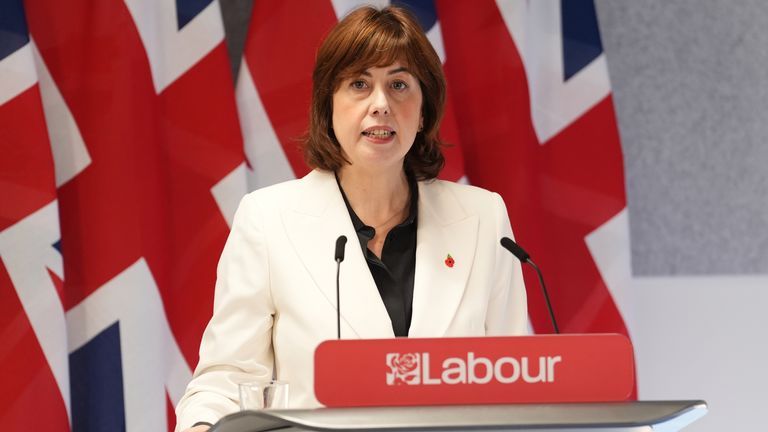
Lucy Powell. Pic: Sky News
Analysts widely viewed Ms Phillipson as the clear choice of Number 10, entering the race as the so-called “unity candidate.” She had campaigned on a mandate to maintain focus and prevent internal squabbling, explicitly cautioning voters that supporting her opponent would lead to “internal debate and divisions that lead us back to opposition.” Despite this warning and the backing of the party establishment, the membership delivered a decisive result.
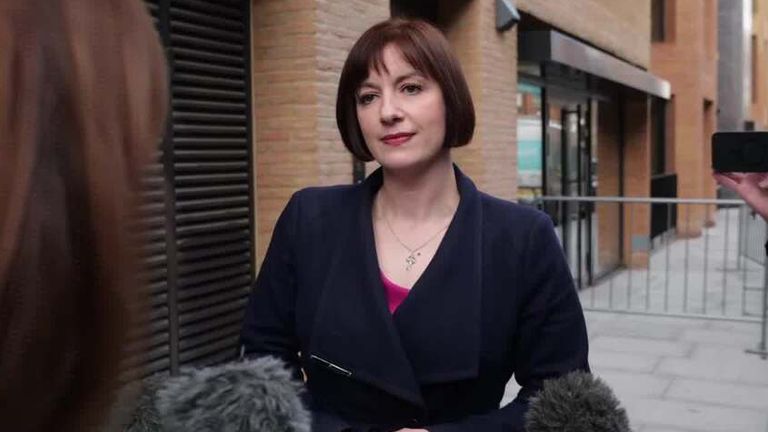
Bridget Phillipson. ‘disappointed to lose’ Pic: Sky News
Contrastingly, Ms Powell deliberately positioned herself as the “anti-Starmer” candidate, having been conspicuously sacked from the cabinet just last month. Consequently, her entire campaign focused on becoming an independent, critical voice for the backbenches, ensuring the party remains anchored to its core principles. The resounding Lucy Powell Deputy Leader Victory validates her strategy of appealing directly to the party’s base.
Speaking to Sky News’s political editor following the announcement, Ms Powell immediately tried to dampen speculation of open warfare. She insisted she would operate as a “friend” to the Prime Minister, asserting confidently: “I am confident we can work well together.”

AD: Oysterian Sea Food Restaurant And Bar
Despite this olive branch, the membership has effectively imposed an “unwanted deputy” upon Sir Keir Starmer, creating what many anticipate will be a politically awkward partnership. Lucy Powell, Deputy Leader, Victory establishes a precedent where the parliamentary wing’s power has been significantly checked by the grassroots, complicating Sir Keir’s efforts to project a unified, centrist front to the nation.
The substance of Ms Powell’s post-victory speech made the direction of the new deputy leadership abundantly clear, highlighting areas where she believes the party is currently struggling. Crucially, the Manchester Central MP stressed that Labour “won’t win by trying to out-Reform Reform, but by building a broad progressive consensus.”
This statement directly challenges the party’s perceived drift towards the centre on issues like immigration and economic messaging. She contended that a crucial part of moving forward involves “wrestling back the political megaphone” from Reform leader Nigel Farage, proactively setting the national agenda rather than reacting defensively.
Ms Powell forcefully rejected the notion of simply blaming immigration for the country’s problems, stating: “We reject that.” She continued by outlining a different diagnosis: “Our diagnosis is different, that for too long the country and the economy have worked in the interests of the few, not the many.”
Tellingly, the phrasing “for the many not the few” immediately resonated with the party’s left wing, a key slogan during Jeremy Corbyn’s tenure. Veteran left-winger John McDonnell celebrated the Lucy Powell Deputy Leader Victory on social media, indicating the membership’s desire for change. Mr McDonnell said on X, “It’s good to see a return to references to the Labour Party serving once more the many, not the few & that Labour must not try out Reform, Reform.”
He concluded that the members recognised “a new start is desperately needed.” This reaction confirms that Lucy Powell, Deputy Leader, Victory serves as a clear mandate from the party base for a significant policy recalibration.
The Labour Party members have spoken & the message is clear, they want change. It’s good to see a return to references to the Labour Party serving once more the many not the few & that Labour must not try out Reform, Reform. Our members realise a new start is desperately needed.
— John McDonnell (@johnmcdonnellMP) October 25, 2025
The internal tensions are evident; however, Ms Powell reiterated that her purpose is not “to write an alternative policy platform” but “to make sure Labour values and beliefs are right at the heart of the conversation.” The political implications of the Lucy Powell Deputy Leader Victory are already creating internal pressure on the Prime Minister.
Conversely, the Conservative Party quickly seized upon the result, attempting to weaponise the internal discord. Tory chairman Kevin Hollinrake asserted that “weak Keir Starmer” had an unwanted deputy leader “imposed on him by the Labour Party.”
He argued that the defeat of Ms Phillipson, the preferred candidate, represented yet “another defeat of the prime minister’s authority,” suggesting Starmer cannot even command the support of his own membership.
The deputy leadership role remains highly important within the Labour structure, acting as the essential communication bridge between the vast party membership and the upper echelons of the parliamentary party.
The entire contest was unexpectedly triggered by the sudden departure of Angela Rayner, who resigned after admitting to underpaying stamp duty.
Ms Powell’s inclusion in the race was ironic, given she was one of the few casualties in the subsequent reshuffle, amplifying the potential for a difficult working relationship with Sir Keir. She will now be free to speak out against policies from the backbenches, unlike a cabinet member who is bound by collective responsibility. As an apparent olive branch, Sky News understands Ms Powell will be offered a seat at political cabinet meetings, though she will not officially rejoin the cabinet.
Despite the intensity of the leadership race and Lucy Powell’s victory as Deputy Leader, the overall turnout for the vote was notably low, registering just 16.6% of eligible members and affiliates. This low figure suggests a deeper underlying problem of apathy or lack of enthusiasm within the wider party base, constituting a silent warning to both the Prime Minister and the new deputy leader.
The result comes immediately after Labour suffered a historic defeat in the Caerphilly by-election, where the seat fell to Plaid Cymru just days earlier. Sir Keir Starmer conceded that the Caerphilly outcome was a “bad result” and a stark “reminder that people need to look out their window and see change and renewal.”
In congratulating Ms Powell, Sir Keir publicly sought to reconcile the leadership’s differing approaches, praising her as a “proud defender of Labour values.” He even echoed her language when attacking the Tories, particularly their extreme stance on deporting legal residents, an issue often advocated by Reform UK. Ultimately, the Lucy Powell Deputy Leader Victory is a clear signal that the membership demands a clearer, more robust defence of traditional Labour values.
The onus now falls on the new deputy leader to effectively channel that grassroots energy into a constructive partnership with the Prime Minister, uniting the party to beat their electoral opponents. Ms Phillipson, despite her disappointment at the loss, immediately offered her full support, concluding: “What we all need to do now is unite this party, beat Reform and secure that second term Labour government.”

AD: Heritage And Restaurant Lounge Bar


