

By Sheila McKenzie-
UK Prisoner Release in Error Scandal has now become a focus for opposition politicians and safety groups demanding immediate accountability and systemic reform.
Analysing recent government statistics reveals the sheer scale of the administrative collapse currently afflicting the penal system. Official figures published in July show that an astonishing 262 prisoners were released in error during the 12 months leading up to March 2025.

AD: Capeesh Restaurant
Tellingly, this represents a staggering 128% increase from the 115 mistakes recorded during the previous year.
Most of these failures, precisely 233 of the 262 releases, occurred directly from prison establishments, with only 29 originating from errors made at the courts.
Although the judiciary sometimes makes mistakes leading to incorrect detention orders, the vast majority of these failures lie squarely with the management and processes within Her Majesty’s Prison and Probation Service (HMPPS).

AD: Oysterian Sea Food Restaurant And Bar
Considering the total prison population across England and Wales stands at approximately 86,000, these numbers indicate a fundamental flaw in basic custodial procedures
. Officials are generally required to process inmate release papers meticulously, often requiring multiple staff sign-offs, yet these protocols are failing at an accelerating rate. This systematic and increasing rate of failure represents a major blow to the integrity of the UK judicial system.
Beyond the headline statistics, the UK Prisoner Release in Error Scandal poses an acute and immediate threat to public safety. History shows that such administrative negligence can have devastating consequences.
The highly publicised case of William Fernandez remains a chilling precedent; released by error from HMP Wormwood Scrubs in March 2021 while awaiting trial for sexual assault, he subsequently went on to rape a 16-year-old girl and commit another sexual assault.
Recently, a nationwide manhunt for Hadush Gerberslasie Kebatu, a migrant who sexually assaulted a schoolgirl and a woman in Epping, continues after he was accidentally freed from custody last Friday.
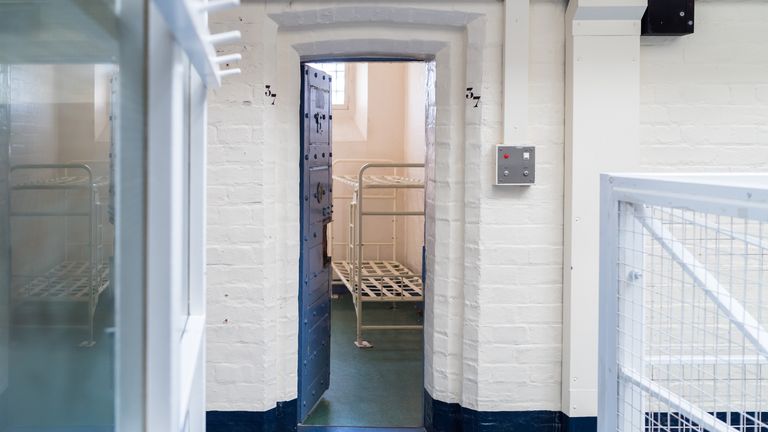
File pic: iStock
Public fury and political condemnation have erupted after it emerged the Ethiopian national, who arrived in the UK via a small boat last summer, was mistakenly released from HMP Chelmsford. Kebatu had been jailed for 12 months earlier this year following his convictions for the two sexual assaults.

Hadush Kebatu, jailed for two sexual assaults in Epping. Pic: Essex Police / PA
Consequently, he was due to be transferred directly to Immigration Enforcement officials for deportation proceedings, not released onto the street.
The operational failure at HMP Chelmsford instead allowed him to vanish, necessitating a significant police effort across the country, particularly in the London area, where he is now believed to be residing.
News of his initial arrest had previously triggered large-scale protests and civil disorder in Epping, near the Bell Hotel where he was staying, highlighting the community tension surrounding the case.
The fact that a known sex offender, awaiting deportation, could be so easily released from a high-security environment underscores a shocking administrative breakdown.
The incident reveals a significant lapse in the internal checks and balances designed to prevent such a grave security breach.
Escalating the crisis, this latest error forms part of a deeply worrying trend that authorities are struggling to contain. The
Similarly, the prison and probation service issued an “unreserved apology” in December 2019 after serial rapist Joseph McCann was mistakenly freed, allowing him to commit a series of further horrific sex attacks on women and children. The current manhunt for Kebatu, a convicted sex offender, naturally generates intense fear within the communities where he might be hiding.

Joseph McCann. Pic: Police handout
Though releases in error happen globally due to bureaucratic oversights—for example, the American and Canadian systems occasionally experience similar incidents involving miscalculated sentences or processing errors—the UK’s recent 128% spike is uniquely alarming. It suggests a critical, institutional breakdown rather than isolated human errors.
Critically, these failures erode the foundation of the social contractp between the state and its citizens: the guarantee of security from convicted criminals.
The repeated precedents of subsequent violent reoffending following mistaken release amplify the severity of the UK Prisoner Release in Error Scandal. Taxpayers expect and demand a functioning prison system that executes the courts’ sentences without fail, protecting the innocent.
The escalating rate of releases in error comes at a time when the entire prison estate faces intense scrutiny over capacity issues
. For instance, in September 2024, Sky News reported that dozens of inmates released under the Labour government’s emergency scheme—intended to ease overcrowding—were also freed by mistake.
Such overlapping operational failures demonstrate a system buckling under pressure and administrative laxity. The continuing hunt for Kebatu, combined with the alarming rise in official statistics, creates immense political pressure for the government.
Opposition parties are predictably seizing upon the data, demanding immediate resignations and a complete overhaul of HMPPS internal processes.
The severity of the UK Prisoner Release in Error Scandal requires more than just apologies and internal reviews. Experts suggest enforceable policy changes, including mandatory digital confirmation systems for all final releases and more robust staff training, are essential steps.
The fate of the 262 prisoners released in error between 2024 and 2025 remains largely unknown, further fuelling public anxiety. While authorities are often successful in recapturing these individuals, the period they spend at large represents an unacceptable risk.
The justice system have the task of prioritise rectifying these fundamental security failures immediately to restore public confidence and prevent further devastating crimes. The time for bureaucratic excuses is over; decisive, transparent action is required to terminate the UK Prisoner Release in Error Scandal once and for all.

AD: Heritage And Restaurant Lounge Bar
