

By Tony O’Reilly-
The government has formally announced the most significant school shake-up in England for a decade, focusing on reducing student pressure while integrating essential modern skills. Officials confirmed they will cut the total GCSE exam time by up to three hours per student, initiating changes based on the recommendations of a comprehensive curriculum and assessment review commissioned last year.
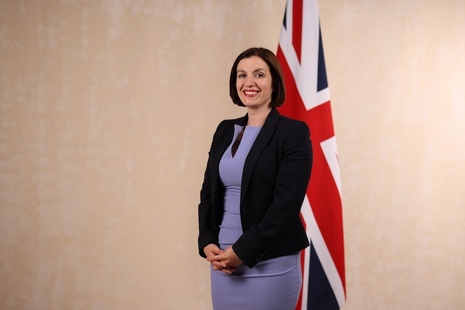
Education Secretary Bridget Phillipson. Pic: Lauren Hurley / No 10 Downing Street
This review, the largest of its type in ten years, deemed the current volume of exams at Key Stage 4 “excessive.” The final report strongly advocates for reducing the overall examination volume by a full 10%, directly addressing widespread concerns about student well-being. This ambitious New GCSE Curriculum Overhaul aims to strike a healthier balance between rigorous academic standards and student mental health.

AD: Capeesh Restaurant
Crucially, the government also intends to introduce mandatory new Maths and English tests in Year 8. Teachers will use these assessments to help quickly identify any existing learning gaps in students before they begin their GCSE preparation period.
The sweeping plan includes a major overhaul of the Key Stage 2 grammar, punctuation, and spelling test, ensuring earlier foundational skills are robustly assessed. Education Secretary Bridget Phillipson(pictured) believes these transformative changes “will help young people step boldly into the future.” The Education Secretary explained the necessity of the New GCSE Curriculum Overhaul during an appearance on Mornings with Ridge and Frost on Sky News.
She pointed out that more than a decade had passed since the national curriculum last received a substantial update. Technology, she stressed, is radically changing the world and shaping young people’s lives in unprecedented ways. It remains essential that the education system fully prepares students for that complex future, a future she explicitly wants them to shape. The focus involves providing a very strong academic foundation, prioritizing reading, writing, and a dedicated push on science subjects.

AD: Oysterian Sea Food Restaurant And Bar
A central tenet of the proposed reforms involves dramatically updating the curriculum to reflect contemporary digital realities. The New GCSE Curriculum Overhaul includes a new focus on data science and Artificial Intelligence (AI) specifically for post-16 students, preparing them for the rapidly evolving global workforce. These changes seek to encourage significantly more young people to pursue essential science and technology careers.
For the very first time, primary-aged children will receive mandatory lessons on how to effectively spot fake news, identify misinformation, and critically assess digital disinformation. Educators will implement these mandatory lessons to help primary students develop crucial critical thinking skills, thereby protecting them while navigating the online world.
Phillipson also highlighted the importance of ensuring children receive a breadth and richness in terms of what they study. She emphasized that parents desire a balance: strong academic subjects combined with the importance of vocational and creative subjects. Alongside the technological updates, primary pupils will also begin learning more about the fundamentals of money management and finance. The review recognizes that children increasingly become consumers before they even enter secondary school, making financial literacy an immediate and necessary skill.
Officials are also committed to ensuring all pupils retain guaranteed access to sport and the arts, promoting holistic development. The introduction of another compulsory reading test in Year 8 will also take place. This new assessment will work in conjunction with a writing assessment in Year 6 and existing SATs, all designed to quickly identify pupils requiring supplementary educational support. All secondary schools will now be expected to work toward offering the triple science GCSE as the standard option for students.
The addition of new compulsory exams in Year 8 has immediately sparked debate among educators and parents. Some critics worry that introducing another mandatory assessment might severely exacerbate the existing “exam factory culture” prevalent in many schools. A former secondary school teacher and parent expressed concern that the current system already demands far too many hours of examination time from 15 and 16-year-olds for their GCSEs.
This person observed first hand the significant rise in young people’s mental health issues, noting that the pressure of exams serves as a huge source of stress for them. Introducing another compulsory exam, critics argue, appears rather short-sighted, considering the extensive evidence of academic-related anxiety. They correctly suggest that exams are not the only mechanism available to drive up standards or improve life chances for young people.
Ms. Phillipson acknowledged the need for careful implementation, ensuring the New GCSE Curriculum Overhaul is executed correctly. The government does not want to “rush” the introduction of the new curriculum, she stressed. She confirmed that the proposed programmes of study will be released for consultation by 2027.
The full national curriculum is scheduled to be taught in schools nationwide by 2030. This lengthy timeline indicates a commitment to thorough planning and consultation across the education sector. Officials will also publish an oracy framework intended to help ensure more young people become effective and confident speakers, building effectively on the existing writing and reading frameworks. This focus on communication skills complements the new digital literacy and critical thinking components.
The uk government says it remains determined to provide a strong academic foundation while ensuring young people evolve into “really discerning citizens” who can effectively question and challenge the information they encounter.
Research suggests that GCSE exams in the uk remains highly competitive by international standards of end of school exams. particularly in English language and Computer Science, but the tailored marking from year to year in accordance with the general performance of students and difficulty of exams has remained a controversial issue.

AD: Heritage And Restaurant Lounge Bar

