

By Aaron Miller-
A White House official has vehemently denied reports claiming President Donald Trump is actively considering reducing the prison sentence of music mogul Sean “Diddy” Combs. The denial came swiftly after the US entertainment site TMZ published an explosive report earlier this week, alleging the US President was “vacillating” on whether to grant a Diddy Sentence Commutation in the near future.
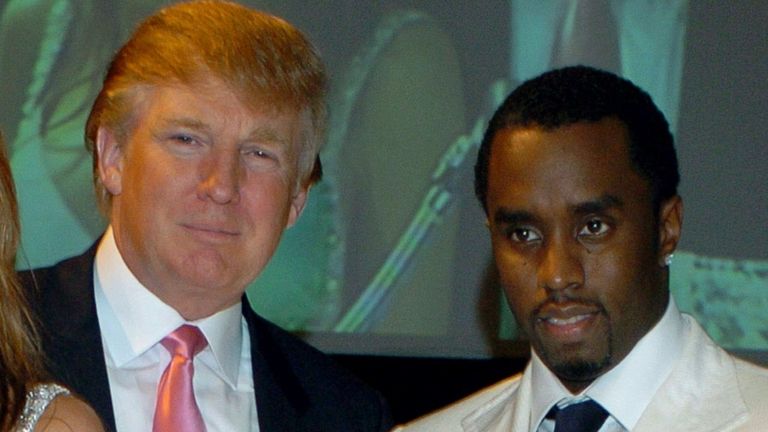
Donald Trump and Sean ‘Diddy’ Combs at an event at Trump’s Mar-A-Lago Club in Florida in 2005. Pic: Reuters
Citing an unnamed “high-ranking White House official,” the TMZ report suggested leniency might be imminent for the recently convicted 55-year-old star. However, the official, speaking to Sky News’ US partner NBC, sharply pushed back on the claim, stating there was “zero truth to the TMZ report, which we would’ve gladly explained had they reached out before running their fake news.” This forceful dismissal immediately plunged the story into a high-stakes journalistic dispute between the political administration and the prominent entertainment outlet.

AD: Capeesh Restaurant
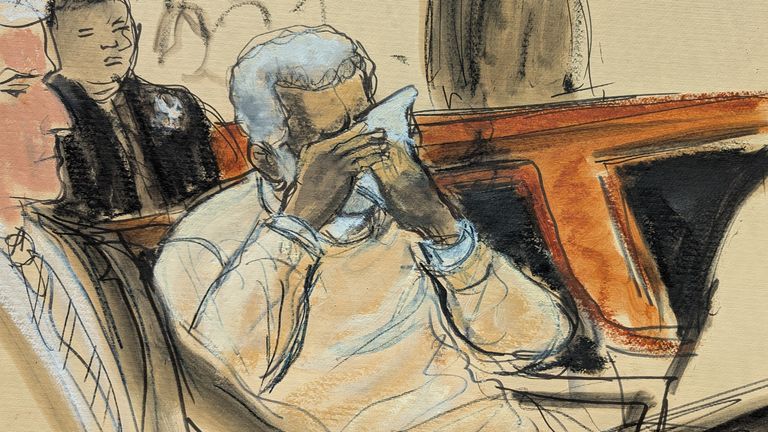
Combs was in tears during his sentencing hearing. Pic: AP/ Elizabeth Williams
The White House official further clarified that only President Trump, “not anonymous sources, is the final decider on pardons and commutations.” This statement sought to reassert the constitutional authority of the executive branch and discredit the unnamed source in the TMZ article.
Nevertheless, a spokesperson for TMZ, Casey Carver, issued a terse reply, maintaining the outlet’s position. “We stand by our story,” Carver stated, later updating the story on their website to double down on the claim and calling their reporting “accurate” despite the communication office’s refutation. The public clash leaves a significant information vacuum, highlighting the intense interest and political sensitivity surrounding the possibility of a Diddy Sentence Commutation. Meanwhile, Combs’s legal team has already been pursuing avenues for executive clemency, having previously told NBC News they were exploring a pardon. This pursuit underscores the complexity of the ongoing legal and political maneuvers following the high-profile conviction.
Sean “Diddy” Combs received a 50-month prison sentence and a hefty $500,000 fine on October 3rd, following his conviction during a highly publicized summer trial. He was found guilty of prostitution-related charges connected to his former girlfriends and male sex workers.

AD: Oysterian Sea Food Restaurant And Bar
Just days ago, the music mogul’s legal team formally filed a legal document officially signaling their intention to appeal the conviction and the subsequent sentence. The appeal process will run parallel to any attempts by his legal counsel to secure a Diddy Sentence Commutation, as both represent independent legal paths to freedom or reduction in punishment.
Understanding the potential executive action requires knowing the difference between the two main forms of clemency. The US Department of Justice clarifies that executive clemency applies to the President’s constitutional power to offer leniency for federal crimes, encompassing both pardons and commutations. Crucially, neither form of clemency signifies innocence, but they carry distinct legal effects.
A pardon represents the President’s forgiveness, granted in recognition of the acceptance of responsibility and good conduct, which fully reinstates civil rights, such as the right to vote. Conversely, a commutation reduces the prison sentence either totally or partially; however, it does not remove the civil disabilities that apply as a result of the underlying criminal conviction. Therefore, a successful Diddy Sentence Commutation would reduce his time served but would not erase the legal consequences of his felony conviction. Combs is currently serving his time at Brooklyn’s Metropolitan Detention Center, where his team has complained about “inhumane” conditions, simultaneously requesting a transfer to a low-security federal facility in New Jersey.
President Donald Trump has exercised the power of executive clemency extensively throughout both his terms in office, setting clear precedents for this type of political speculation. Notably, he has granted commutations and pardons to numerous figures, including approximately 1,500 criminal defendants connected to the January 2021 attack on the US Capitol. Just last week, he commuted the sentence of disgraced former Republican congressman George Santos, illustrating his willingness to intervene in high-profile criminal cases. This history of granting politically charged clemency undoubtedly fuels media reports about a possible Diddy Sentence Commutation, despite the White House’s outright denial.
Significantly, President Trump had addressed the possibility of leniency for Combs before his sentencing in a public interview back in August. He stated that he had been approached about a possible pardon but suggested he was unlikely to grant one due to political considerations. “I was very friendly with him. I got along with him great and he seemed like a nice guy,” the president recalled, adding: “But when I ran for office, he was very hostile.” When directly asked if this hostility meant he would not grant a pardon, Trump replied, “I would say so.” He explained that previous political opposition made granting clemency “more difficult to do,” suggesting a political calculation governs his use of the clemency power.
Combs’s own pre-sentencing statement, where he admitted his past behavior was “disgusting, shameful and sick,” and acknowledged getting “lost in my excess and lost in my ego,” may complicate any future requests. The final decision on any Diddy Sentence Commutation will rest solely on the President’s political will, regardless of the TMZ report or the official denial.

AD: Heritage And Restaurant Lounge Bar


