

By Aaron Miller-
Convicted sex trafficker Ghislaine Maxwell is “much, much happier” since being moved to a minimum-security facility in Texas, according to newly leaked emails obtained exclusively by NBC News.
The messages, which have been shared with US politicians, vividly describe a stark improvement in conditions over her previous, higher-security confinement.

AD: Capeesh Restaurant
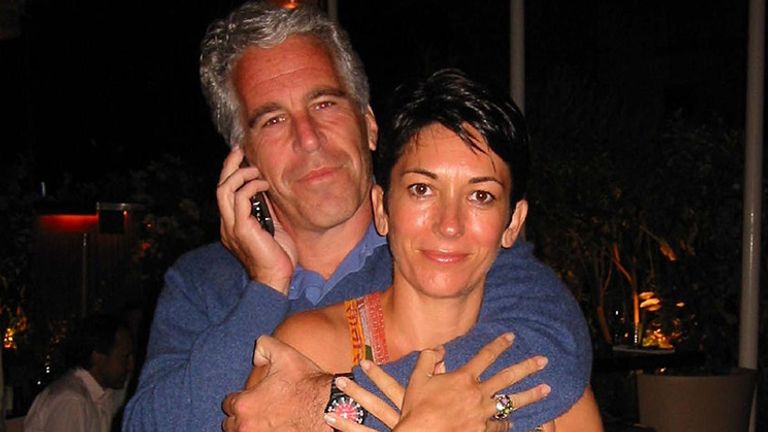
Ghislaine Maxwell and Jeffrey Epstein. Pic: US Justice Department
This voluntary move to Federal Prison Camp (FPC) Bryan, days after the disgraced British socialite was interviewed by the Justice Department in July, has triggered intense speculation that Maxwell is receiving Ghislaine Maxwell VIP Prison Treatment—a claim her legal team denies.
The fundamental problem lies in the fact that prisoners convicted of sex offenses are generally prohibited from being housed in such low-security camps, making the transfer itself highly unusual.
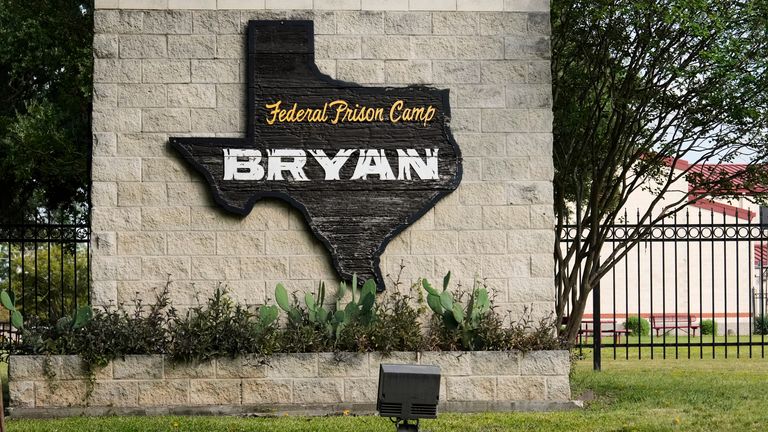
Maxwell is now serving her sentence at Federal Prison Camp Bryan in Texas. Pic: AP
Maxwell, the ex-girlfriend of convicted paedophile Jeffrey Epstein, is serving a 20-year sentence for her role in sex trafficking young girls. In her correspondence with a relative, the 63-year-old painted a picture of FPC Bryan that she found surprisingly idyllic. She wrote:

AD: Oysterian Sea Food Restaurant And Bar
“The food is legions better, the place is clean, the staff polite… I haven’t heard or seen the usual foul language or screaming accompanied by threats levelled by inmates by anyone.”
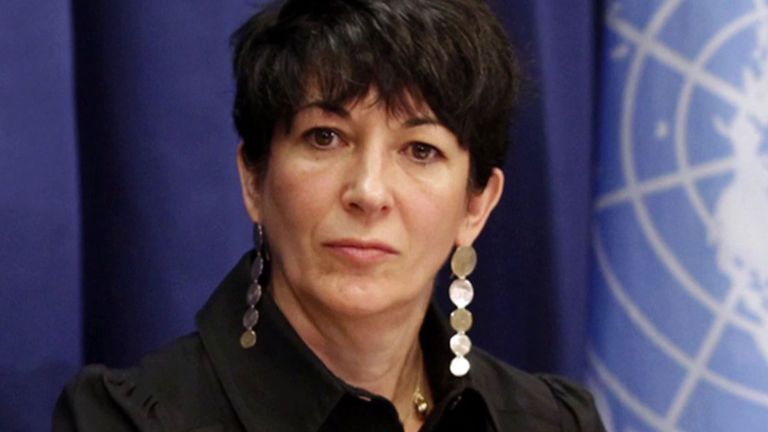
Ghislaine Maxwell. Pic: Sky News
The shift was so jarring she concluded: “I feel like I have dropped through Alice in Wonderland’s looking glass.” She contrasted this dramatically with her previous facility, FCI Tallahassee in Florida, where she recalled disturbing encounters, including possums falling from ceilings and frying on kitchen ovens while food was being served,
suggesting a significant downgrade in institutional quality and cleanliness.
The specific circumstances of Maxwell’s transfer and the reported perks she allegedly enjoys—such as meals delivered directly to her dormitory room, late-night workouts, and permission to shower when other inmates are asleep—form the core of the claims regarding Ghislaine Maxwell VIP Prison Treatment. FPC Bryan is situated in a residential area, ringed only with barbed wire, and houses around 635 prisoners
. When Maxwell arrived over the summer, her presence immediately sparked local protests, with one demonstrator stating: “We don’t want a child sex trafficker here.”
The claims of special treatment have been underscored by disturbing rep
orts from some of Maxwell’s fellow inmates. Several told The Wall Street Journal they have been threatened with retaliation if they speak about her to the media, with at least one inmate reportedly being transferred out of the facility following an interview.
Maxwell’s lawyer, David Oscar Markus, strongly pushed back against the controversy, telling NBC News that publishing a prisoner’s private emails is inappropriate tabloid behavior, not responsible reporting. He contended that anyone interested in this kind of gossip r
eveals more about themselves than about his client. Markus asserted it is simply time for critics to “get over the fact that she is in a safer facility,” arguing that improved conditions should be desired for everyone in the system.
Maxwell’s brother, Ian, also weighed in, stating the messages were “private by their very nature” and must have been “stolen and leaked without authorisation” if they reached a reporter. T
he Justice Department, which oversaw the controversial transfer, has consistently declined to comment on the matter. T
his continued silence only intensifies the allegations of Ghislaine Maxwell VIP Prison Treatment and institutional favoritism.
Despite the improved conditions in Texas, Maxwell’s legal options for early release are rapidly closing. Last month, the Supreme Court officially rejected her final attempts to appeal her sex trafficking sentence.
This decision means her projected release date remains in 2037, when she would be 75 years old, making a presidential pardon her best remaining chance at freedom.
Donald Trump addressed the possibility of clemency around the time the Supreme Court ruling was announced, telling reporters he planned to speak with the Justice Department and “would have to take a look” at whether he would consider granting her a pardon.
Such a high-profile move would undoubtedly reignite the intense public fury surrounding the entire Epstein-Maxwell network.
Pressure continues mounting on individuals connected to the late financier Jeffrey Epstein, who died by suicide in 2019 while awaiting trial on sex trafficking charges.
For example, earlier this week, the US Congres formally wrote to Andrew Mountbatten Windsor, who has been stripped of his royal titles by the King, requesting an interview.
The request specifically concerned the Prince’s “long-standing friendship” with Epstein, which has subjected him to years of legal and public scrutiny.
Virginia Giuffre, who accused Andrew of sexually assaulting her after being introduced by Epstein, tragically died in April. She alleged she was forced to have sex with the Prince three times, including once at Ghislaine Maxwell’s London home.
The enduring controversies around Epstein’s death, the lingering questions about his associates, and the current claims of Ghislaine Maxwell VIP Prison Treatment keep the entire scandal in the international spotlight.

AD: Heritage And Restaurant Lounge Bar


