

By Sheila McKenzie-
A dramatic legal battle concluded this week with the freedom of Bella May Culley, the Pregnant British Teenager Released from a Georgian jail where she had been held on severe drug charges since May. The teenager’s release was contingent on a hefty financial agreement; her family paid 500,000 lari, approximately £138,000, as part of a crucial plea deal aimed at significantly reducing her potential sentence.
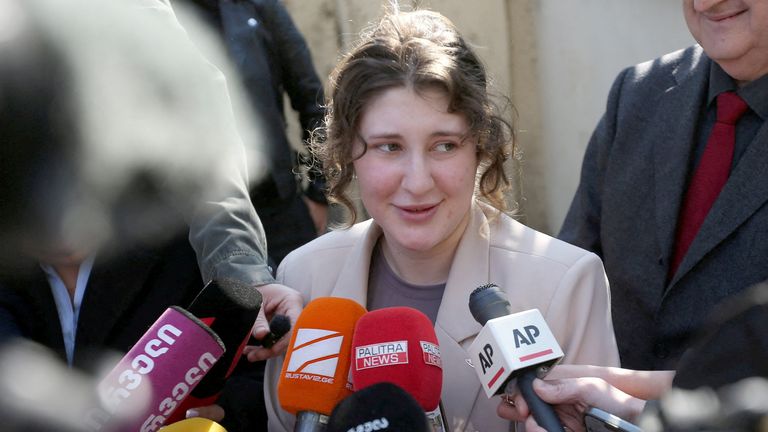
Bella Culley speaks after being released from custody. Pic: Reuters
The 19-year-old from Billingham, County Durham, was arrested at Tbilisi Airport and faced accusations of attempting to smuggle a shocking 12 kilograms of marijuana and 2 kilograms of hashish into the South Caucasus nation. The Georgian court found her guilty on Monday, but sentenced her to five months and 25 days in prison, equalling the exact time she had already spent in pre-trial custody.

AD: Capeesh Restaurant

Bella Culley at an earlier court hearing in May. Pic: RUSTAVI 2/AP

Police footage released in May showed Culley in handcuffs as she made an initial court appearance. Pic: AP
The verdict, marking the end of her detention, was immediately followed by an emotional scene in the courtroom. Bella May Culley, wearing a cream blazer, looked understandably overwhelmed as the verdict was read aloud. Her mother, Lyanne Kennedy, who had travelled back and forth between the UK and Georgia throughout the ordeal, cried alongside her daughter.
Bella, now 35 weeks pregnant, confirmed her profound relief, telling reporters, “I’m happy.” She candidly admitted she truly did not expect to be freed on that particular day.
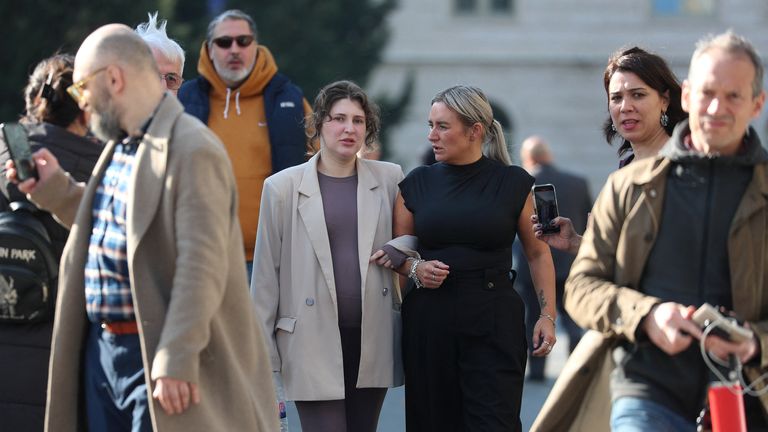
Bella Culley walks with her mother, Lyanne Kennedy, following her release. Pic: Reuters
Her lawyer, Malkhaz Salakhaia, confirmed that officials would release her passport promptly, making her completely free to leave the country on Monday.

AD: Oysterian Sea Food Restaurant And Bar

Miss Culley’s lawyer, Malkhaz Salakaia, said she had been tortured. Pic: Reuters
Georgian prosecutors had initially considered requesting a lengthy two-year prison term, but the case prosecutor, Vakhtang Tsalughelashvili, confirmed authorities “decided to consider the time she has already served,” a merciful decision given the circumstances.
This compassionate approach provided a much-needed lifeline in a case that had captured significant media attention both in the UK and internationally.

Lyanne Kennedy(R) was joined in Tbilisi by Bella Culley’s grandmother Christine Cook(L). Pic: Reuters
The emotional relief of being free follows months of harrowing experiences and troubling allegations regarding the circumstances of her arrest and detention. When initially arrested in May, the teenager pleaded not guilty to the charges, arguing she had been tortured in Thailand and forcefully coerced into carrying the illegal narcotics. She described being threatened by gangsters who allegedly used a hot iron to ensure her compliance, according to her lawyer’s account.
Mr. Salakhaia confirmed that Georgian police subsequently launched a separate criminal investigation into her serious coercion claims, acknowledging the gravity of her statement. The young woman initially faced a maximum sentence of up to 15 years or even life imprisonment under Georgia’s extremely strict anti-drug laws, leading her legal team to aggressively pursue a plea bargain.
The five months Miss Culley spent in custody were marked by grim conditions before a recent transfer provided some relief. She initially endured confinement in a cell at Georgia’s Rustavi Prison Number Five, where sanitary conditions were appalling.

Bella Culley has been detained at Georgia’s Rustavi Prison Number Five. Pic: Rayhan Demytrie/BBC
Her mother reported the cell provided only a hole in the ground for a toilet, communal showers limited to twice a week for just 15 minutes, and only one hour of fresh air daily. Lyanne Kennedy revealed her daughter had been forced to boil pasta in a kettle and even resort to toasting bread over a candle flame to eat.
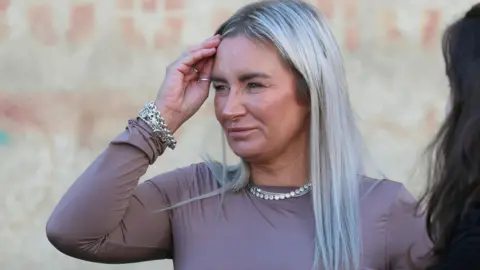
Bella Culley’s mother Lyanne Kennedy said her daughter was “looking strong”. Pic: Reuters
The harrowing accounts were corroborated by reports from other inmates, including a Russian political activist, Anastasia Zinovkina, who described the sanitary conditions as “horrific.”
Accounts from inside the jail reveal harsh conditions. In September, Georgian media reported on an open letter purportedly from Anastasia Zinovkina, a Russian political activist serving an eight-and-a-half-year sentence for drug possession. Zinovkina, who claims the drugs were planted, described the sanitary conditions as “appalling” and “horrific.” She wrote, “One single bar of soap is used to wash hair, body, socks, underwear, and dishes. If the soap runs out before the guards decide to give out a new one (which happens once every three months) then they simply don’t wash.
Toilet paper is provided once monthly, and only to those with no money on their prison account. Showering is permitted only twice weekly – on Wednesdays and Sundays – for 15 minutes. The girls who don’t have slippers bathe barefoot or use shared slippers. They get fungal infections and pass them to each other.”
Fortunately, the Pregnant British Teenager Released had been recently transferred to a prison “mother and baby” unit, where conditions markedly improved. She gained access to two hours of walking time, a proper toilet, a shower in her room, and the ability to cook for herself and others, a welcome change after five months of suffering.
The outcome of this case highlights Georgia’s stringent approach to drug-related offences and the common use of financial plea agreements to resolve criminal charges. Georgia, a South Caucasus nation of 3.7 million, permits these plea deals to significantly reduce or eliminate prison sentences in specific instances. Criminal justice lawyer Guram Imnadze, a drug policy expert based in Tbilisi, notes that nearly 90% of drug-related crimes in Georgia are currently resolved through plea bargaining.
This is largely because the potential sentences for trafficking large amounts of drugs are so severe—up to 20 years or life imprisonment—that pursuing a bargain becomes the primary defense strategy for most defendants.
Miss Culley’s case coincided with a new interior minister taking office, prioritizing drug crimes, further complicating her defense. Mr. Imnadze explained that the authorities wanted to showcase tangible results to the public, and an arrest involving 12 kilograms of marijuana is undoubtedly considered a “huge amount for public perception.” The family’s difficult task of raising the substantial sum of money became the only viable path to securing her freedom, as they faced the devastating possibility of a two-decade sentence.
The family successfully raised the £137,000 required to finalize the agreement, securing her release based on time served. Although she pleaded guilty to bringing drugs into the country, her lawyer indicated they would still appeal to the President of Georgia for an official pardon based on the coercion and torture claims.
They also expressed hope that a provision in Georgian law, stating a mother must be outside custody until her child is one year old, would ensure her continued freedom, a vital element for the Pregnant British Teenager Released and her unborn child.

AD: Heritage And Restaurant Lounge Bar

