

By Sammy Jones-
The family of Agnes Wanjiru, whose body was discovered in a septic tank in Kenya over a decade ago, celebrated a major breakthrough in their long quest for justice this week. Robert James Purkiss, 38, the former British soldier accused of her murder, formally appeared at Westminster Magistrates’ Court on Friday.

Robert Purkiss is accused by prosecutors in Kenya of the murder of Agnes Wanjiru, an allegation he denies. Pic: Sky News
This appearance signals the official start of complex extradition proceedings initiated by Kenyan prosecutors, who seek to bring Purkiss to Africa for trial concerning the death of the 21-year-old woman in Nanyuki back in 2012. The initiation of the Agnes Wanjiru Extradition Case provides a glimmer of hope after years of diplomatic and legal frustration.

AD: Capeesh Restaurant
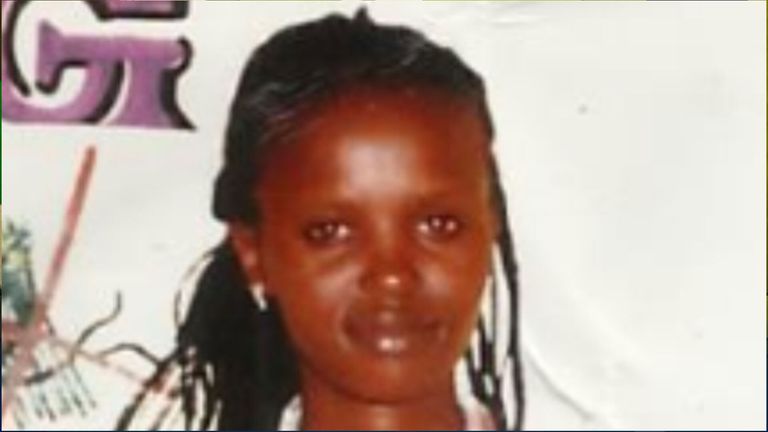
Agnes Wanjiru was killed in 2012, with Kenyan police accusing a British soldier of murder. Pic: Sky News
The court heard harrowing details of the allegations against Purkiss. Prosecutors claim a post-mortem examination identified a two-centimeter stab wound to Wanjiru’s lower abdomen and a collapsed lung, confirming a violent death. The court was told Purkiss allegedly confessed to the killing shortly after the incident, reportedly telling a colleague that “it was sex that went wrong.”
Despite this detail, the former soldier’s lawyer, David Josse KC, asserted his client “vehemently” denies the murder charge and confirmed Purkiss does not consent to the request for extradition.
Purkiss was remanded in custody following the hearing and will appear in court again on November 14th as the formal legal process of the Agnes Wanjiru Extradition Case continues.

AD: Oysterian Sea Food Restaurant And Bar
This initial hearing represents a massive, symbolic victory for a family that never truly expected to see an arrest made in this long-cold case.
Esther Njoki, Wanjiru’s niece and the dedicated spokesperson for the family, expressed immense relief and happiness as the Agnes Wanjiru Extradition Case commenced. Speaking to Sky News correspondent Charlotte Leeming, Ms. Njoki reflected on the difficulty of the journey, noting there were times when the family felt completely overwhelmed and ready to give up the fight. ”
I don’t think at any time we have ever thought that he would ever get arrested,” she explained, highlighting the sense of disbelief and sudden optimism the proceedings have brought.
However, the presence of Agnes’s young daughter, who was only five months old when her mother was killed, continually motivated the family to persist. “Seeing Agnes’ daughter, who survived her, we had to take up that fight and to fight for her,” Ms. Njoki emotionally stated.
Ms. Njoki remembers her maternal aunt as a “lively” and “extrovert” individual, lamenting the loss of her protective and caring presence within the family. “We always miss her presence here,” she sadly conveyed, explaining her motivation transcends seeking justice just for Agnes.
She emphasized the importance of setting a precedent for future generations, ensuring other soldiers who might believe they can “come to Kenya and do anything that they feel like doing because they have power” understand they face accountability.
Despite the current happiness, Ms. Njoki acknowledged the Agnes Wanjiru Extradition Case is “just the beginning of the long process that is ahead of us.”
Having already waited thirteen frustrating years, the family remains uncertain exactly how long the extradition proceedings themselves might take, a delay which continues to deepen the family’s grief. “As long as justice has not been served, there’s no peace,” Ms. Njoki concluded, clearly articulating the heavy emotional burden carried by Wanjiru’s relatives.
The murder took place in Nanyuki, a market town that serves as the main base for the British Army Training Unit in Kenya (BATUK), which has been operating there for decades. Ms. Wanjiru worked as a hairdresser and sex worker at the time she was killed, placing her directly in the environment surrounding the military base.
For sixty years since Kenya’s independence, the town has remained inextricably linked to the British military presence, leading many to feel that “neocolonialism is still in Kenya,” as Ms. Njoki argued before her flight to the UK in October. She asserted that the failure of the Kenyan government to adequately protect its citizens from foreign soldiers shows that “these guys are still colonising us.”
The case of Agnes Wanjiru is not isolated; public hearings held last year featured dozens of Kenyans alleging various violations by BATUK personnel in the Laikipia and Samburu regions.
Following mounting pressure, the Ministry of Defence (MoD) banned British soldiers from soliciting sex overseas in November 2022. However, an internal service inquiry subsequently found low-to-moderate violations of this ban are still occurring in Kenya.
Maryanne Wangui, a friend of Agnes and leader of the sex workers alliance in Nanyuki, confirmed soldiers are now simply paying for sex more discreetly, often using Airbnbs.
“They are using Airbnbs and they have their pimps who they are using to bring those sex workers to their houses and they do their stuff there and pay them there. We are not protected because if a girl is killed in an Airbnb – who will cater for that death?” she asks.
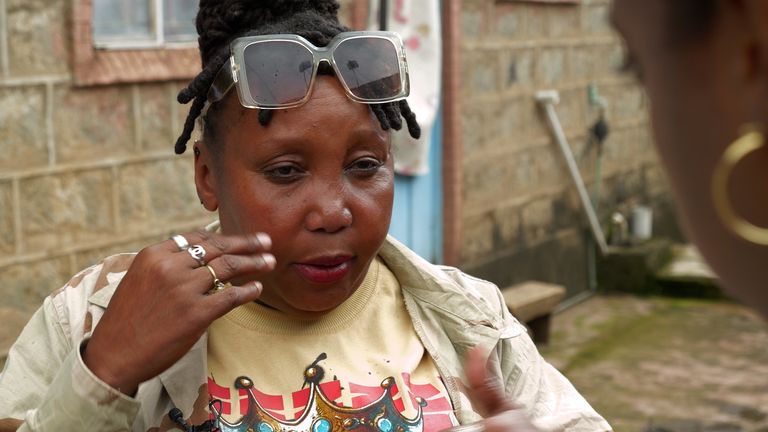
Maryanne Wangui. Pic: Sky News
The MoD stated: “There is absolutely no place for sexual exploitation and abuse by people in the British Army,” adding, “It preys on the vulnerable and benefits those who seek to profit from abuse and exploitation.” The UK government officially remains committed to helping the Wanjiru family secure justice, but the continued presence and associated societal impacts of the training unit underscore the urgency of a resolution to the Agnes Wanjiru Extradition Case.

AD: Heritage And Restaurant Lounge Bar