

By Ben Kerrigan-
Evidence emerging from the public inquiry into the horrific mass stabbing in Southport indicates that Axel Rudakubana, the 17-year-old killer, was failed comprehensively by nearly every state agency meant to intervene.
Last July’s attack on a Taylor Swift-themed dance class tragically resulted in the deaths of seven-year-old Elsie Dot Stancombe, six-year-old Bebe King, and nine-year-old Alice da Silva Aguiar, while injuring ten others.

AD: Capeesh Restaurant

(Left to right) Bebe King, Elsie Dot Stancombe and Alice da Silva Aguiar. Pic: Merseyside Police
The inquiry, which began in Liverpool Town Hall, is now examining the five years leading up to the atrocity, raising serious and harrowing questions about why a known threat was allowed to materialize.
Rudakubana, currently serving a minimum of 52 years in prison, had been known to police, counter-terrorism officers, the criminal justice system, social services, and mental health teams since he was a young boy.
Rudakubana’s deeply troubling behaviour and escalating obsession with violence brought him into repeated contact with these various organizations over half a decade

AD: Oysterian Sea Food Restaurant And Bar
. His parents, Alphonse Rudakubana and Laetitia Muzayire, who had been granted asylum in the UK after fleeing the Rwandan genocide, were accustomed to their son’s violent outbursts at home.
They admitted knowing the teenager had acquired a small arsenal of weapons online and possessed a history of carrying concealed knives.
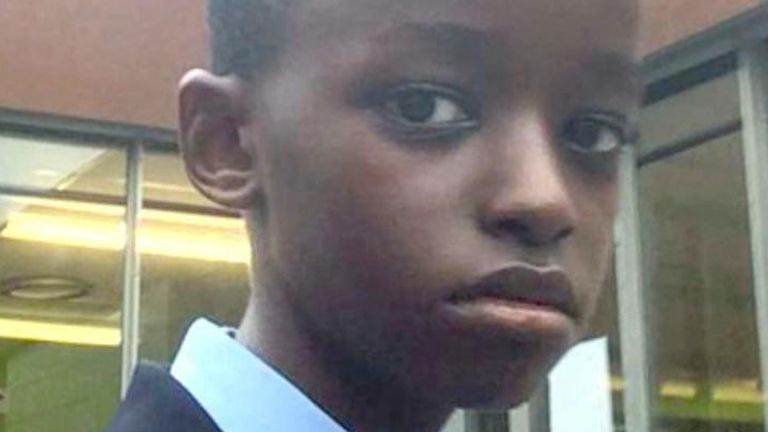
Rudakubana’s behaviour deteriorated rapidly. Pic: Sky News
The parents, however, told the inquiry they never believed their son capable of executing the mass stabbing, despite their fears he posed a threat to his father and older brother.
Harrowing accounts from the dance studio detailed extreme bravery among the victims and witnesses, including an already injured girl who protected her younger sister and businessman John Hayes who was stabbed after running from his office next door to tackle the attacker.
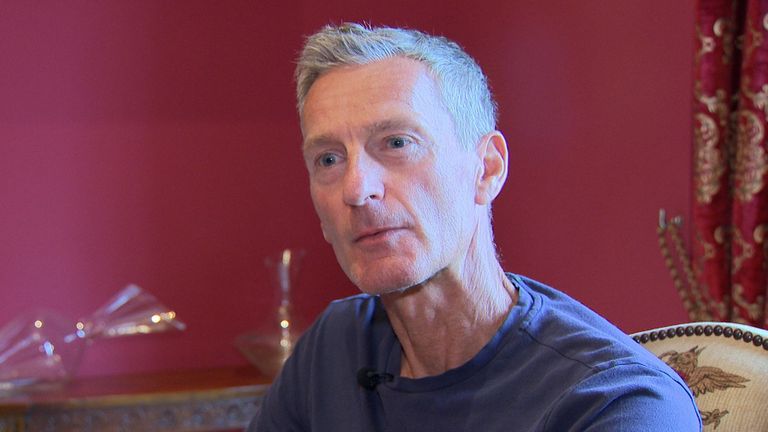
John Hayes was stabbed as he tackled Axel Rudakubana. Pic: Sky News
The teacher organizing the event, Leanne Lucas, herself badly injured, stated there was nothing she could have done to keep the children safe when “multiple organisations” had already failed to stop the killer, crystallizing the central issue of the Southport Inquiry Systemic Failures.
Rudakubana’s descent into violence accelerated significantly when he was in Year 8, becoming withdrawn, isolated, and prone to regular domestic violent outbursts after the family moved to Southport in 2013.
The severity of his risk first became undeniably clear in October 2019 when he was expelled from Range High School in Formby.
He had phoned Childline to report carrying a knife into school because he intended to kill a boy he claimed was bullying him.
Subsequently, at The Acorns School, a pupil referral unit, the headteacher Joanne Hodson felt an overwhelming “visceral sense of dread” like “he was building up to something.”
When Hodson directly asked why he took a knife to his former school, Rudakubana looked her in the eyes and chillingly responded: “to use it.”
This terrifying frankness did not result in an appropriate custodial or psychological intervention, which is an integral element of the Southport Inquiry Systemic Failures.
In December 2019, he took a taxi back to Range High School, carrying a knife in his bag, and attacked a boy in the corridor with a hockey stick when he could not find the alleged bully.
Pleading guilty to assault, possession of an offensive weapon, and possession of a bladed article in February 2020, then-13-year-old Rudakubana received only a ten-month referral order. This remained his only criminal conviction before the devastating mass attack.
Compounding the issue, most of his mandatory contact with the Lancashire Council youth offending team (YOT) happened over the phone during the first COVID-19 lockdown. Social workers conducted only three 30-minute face-to-face sessions to address his profoundly concerning behaviour.
Assessed as merely “medium risk” despite repeatedly refusing to see social workers, no enforcement action was ultimately taken before his case closed in January 2021. Meanwhile, staff at The Acorns made three referrals to the government’s anti-terror program, Prevent, between 2019 and 2021.
Rudakubana was researching “school mass shootings,” discussing guns and beheadings, even calling the Manchester Arena attack a “good battle,” but every case was closed because he lacked any clear ideological motivation. Teachers openly expressed that they had “lost faith that anything would be done.”.
Even as professionals lost confidence, the family’s situation descended into domestic chaos, repeatedly necessitating police intervention.
Rudakubana frequently engaged in violent outbursts at home, which could be triggered by losing an argument or receiving a visit from social workers.
His father admitted feeling “ashamed” he had become “conditioned to his behaviour,” allowing the abuse to continue because any attempt to impose discipline was met with an “escalation.”
After he “trashed” his parents’ house in November 2021 and later kicked his father and damaged a rental car, police were repeatedly called to the home.
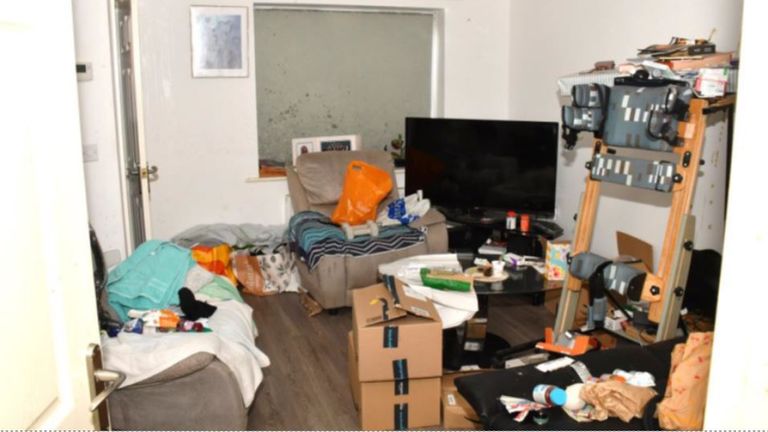
Rudakubana’s home. Pic: Merseyside Police
In March 2022, Rudakubana, then 15, was discovered on a bus with a small kitchen knife, admitting to police he wanted to stab or poison someone.
Crucially, instead of arresting and charging him, officers treated him as a vulnerable person and took him home, simply making a referral for mental health support, marking the last time he left home alone before the attack.
The catastrophic failures continued right up to the week of the murders, highlighting the deep-seated nature of the Southport Inquiry Systemic Failures. Rudakubana was first referred to Alder Hey by his GP in August 2019, yet waited a staggering 77 weeks for an autism diagnosis. Forensic Child and Adolescent Mental Health Services (FCAMHS) refused to assess his risk to others without the diagnosis, ultimately treating him only for anxiety.

Police and forensics officers at the scene of the deadly attack in July last year. Pic: PA
Shockingly, Rudakubana was discharged from Alder Hey CAMHS just six days before the attack, with the official document recording his risk to others as “None,” despite knowing he was refusing to wash, barely eating, and had not left the house for five months.
The day before the attack, Rudakubana burst into his father’s bedroom brandishing a knife and asked about his old school, attempting to acquire petrol for a suspected arson attack.

Axel Rudakubana pictured before the attack. Pic: PA
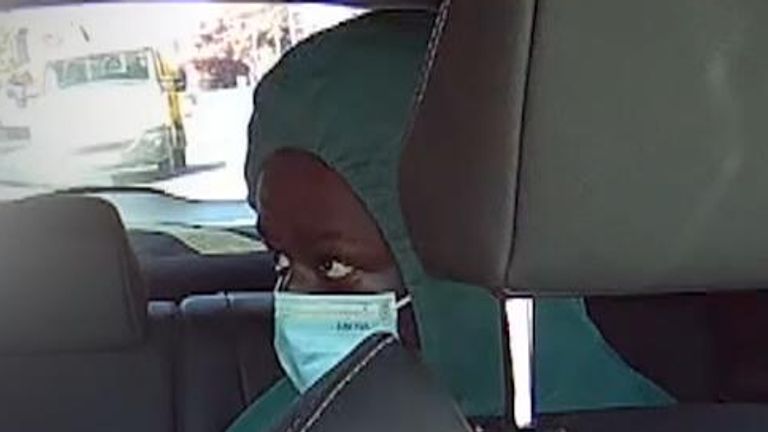
Rudakubana in a taxi before the Southport attack. Pic: Merseyside Police
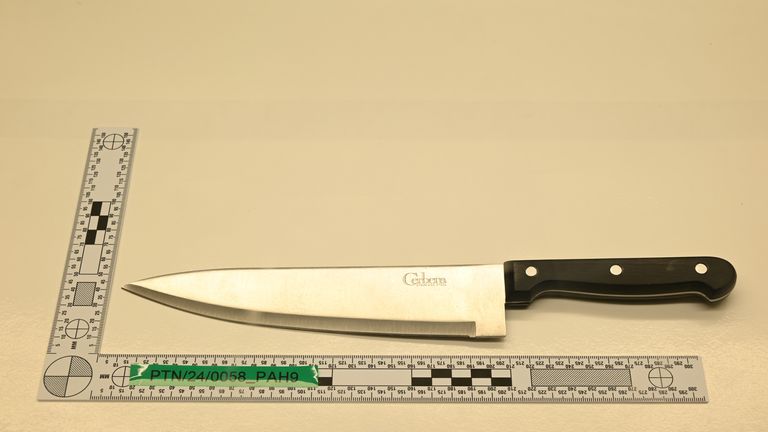
A knife identical to the one used in the attack. Pic: Merseyside Police
Later that evening, his mother and father, terrified, discovered a bow and arrow, firecrackers, and a crude attempt to prepare the deadly poison ricin in his “off limits” bedroom.
His father also admitted accepting delivery of machetes and knives his son had ordered using stolen ID, a “serious breach” of his parental duty driven by fear.
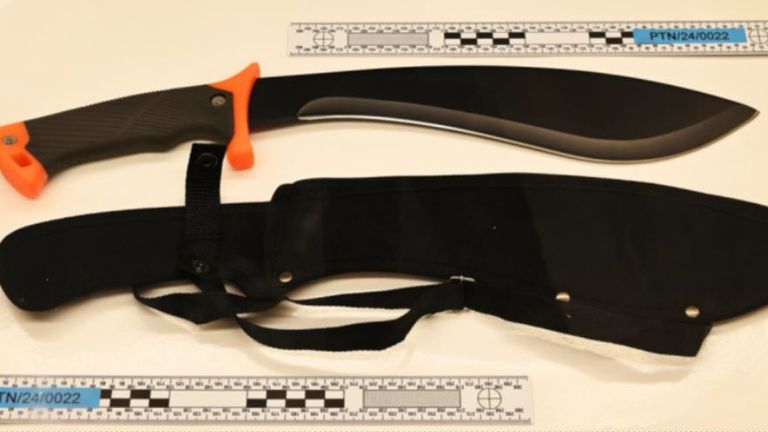
Machetes ordered online. Pic: Merseyside Police
The father confessed to the inquiry that his fear of his son and worry he would be taken into care “prevented him from doing things a parent would normally do,” such as restricting internet access and challenging the ordering of weapons.
He concluded, “I accept I bear my share of the responsibility and that by not challenging his behaviour he was allowed to acquire dangerous weapons and view inappropriate content online,” adding that he was “desperately sorry” for the catastrophic consequences.
Rudakubana’s brother suggested the target was chosen because “children are very valuable to society” and harming them would “hurt society very badly.”
Six minutes before leaving the house to commit the murders, Rudakubana searched X (formerly Twitter) for a video of a recent terrorist attack on a bishop in Sydney.
Lancashire Police Assistant Chief Constable Mark Winstanley issued a stern warning, admitting many young men view similar material, expressing his fear there could be another attack.
Bebe King’s parents, Lauren and Ben King, concluded after hearing the evidence that it had “been painfully clear that Bebe was failed at every possible turn.”
They, along with the other victims’ families, have called for Rudakubana’s parents and every agency involved to be held fully accountable for the egregious Southport Inquiry Systemic Failures.
The inquiry chairman, Sir Adrian Fulford, hopes to deliver his report on the first phase of evidence by the spring, promising a meticulous examination of these failures to prevent future tragedies.

AD: Heritage And Restaurant Lounge Bar


