

By Tony O’Reilly-
President Trump delivered a strong Tomahawk Missile Warning to Russia, stating the US may provide these advanced long-range weapons to Ukraine if the war does not conclude quickly. The chief executive was speaking aboard Air Force One while en route to the Middle East, where he promoted a separate peace agreement for Gaza.
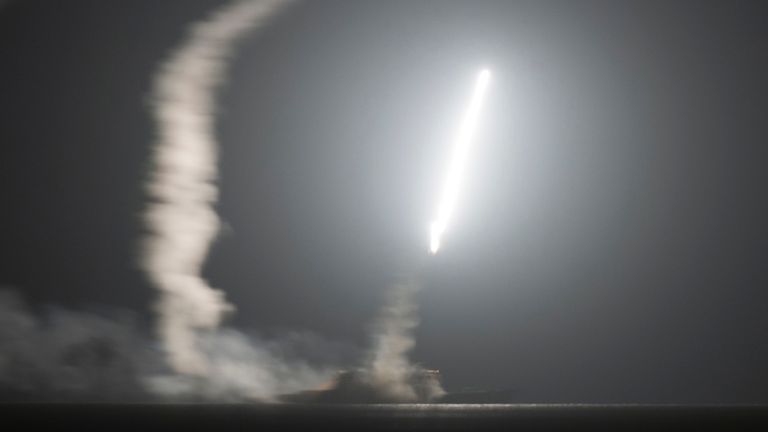
A Tomahawk missile being launched in the Gulf in 2014. Pic: Reuters
He told reporters, “I might say ‘Look: if this war is not going to get settled, I’m going to send them Tomahawks’.” The threat to introduce the Tomahawk missile, which has a striking range of miles, could allow Kyiv to strike targets deep within Russian territory, including Moscow itself.

AD: Capeesh Restaurant
Consequently, Russia had previously cautioned that escalating the conflict by supplying such sophisticated weaponry would severely damage US-Russian relations. This latest Tomahawk Missile Warning was disclosed by the President while he was traveling, underscoring its weight in international affairs. Mr. Trump described the weapon as “incredible” and “very offensive,” arguing Russia simply does not need that level of aggression directed toward them.
He furthermore suggested the prospect of Ukraine receiving these missiles has already been raised in direct conversations with President Zelenskyy. Therefore, the Tomahawk Missile Warning represents a major new escalation step in the more than three-and-a-half-year conflict.
President Zelenskyy has publicly assured the international community that any Tomahawks supplied would only be used to pursue valid military goals and would never be deployed to attack civilian populations. The Ukrainian leader reiterated his commitment to this principle during a recent interview with Fox News.

AD: Oysterian Sea Food Restaurant And Bar
Meanwhile, the Kremlin’s official response through spokesman Dmitry Peskov highlighted that “the topic of Tomahawks is of extreme concern,” demonstrating Russia’s anxiety over this potential development. The President believes discussing this option with Russia is important, stressing, “I think I might speak to Russia about that.” Such a decision would completely change the dynamics of the war, providing Ukraine with unparalleled long-range capability.
Subsequently, these comments arrive as both sides issue conflicting reports on the situation along the -mile frontline. Mr. Zelenskyy claimed a Ukrainian counteroffensive has made measurable gains along the front, specifically noting advances in the Zaporizhzhia region. He stated in his nightly address that Ukrainian forces had gained over km further south in Zaporizhzhia and continued advancing around Dobropillia in the Donetsk region.
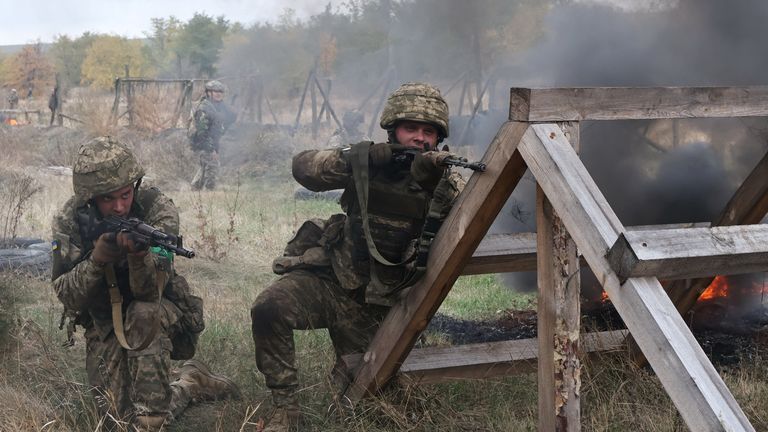
Ukrainian troops training near the frontline in Zaporizhzhia. Pic: Reuters
Conversely, a Russian defence ministry report made no reference to Ukrainian successes, maintaining that Moscow’s troops had hit Ukrainian forces and equipment in Zaporizhzhia. Last week, Russian President Vladimir Putin told senior military officers that Moscow’s forces had captured square miles of territory this year, asserting they held a strategic advantage across all sectors.
The conflicting claims highlight the difficulty of assessing the actual war situation independently. Beyond the fighting, Russia attacked Ukraine’s power grid over the weekend, intensifying its campaign to cripple the country’s energy infrastructure before the winter months begin. President Zelenskyy condemned the action, detailing that Russia had launched “more than drones, missiles, and around glide bombs” over the preceding week.
The President also confirmed a “very productive” phone call with Donald Trump, covering air defense, resilience, and long-range capabilities, alongside energy sector details. A senior Ukrainian delegation is now scheduled to visit the US this week for follow-up talks on security assistance.

AD: Heritage And Restaurant Lounge Bar


