

By Ben Kerrigan-
President Emmanuel Macron ended days of intense political speculation by reinstating Sébastien Lecornu to the nation’s second-highest office, making the decision to have Lecornu reappointed Prime Minister highly unusual in contemporary French politics.
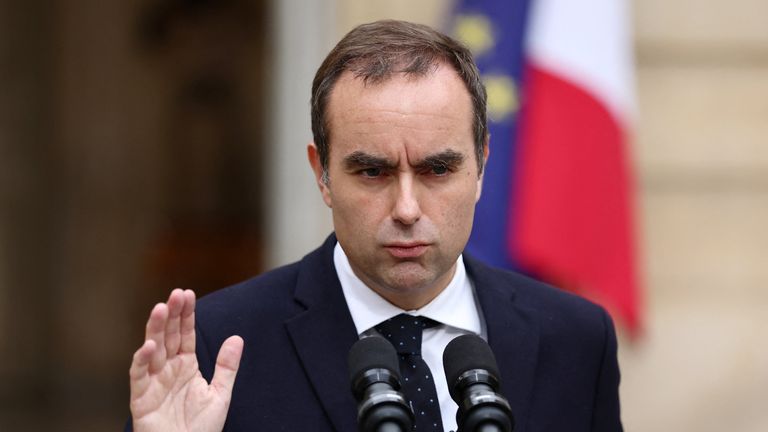
Sebastien Lecornu has been reappointed as France’s prime minister – days after he quit. File pic: Reuters
Prime ministerial resignations traditionally precede a significant government overhaul, where a new figure is chosen to inject fresh impetus and direction. However, this time, the expected major reshuffle did not materialize in the anticipated way. Lecornu initially tendered his resignation, a formal custom designed to allow the President full flexibility in rebuilding the cabinet structure. The subsequent delay of four days between his departure and his return proved to be nothing more than a brief hiatus.

AD: Capeesh Restaurant
This move to have Lecornu reappointed Prime Minister was widely seen by political analysts as an assertion of continuity and confidence by the Élysée Palace. Rather than risking a disruptive change in leadership at the top, Macron chose familiarity over radical transformation.
Lecornu, a highly trusted ally who had previously served as Minister of Defence, brings considerable political capital and executive experience. His reappointment suggests President Macron views Lecornu as the most capable figure to handle the intricate legislative battles ahead. The speed with which Lecornu reappointed Prime Minister happened suggests the President faced a narrow field of viable alternatives or decided the timing for a complete reset was not optimal. This unconventional rapid reversal underscores the President’s pragmatic and often unexpected political style. Macron values loyalty and operational effectiveness above conventional political procedure.
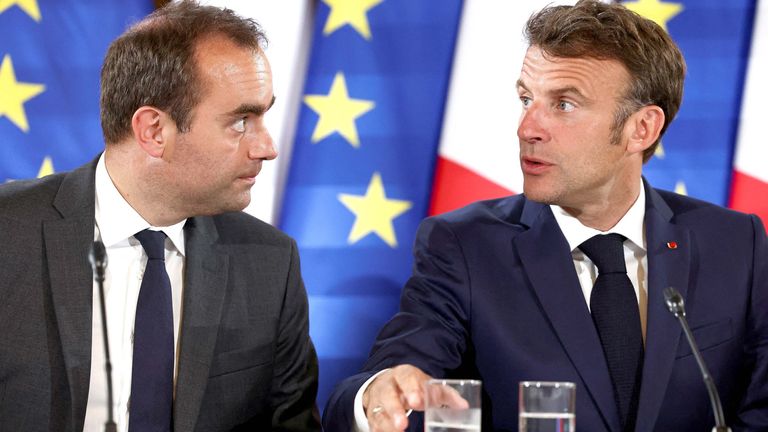
Lecornu’s second tenure marks the eighth prime minister of the Macron presidency. File pic: Reuters
The significance of having Lecornu reappointed Prime Minister cannot be overstated, particularly given the current governmental challenges. President Macron’s alliance lacks an absolute majority in the National Assembly, compelling the government to rely on fragile alliances and the controversial Article 49.3 to pass key legislation.

AD: Oysterian Sea Food Restaurant And Bar
Lecornu’s experience and negotiation skills are now essential for managing this precarious parliamentary situation. His immediate return stabilizes the executive branch, allowing the administration to refocus quickly on essential domestic reforms and international commitments. The unexpected nature of this event has nonetheless drawn criticism from opposition parties, who claim it demonstrates political theatre over genuine governance strategy.
This move contrasts sharply with the formal procedures overseen by bodies like the Constitutional Council of France, which ensures institutional regularity. Ultimately, the decision to see Lecornu reappointed Prime Minister reflects Macron’s strategy to stick with proven leadership during a volatile period.
The reappointment elicited derision from political adversaries. Jordan Bardella, President of France’s far-right National Rally party, indicated he would cast a vote against the new government, asserting, “The Élysée Palace is a bad joke, a democratic disgrace, and a humiliation for the French people.”
Party leader Marine Le Pen said: “All the political parties that helped Emmanuel Macron gain the time he needed to implement this shameful manipulation will be held to account at the next elections.”
Mathilde Panot, the head of the hard-left France Unbowed party, also said that “never before has a President wanted so much to govern by disgust and anger”. “Lecornu, who resigned on Monday, was reappointed by Macron on Friday,” she added. “Macron miserably postpones the inevitable: his departure.”
Also, Stephane Troussel of the Socialist Party called the reappointment “a farce in which Emmanuel Macron is the
protagonist. A bad joke for millions of citizens who expect change and hope for the future”. He added: “They can rest assured that this President’s reign will soon be coming to an end.”
On the preceding Friday, President Macron initiated a gathering of representatives from prominent political parties to solicit their endorsement for the reappointment of Mr. Lecornu. The President’s advisors indicated that Mr. Lecornu was granted considerable autonomy, signifying President Macron’s intention to afford his Prime Minister latitude in the negotiation of both cabinet appointments and budgetary allocations.
This return to office signifies that Mr. Lecornu is the eighth Prime Minister during Mr. Macron’s presidency, and the fifth appointment within the span of a year. His predecessor, François Bayrou, was appointed in December of the previous year and was subsequently removed following a confidence vote resulting in a decisive margin of 364 to 194 in September.
The Prime Minister’s primary focus will be on securing support for critical economic measures and navigating complex geopolitical issues. The return of Lecornu, a figure who enjoys strong confidence within the presidential inner circle, provides the political security Macron clearly sought. Observers are now analysing the implications of Lecornu reappointed Prime Minister for the wider cabinet appointments that must follow this pivotal decision.

AD: Heritage And Restaurant Lounge Bar


