

By Tony O’Reilly-
Former French President Nicolas Sarkozy, 70, surrendered to authorities and entered Paris’s notorious La Santé prison on Tuesday morning to begin his five-year jail sentence, marking a definitive and stunning low point in his career.
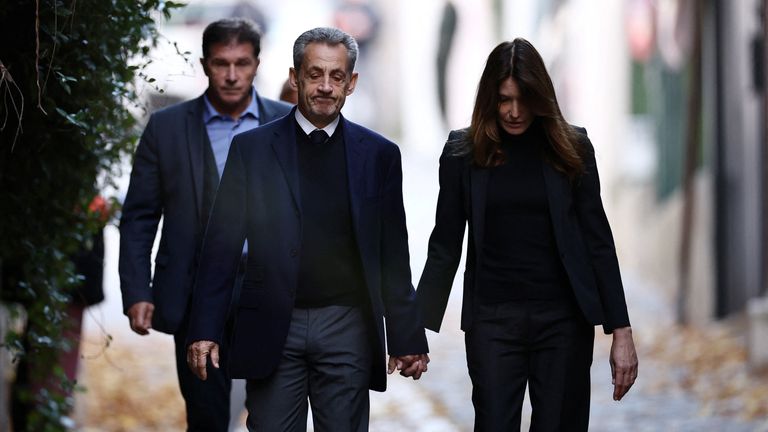
Nicolas Sarkozy leaves his house with his wife Carla Bruni-Sarkozy. Pic: Reuters
The former head of state, who led France from 2007 to 2012, was pictured holding hands with his wife, singer and model Carla Bruni-Sarkozy, just before stepping into the vehicle that transported him to the maximum-security facility. The highly publicized surrender caps a monumental political and legal downfall for one of the nation’s most recognizable figures, as the shocking reality of the Nicolas Sarkozy prison sentence takes hold.

AD: Capeesh Restaurant
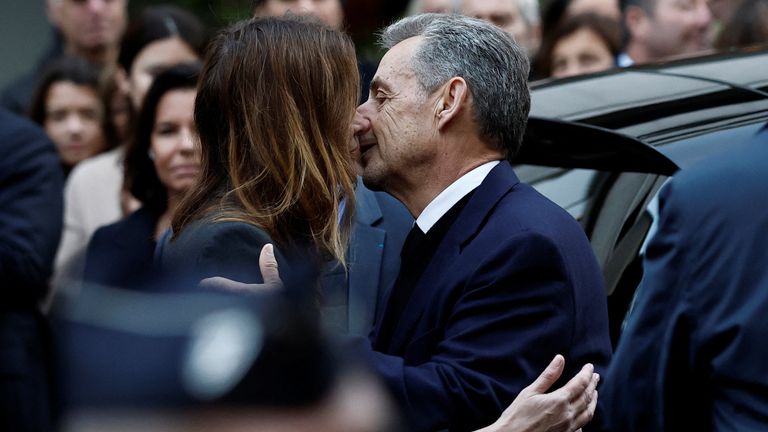
Former French President Nicolas Sarkozy kisses his wife Carla Brun-Sarkozy. Pic: Reuters
Hundreds of passionate supporters gathered outside the former president’s home, chanting “Nicolas, Nicolas” and singing the national anthem as he made his way to the car. His children and grandchildren, including Jean, Pierre, Louis, and Giulia, joined the small but emotional gathering, demonstrating fierce family loyalty amid the crushing political scandal.
As he prepared to begin his prison term, Sarkozy posted a defiant message on social media, repeating his claims that he remains an “innocent man” and expressing a profound “deep sorrow for France.” The 70-year-old’s surrender marks the culmination of the decade-long scandal that resulted in the definitive Nicolas Sarkozy prison sentence, leaving the French political landscape irrevocably altered.
The legal requirement for Sarkozy to submit to imprisonment places him in a unique and unwelcome position in French history. He has now become the first former French leader to be incarcerated since Marshal Philippe Petain, who was jailed after World War II for collaborating with the Nazis.

AD: Oysterian Sea Food Restaurant And Bar
This comparison, stark and deeply resonant, underscores the monumental historical implications of the Nicolas Sarkozy prison sentence, transcending simple political rivalry to touch the nation’s deepest institutional values. Even without the historical parallel, the incarceration of a former president sends a powerful signal about the equality of justice under the law in the Fifth Republic.
The legal ruling that culminated in the five-year sentence affirmed his conviction last month for criminal conspiracy. Specifically, the charges leading to the Nicolas Sarkozy prison sentence involved the illegal financing of his 2007 presidential election campaign. Evidence presented during the trial suggested the campaign illegally benefited from funds allegedly channeled from the late Libyan dictator Muammar Gaddafi. This allegation of a foreign regime attempting to influence a democratic election has always added an element of geopolitical intrigue to the underlying corruption case.
His long legal battle ended with the definitive ruling that affirmed the Nicolas Sarkozy prison sentence, although his legal team maintains its innocence and continues to pursue all available avenues for appeal, arguing the process has been tainted by political animosity. The political class remains sharply divided over the harshness of the Nicolas Sarkozy prison sentence, with supporters decrying it as an act of vengeance, while critics argue it confirms that no one, regardless of former office, stands above the law.
Upon his arrival at La Santé prison, Sarkozy’s lawyers confirmed he will be held in solitary confinement. This strict measure is mandatory for security reasons, ensuring the former president is kept entirely separate from all other prisoners. His high-profile status and the sensitive nature of the state secrets he holds necessitated the tightest possible security protocols, ensuring his safety while incarcerated.
This stunning turn of events, culminating in the Nicolas Sarkozy prison sentence, profoundly affects the dignity and political standing of a former leader, a reality few would have predicted during his peak years of power. One Parisian resident, Michelle Perie, 67, came out to support him, expressing feelings of “anger and injustice,” and remarking that “he’s not like any other defendants.”
Sarkozy’s own words, given just before his surrender, painted the judicial outcome as a form of personal vendetta, taking “hatred to an unprecedented level.” He expressed certainty that “The truth will triumph. But the price to pay will have been crushing.” The former president also revealed a revealing detail to Le Figaro newspaper, stating he would take three books with him, notably Alexandre Dumas’ The Count of Monte Cristo. This literary choice is poignant; the novel’s hero is unjustly imprisoned before escaping an island prison to seek revenge, suggesting Sarkozy views his current predicament through a lens of heroic, if tragic, defiance.
The specific conditions surrounding the Nicolas Sarkozy prison sentence—solitary isolation and the constant presence of security—contrast sharply with the luxurious life he led for decades. The question of his personal security, even in solitary, remains a serious and continuing challenge for prison authorities, demanding a level of operational commitment rarely seen.
The dramatic beginning of the Nicolas Sarkozy prison sentence has forced France to confront the limits of presidential immunity and the definition of political corruption in the twenty-first century. As the former president remains confined, the legal battles surrounding his convictions will certainly continue, ensuring his presence will dominate the national political discourse for the foreseeable future, even from behind the high walls of La Santé.

AD: Heritage And Restaurant Lounge Bar


