

By Tony O’Reilly-
Former French President Nicolas Sarkozy has been freed from prison, receiving conditional bail while he pursues his official appeal against a historic conviction. The 70-year-old statesman, who led France from 2007 until 2012, was seen leaving La Santé prison in Paris earlier today.
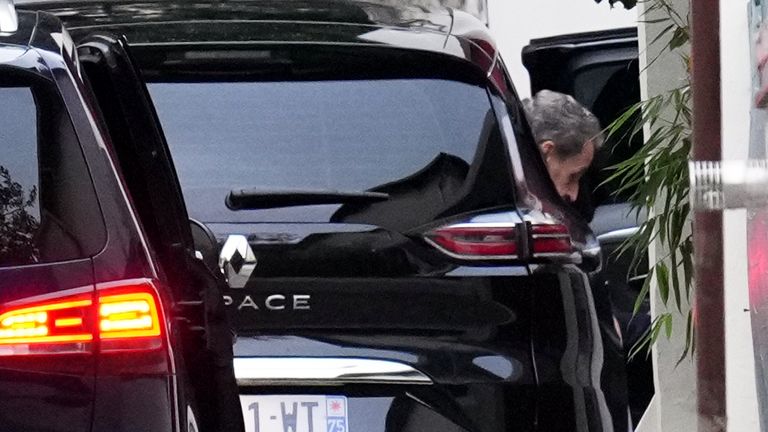
Nicolas Sarkozy leaves his car as he arrives at his Paris home after being released from prison. Pic: AP
A black car with heavily tinted windows transported him directly toward his private residence located in the western area of the city. His release marks a temporary, but significant, victory for the politician, who had been incarcerated since October after his conviction for conspiring to illegally raise funds for his presidential campaign from the Libyan regime.

AD: Capeesh Restaurant
Mr. Sarkozy had presented an emotional plea to the court earlier on Monday, requesting immediate release while his legal team prepared the intricate framework for his appeal. The former President addressed the court via videolink from the correctional facility, arguing forcefully that he has always strictly complied with all requirements set forth by the French justice system.
The experience of incarceration clearly took a toll on the veteran political figure. “I had never imagined I would experience prison at 70. This ordeal was imposed on me, and I lived through it. It’s hard, very hard,” he told the court, underscoring the severity of the situation. This dramatic, short period of imprisonment already places him in a unique and unprecedented position in modern French political history. The focus now shifts entirely to the impending legal battle that will define the fate of his Nicolas Sarkozy Conviction Appeal.
The court granted Mr. Sarkozy bail but imposed a set of strict conditions governing his newfound freedom. These limitations directly address the nature of his conviction for criminal conspiracy and are designed to prevent any possible interference with the ongoing legal processes. Specifically, the former President is now absolutely prohibited from leaving the territorial borders of France.

AD: Oysterian Sea Food Restaurant And Bar
The court has explicitly banned him from communicating with several key people involved in the case, including co-defendants and witnesses. This critical restriction highlights the serious nature of the criminal conspiracy charge, ensuring the integrity of the witnesses and the evidence remains protected ahead of the next court date.
Mr. Sarkozy was originally found guilty in September of criminal conspiracy over the alleged illegal financing of his successful 2007 presidential election campaign. That verdict centered on the serious accusation that his campaign illicitly accepted vast sums of money from the government of the late Libyan dictator Muammar Gaddafi.
The court imposed a five-year sentence, demanding a period of active incarceration immediately following the conviction. His brief time served now gives way to an arduous and lengthy appellate process. Legal analysts expect the appeals trial, a crucial stage in the Nicolas Sarkozy Conviction Appeal timeline, to commence sometime next spring. This will become one of the most closely watched political trials in recent European history, capturing global attention due to the defendant’s prominent past role.
The jailing of Nicolas Sarkozy represented a truly singular and dark moment in French democracy. He immediately became the first former French leader to be sent to prison since the post-World War Two incarceration of Marshal Philippe Pétain, a notorious Nazi collaborator. This comparison alone emphasizes the sheer political and historical gravity of the conviction he currently challenges through his Nicolas Sarkozy Conviction Appeal.
The allegations themselves date back over a decade and trace a trail of corruption stretching across international borders. Prosecutors argued that the money, allegedly delivered in suitcases, provided an illegal and covert funding stream that helped propel Sarkozy to the presidency.
Throughout the entire investigation and trial process, Mr. Sarkozy has consistently and vehemently denied all allegations of wrongdoing. He has loudly and repeatedly insisted that the entire case against him is fundamentally politically motivated, a claim frequently made by high-profile defendants. This position forms the bedrock of his current defense strategy on appeal.
His legal team must now convincingly argue that significant errors were committed either in the trial process or in the interpretation of the law that led to the original guilty verdict. Navigating this appeal while adhering to the severe bail conditions will prove exceptionally demanding for the former head of state. The political implications of the final ruling are enormous, permanently influencing how future generations view French political accountability.
The brief period of Mr. Sarkozy’s imprisonment was fraught with unique security concerns. Reports quickly surfaced that the former president had become the target of credible death threats less than a day after he began serving his five-year sentence for criminal conspiracy. Given his status as a former head of state, authorities implemented extraordinary security protocols to ensure his safety within the prison environment. These measures included assigning two permanent police officers to act as personal bodyguards.
These officers were strategically stationed in nearby cells throughout his time in prison, providing constant, close-proximity protection to ensure he came to no harm from other inmates or external threats. The necessity for such extreme precautions clearly demonstrated the immense security challenge associated with jailing a figure of his prominence.
As the former president prepares his full arguments for the Nicolas Sarkozy Conviction Appeal, his lawyers will meticulously dissect the original judgment. The appeal process offers him a crucial opportunity to challenge the complex evidence presented by the prosecution regarding the illicit funding allegations.
His successful 2007 campaign remains shadowed by these serious accusations that the funds originated from the Gaddafi regime, highlighting systemic vulnerabilities in French political financing laws.
The focus on this case extends beyond just Sarkozy; it asks fundamental questions about the accountability of top government officials worldwide. The outcome will resonate across the European legal landscape, setting a precedent for prosecuting high-ranking officials. Citizens around the world, particularly those concerned with political ethics, will closely watch the progression of the appeal. The legal fight continues, representing a defining moment for the French justice system.
The trial and conviction of a former French President carry significant international ramifications, moving beyond mere domestic political intrigue. France, a founding member of the European Union and a permanent member of the United Nations Security Council, holds a strong symbolic position on the world stage. Therefore, the criminal conviction of its former leader sends a powerful message about the robustness of its judicial institutions and its commitment to the rule of law. It demonstrates that, in principle, even the most powerful individuals in the nation are not above the law.
The case involving Libyan funds also touches upon complex international relations and the ethics of diplomatic financing. The allegations highlight the murky intersection between geopolitical power, foreign dictatorships, and democratic elections in Western Europe. As Sarkozy prepares for the next stage of the Nicolas Sarkozy Conviction Appeal, the evidence and testimony reviewed will invariably expose sensitive details about the clandestine dealings that underpin high-level diplomacy.
This judicial saga serves as a global example of the challenges countries face in policing international corruption and the illicit transfer of wealth for political gain. The world watches to see if the French judicial system can fully withstand the immense political pressure associated with prosecuting a former head of state. The eventual ruling will serve as a crucial test case for democratic accountability on a global scale, solidifying the legal boundaries that govern political conduct at the highest level.

AD: Heritage And Restaurant Lounge Bar


