

By Isabelle Wilson-
Japan’s parliament formally elected Sanae Takaichi as the country’s first ever female Prime Minister this Tuesday, concluding a significant chapter in the nation’s political history. She secured 237 votes within the 465-seat lower chamber, confidently establishing her majority among the representatives.
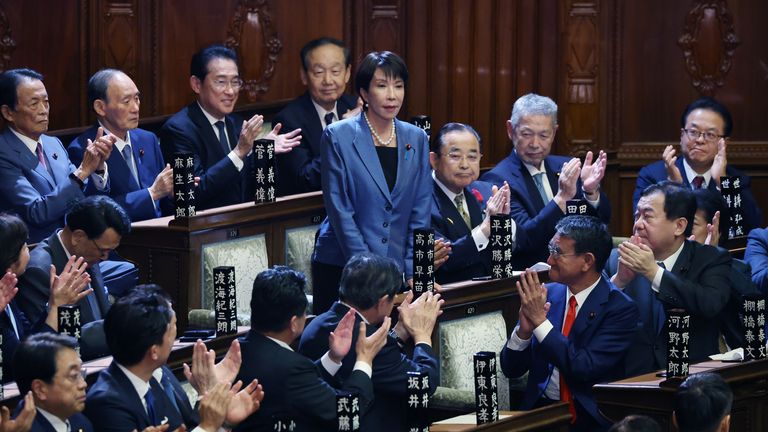
The new prime minister stands and bows after the vote. Pic: AP
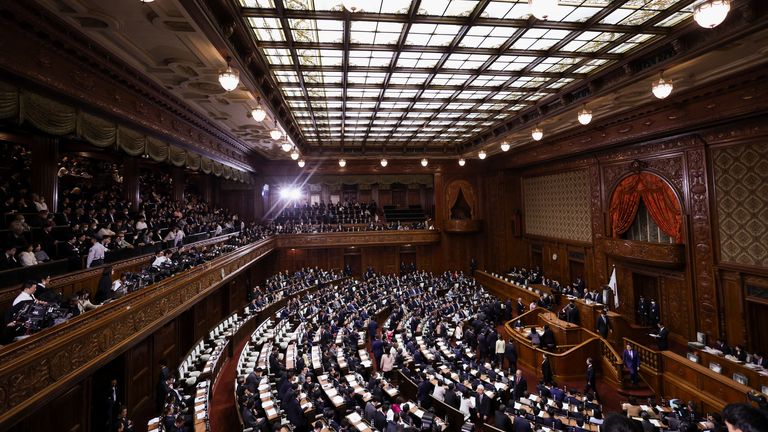
Japanese lawmakers electing the new PM at the Lower House of Parliament in Tokyo. Pic: Reuters
The less powerful upper house is also expected to confirm her election later today, paving the way for her official swearing-in ceremony. Takaichi, a staunch conservative politician, takes the leadership helm at a moment of significant national anxiety, marking a decisive shift to the political right. This historic moment of electing Japan’s First Female PM has been tempered by the complex, last-minute political maneuvers required to secure her power base.

AD: Capeesh Restaurant
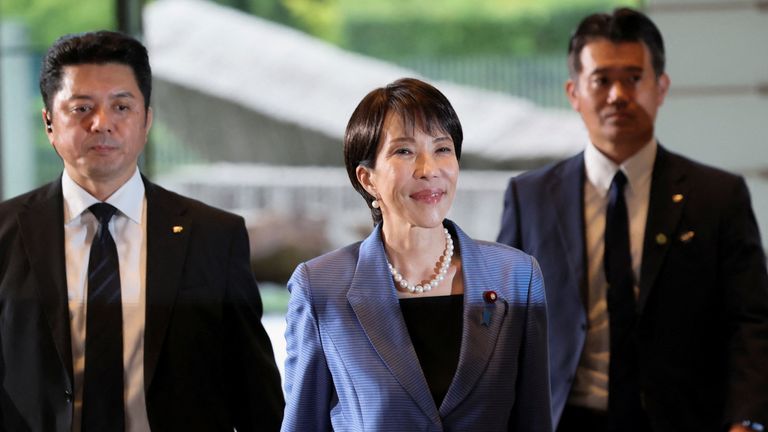
Ms Takaichi arrives at the prime minister’s official residence the Japanese capital. Pic: Reuters
Her victory follows the resignation of the incumbent Prime Minister, Shigeru Ishiba, who also belongs to the powerful Liberal Democratic Party (LDP). Ishiba announced his departure last month, setting the stage for Takaichi’s rise through the LDP leadership structure. This political ascent required immediate and urgent coalition building. Takaichi’s LDP reached a critical deal yesterday with the right-wing Japan Innovation Party, formalizing an alliance that secured the necessary votes.
This new partnership became essential after the LDP lost its long-term coalition partner, the Buddhist-backed Komeito party, which typically takes a more centrist political stance. Takaichi’s success in being elected as Japan’s First Female PM now immediately puts her untested alliance to the rigour of parliamentary governance. The challenge of maintaining political stability will define the initial phase of her time as Japan’s First Female PM, forcing her to consolidate power quickly.
Takaichi enters office not only as Japan’s First Female PM but also as an assertive conservative, openly citing former British Prime Minister Margaret Thatcher as a primary source of political inspiration. This ideological foundation signals a significant conservative tack for Japan’s leadership, particularly as the nation confronts profound domestic and economic challenges.

AD: Oysterian Sea Food Restaurant And Bar
Japanese citizens currently grapple with rapidly rising prices, a persistent issue that has fueled public anger and increased support for opposition groups, including the far-right Sanseito party. Takaichi’s right-leaning policies will face immediate scrutiny on how effectively they can tackle the cost of living crisis gripping the nation.
Her political focus extends beyond purely economic concerns. Takaichi holds deeply conservative views on two major societal issues: immigration and national identity. With Japan facing acute labour shortages due to its shrinking and aging population, the country urgently needs viable solutions regarding foreign workers.
Takaichi’s stringent approach to immigration has generated considerable internal debate, contrasting sharply with the economic necessity for foreign labour. Her policy positions on these matters are poised to become central battlegrounds during her initial months in power.
Takaichi maintains controversial views on gender equality and social diversity, which paradoxically clash with the historic nature of her own election as Japan’s First Female PM. This ideological rigidity suggests potential conflict with modernizing elements both within her party and across the wider public sphere.
Despite the celebratory nature of her election as Japan’s First Female PM, Takaichi’s government faces immediate and severe political instability due to its fragile alliance. Her new LDP-Japan Innovation Party coalition remains short of a majority in both houses of parliament.
This fundamental lack of a solid majority means Takaichi must now consistently persuade other opposition groups to support her legislative agenda if she intends to pass any significant bills. Governing under these conditions often requires continuous negotiation, concessions, and compromises, making her administration inherently unstable and vulnerable to internal dissent or external pressure.
Takaichi herself acknowledged this vulnerability during the coalition signing ceremony on Monday. She stressed the importance of a unified approach, declaring, “Political stability is essential right now.” The Prime Minister emphasized that without stability, her government cannot successfully advance crucial policies aimed at building a strong economy or implementing effective diplomacy.
The sudden departure of the centrist Komeito party leaves the LDP heavily reliant on the ideologically aligned but politically less established Japan Innovation Party. This reliance could empower the smaller party to extract major concessions, further challenging Takaichi’s ability to govern decisively and effectively. The need to woo opposition groups constantly will define her time as Japan’s First Female PM.
Takaichi’s ascendance as Japan’s First Female PM represents an undeniable, symbolic shattering of the glass ceiling within Japan’s deeply male-dominated political structure. This historic achievement, however, stands in stark contrast to her personal policy positions on social issues, many of which actively impede gender equality and diversity. She has historically been among the Japanese politicians who have consistently stonewalled measures aimed at advancing women’s rights and inclusion. This presents a complex paradox for a female leader of her stature.
The social policies Takaichi supports are remarkably conservative, defying expectations often associated with a pioneer like Japan’s First Female PM. Takaichi staunchly supports the imperial family’s male-only succession tradition, actively opposing any moves to allow female members of the family to ascend the Chrysanthemum Throne.
She stands against allowing separate surnames for married couples, a practice viewed by many younger Japanese as a crucial step toward modern gender parity. She also opposes legalizing same-sex marriage, a position that places her at odds with growing public opinion and international standards of inclusivity.
Takaichi’s election highlights a significant cultural schism: while she has broken the highest barrier of political power, her ideological stance suggests she will not use her position as Japan’s First Female PM to aggressively promote a broader agenda of social liberalization or diversity. Her government must balance the symbolic importance of her premiership with the practical reality of her socially conservative mandates.

AD: Heritage And Restaurant Lounge Bar


