
By Tony O’Reilly-
The Netherlands delivered a surprise result in its latest general election, dealing a significant Dutch Far-Right Setback to long-serving populist leader Geert Wilders.
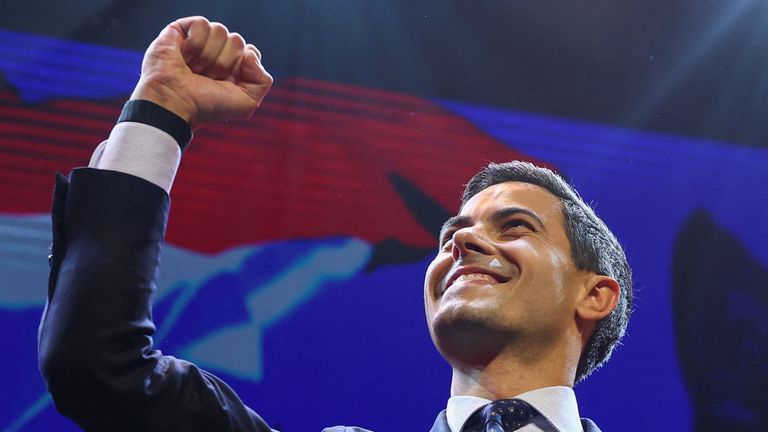
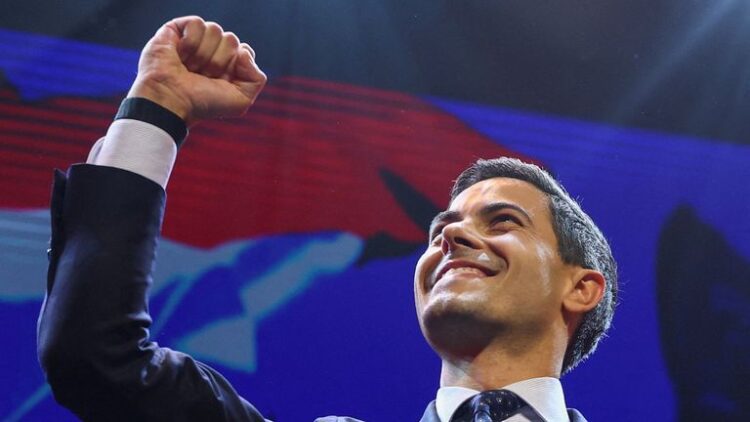
Democrats 66 (D66) party leader Rob Jetten celebrates the exit poll. Pic: Reuters
Election exit polls project that the centrist D66 party, led by the dynamic 38-year-old Rob Jetten, has surged into the lead, claiming victory in an election Wilders himself had triggered by collapsing the previous government. Jetten is now on course to become the country’s youngest-ever prime minister and the Netherlands’ first openly gay head of government, signaling a decisive shift away from populist trends dominating continental politics.

AD: Capeesh Restaurant
With approximately half of all votes counted, Rob Jetten’s D66 party is projected to secure 27 seats in the country’s 150-seat lower house of parliament. This narrowly edges out Wilders’ Freedom Party (PVV), which Ipsos projected would finish second with 25 seats.
This outcome stands in stark contrast to the previous election just two years ago, when Geert Wilders led his party to a victory with 37 seats. Although Wilders won the popular vote then, his potential coalition partners ultimately refused to endorse him as prime minister due to his extreme anti-Islam and anti-EU stances. The current result represents a major Dutch Far-Right Setback, forcing the PVV leader to acknowledge the outcome, stating in the early hours of Thursday, “I regret the loss, but it’s not as if we were wiped off the map.” He subsequently offered congratulations to Mr. Jetten for his strong showing.
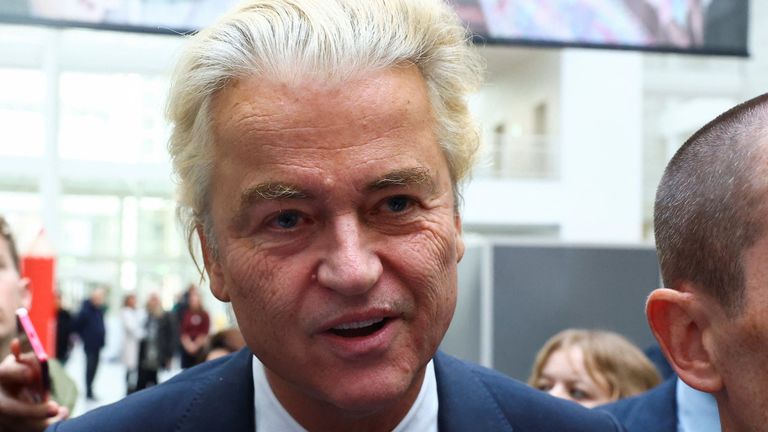
Geert Wilders is one of Europe’s most recognisable far right leaders. Pic: Reuters
Rob Jetten’s success is built upon a campaign focused on domestic stability and progressive values. He experienced a remarkable surge in support during the crucial final month leading up to polling day, capturing the attention of voters fatigued by political instability. His platform promised to resolve the country’s crippling housing shortage, massively invest in education, and adopt a measured, humane approach to immigration reform.

AD: Oysterian Sea Food Restaurant And Bar
Like the other mainstream parties participating in the election, Mr. Jetten steadfastly committed to continued military and financial support for Ukraine, reinforcing crucial ties with NATO, and actively defending the European Union. Celebrating his projected win, Mr. Jetten declared emphatically, “We’ve shown not only to the Netherlands, but also to the world that it is possible to beat populist and extreme right movements.” This stunning Dutch Far-Right Setback offers a counter-narrative to the populist advances seen recently in countries like France and Germany.
To understand the profound impact of this Dutch Far-Right Setback, one must consider the long and tumultuous political journey of Geert Wilders. Wilders, now one of Europe’s longest-serving and most recognizable populist leaders, began his career within the mainstream conservative liberal party, the VVD (People’s Party for Freedom and Democracy).
However, he split from the VVD in 2004, citing irreconcilable differences over the EU and Turkey’s potential membership. He went on to establish the Party for Freedom (PVV), building a movement centred almost entirely around an uncompromising anti-Islam stance, strong Euroscepticism, and fierce opposition to immigration.
The PVV’s policy proposals for this election cycle were characteristically hardline, including the proposal to deny all future asylum requests, forcibly sending all male Ukrainian refugees back to their homeland, and completely cancelling foreign aid obligations. The fundamental conflict over immigration policy was directly responsible for triggering this general election; Wilders ultimately brought down the government in June when his coalition partners refused to adopt his demanded, severely restrictive measures.
His political career has been marked by controversy, including multiple court cases surrounding his inflammatory public statements regarding minority groups. Despite previous electoral success, the PVV has never managed to secure enough cross-party support to form a governing coalition, leaving Wilders perpetually outside the corridors of power. This persistent inability to translate votes into governance contributed significantly to the perception of the latest Dutch Far-Right Setback.
Wilders has maintained a continuous presence in the Dutch parliament for decades, using his position as a prominent platform to challenge established norms and institutions, including the monarchy and the judiciary. His focus on cultural identity and national sovereignty resonated with a dedicated core of voters who felt ignored by the political establishment. However, his uncompromising approach ultimately proved toxic for coalition formation, forcing the political mainstream to unite against him.
The electorate’s decision to hand the centrist D66 the largest share of seats suggests a desire for political stability and a constructive, solutions-oriented government, prioritizing domestic issues like housing over Wilders’ more confrontational, identity-focused politics. For further context on Wilders’ previous political attempts, consult our analysis of the 2023 election results and the subsequent failure to form a cabinet.
The emergence of Rob Jetten as the presumptive Prime Minister marks a celebration for Dutch centrists, yet the road to governance remains long and complex. The political system mandates that Mr. Jetten must now embark upon weeks or potentially months of intensive negotiation with other party leaders to form a stable majority coalition of 76 seats.
Given the highly fragmented nature of the Dutch parliament—where no single party ever comes close to winning an outright majority—Jetten will require the support of at least four distinct political parties to secure the mandate to govern. This process requires significant political dexterity and compromise.
One possible coalition scenario involves a pact including Jetten’s D66, the conservative Christian Democrats (CDA), the centre-right VVD, and the unified Greens-Labour party (GroenLinks-PvdA). Such a broad-based alliance, spanning the political center-right to the progressive left, would necessitate major concessions from all sides but would achieve the needed parliamentary majority.
The victory secured by Jetten and the subsequent Dutch Far-Right Setback sends a powerful, timely message across Europe. At a moment when populist and hard-right movements have gained momentum in major nations like Germany, Italy, and Sweden, the Dutch vote offers a visible example that mainstream centrist parties can effectively mobilize a counter-movement by focusing on bread-and-butter issues like the housing crisis.
This election is a clear indication that while the support for far-right ideology remains substantial, it is not politically insurmountable when a unified and energetic centrist alternative presents itself. The Dutch electorate has effectively rejected the notion of political gridlock and has instead chosen a path toward constructive governance under a new generation of leadership. The outcome strengthens the position of pro-EU forces on the continent.

AD: Heritage And Restaurant Lounge Bar
