
By Aaron Miller-
European air travel chaos was narrowly avoided this week after French air traffic controllers formally called off a massive three-day strike scheduled for October 7 to 9.

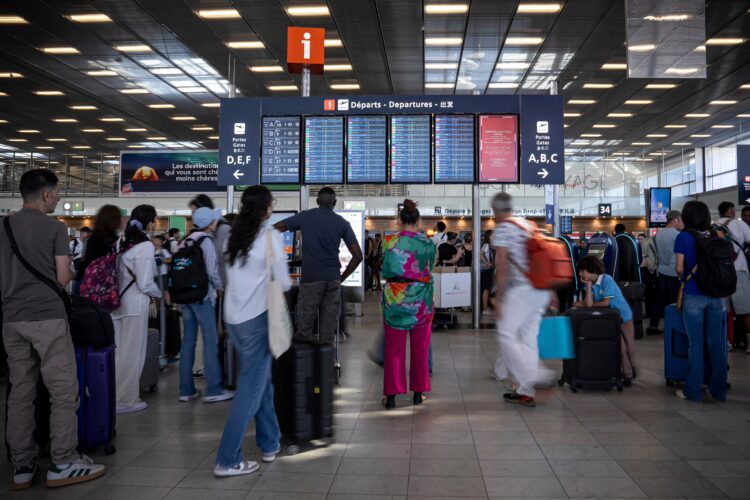
Passengers look a departures information board at Orly airport, near Paris, as French air traffic controllers launched a two-day strike to demand better working conditions, Friday, July 4, 2025. (AP Photo/Aurelien Morissard) (AP)
The Syndicat National des Contrôleurs Aériens (SNCTA), representing the majority of controllers, announced the suspension of the walkout following successful negotiations.

AD: Capeesh Restaurant
This major decision instantly brought widespread relief to travellers and airlines alike who were bracing for extensive cancellations and delays throughout Europe.
Considering the widespread impact across the continent, averting the disruption ensures millions of people can proceed with their autumn holiday and business plans without major interruptions.
Agreement Reached to Avert Major French ATC Strike
The SNCTA union confirmed on Saturday that it would halt the forthcoming industrial action, which was planned for Tuesday through Thursday. This pivotal decision follows a series of agreements reached with the Direction générale de l’aviation civile (DGAC), France’s Civil Aviation Authority, regarding their ongoing grievances.

AD: Oysterian Sea Food Restaurant And Bar
Importantly, the resolution also involved a significant political move: the French Prime Minister agreed to postpone a crucial debate on the national finance bill, a key concession satisfying one of the union’s core demands.
Negotiations focused heavily on improving pay structures and bettering working conditions for staff, issues the union has persistently highlighted as necessary for operational stability.
Consequently, the French ATC strike cancelled news confirmed that European airspace would remain fully open for transit next week.
Airlines had prepared themselves for serious financial and logistical consequences if the planned industrial action had gone ahead. Europe’s biggest airlines estimated that the widespread stoppages could have resulted in the cancellation of approximately 600 flights every single day.
This daily grounding would have inevitably impacted the travel arrangements of up to 100,000 passengers across the continent.
Notably, flights between the UK and popular Mediterranean destinations like Spain, Italy, and Greece would have suffered disproportionately due to their necessary routes traversing French airspace. Therefore, the immediate cancellation of the French ATC strike cancelled disruption provides a crucial boost to the aviation sector during a busy period.
The union has continually argued that air traffic control governance has been characterized by mistrust, punitive practices, and generally harsh managerial methods for several years.
Furthermore, they demanded that pay rises be implemented to keep pace with the ongoing inflation rate, highlighting staff shortages and outdated equipment as critical problems needing urgent solutions.
The SNCTA had initially postponed a similar strike planned for September, moving it to October, after the French government collapsed, leaving no clear ministerial counterpart for talks.
Clearly, the swift actions and agreements secured over the weekend to resolve these underlying issues proved enough to avert this latest threat.
Industry figures hope the political concessions and labour agreements mark a genuine turning point toward more stable working relations in the sector. Ensuring the smooth flow of air traffic is fundamentally important for European business activity and holiday makers alike.
The relief felt by the industry is significant because any extensive interruption, such as the now French ATC strike cancelled, always results in costly rerouting and rebooking expenses for carriers.
Passengers planning to travel can now feel reassured their booked flights will operate as scheduled, minimizing pre-travel stress.

AD: Heritage And Restaurant Lounge Bar


