

The first digital veteran ID cards are available today, marking the inaugural step in the government’s ambitious programme to digitise nearly every form of national identification. This initiative aims to make passports, driving licences, national insurance cards, and many other government documents accessible on citizens’ smartphones by the end of 2027. The launch event, appropriately held at the historically significant Tower of London, featured Beefeaters demonstrating their new digital cards and humorously discussing using them for discounted food.
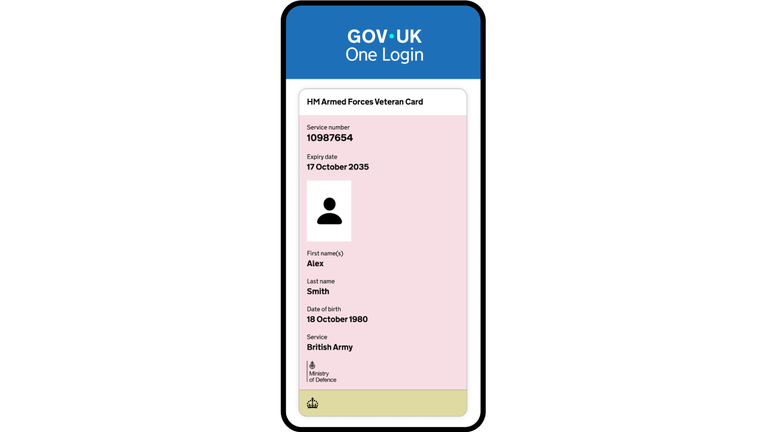
A mock-up of the digital Veterans ID card. Pic: Government
This programme is separate from the controversial “mandatory” digital right-to-work checks announced recently, though it operates under the same overarching plan. Minister Ian Murray MP, who is overseeing the transition, enthusiastically promoted the convenience and efficiency benefits of having personal documents readily available on a phone. “We all use our smartphones for everyday life,” he explained, noting the goal is “making the relationship with the citizen easier and making their access to government services easier.” Mr. Murray looks forward to ending the need to “continuously fill out my name, my address, my telephone number,” suggesting users will soon simply scan their phones for verification. This comprehensive UK Digital ID Rollout signifies a major modernization of state interaction.
The ultimate objective is to create a secure, wallet-style app, similar to those used by Apple or Google for payment cards, capable of storing all government documents. The Government Digital Service, located within the Department for Science, Innovation and Technology, is developing the solution using secure, “federated” technology. Any mention of digitisation raises questions about data security, but the government insists its federated solution is safe.

AD: Capeesh Restaurant
Using the veteran’s ID as an example, the original data—who is a veteran, where they served, and other relevant information—remains exclusively with the Ministry of Defence. Once the initial sign-in and verification process is complete, the digital ID can be used to instantly prove veteran status. This swift verification grants them easy access to benefits, including housing, mental health support, shopping discounts, and museum entry.
For driving licences, data stays with the DVLA; passports remain with the Passport Office; and national insurance details stay with the Department for Work and Pensions. Those who developed the software say this approach intentionally prevents the creation of a single, highly vulnerable vault of everyone’s personal data. Furthermore, accessing the digital ID on the phone requires the device’s security, such as a face scan, fingerprint, or PIN code.
The government is even exploring using contactless technology with the digital wallet to tap and verify details like age at locations such as an off-licence. The core principle of the UK Digital ID Rollout is empowering the citizen.

AD: Oysterian Sea Food Restaurant And Bar
The government hopes this digital shift will expedite tedious paper-based interactions, including house buying, passport control, and the right to work checks. However, the mandatory aspect of the policy immediately becomes a contentious issue. Announcing the compulsory use of digital ID for the right-to-work checks last month, the Prime Minister made it explicitly clear this was intended as a measure to crack down on immigration. Straightaway, significant concerns were raised regarding the necessity of a compulsory digital ID, who would enforce the checks, and the potential for scope creep.
Polling showed considerable opposition to a mandatory digital ID, even among traditional Conservative and Reform voters, the very demographic the immigration policy debate targets. High-profile Tory MP David Davis, a staunch opponent of government overreach, sharply criticized the plan. “Digital ID gives the state the unchecked power to digitally strip citizens naked,” he argued. He warned that any government scheme would be highly susceptible to attack from foreign states, ransomware criminals, and other hackers.
If the digitisation of identification is so beneficial, critics ask, why force people to use it instead of relying on its clear advantages to encourage adoption? Mr. Murray defended the mandatory right-to-work ID, saying it is already mandatory “to be able to prove that you can work in the UK.” He insisted the digital process will simplify compliance for employees and aid the Home Office in identifying employers not conducting checks—ending the need for endless photocopying of passports and scanning of old phone bills. The government asserts this right-to-work application is the only mandatory use case, even suggesting the digital ID could be deleted once employment is confirmed.
However, the opposing view is that once the essential digital infrastructure is built, this or a future government could easily change tack and expand its compulsory usage. Mr. Murray concluded by reiterating the core purpose: “The principle here is to make the state and the citizen’s relationship much easier – and the power of the data in the hands of the citizen.”

AD: Heritage And Restaurant Lounge Bar


