
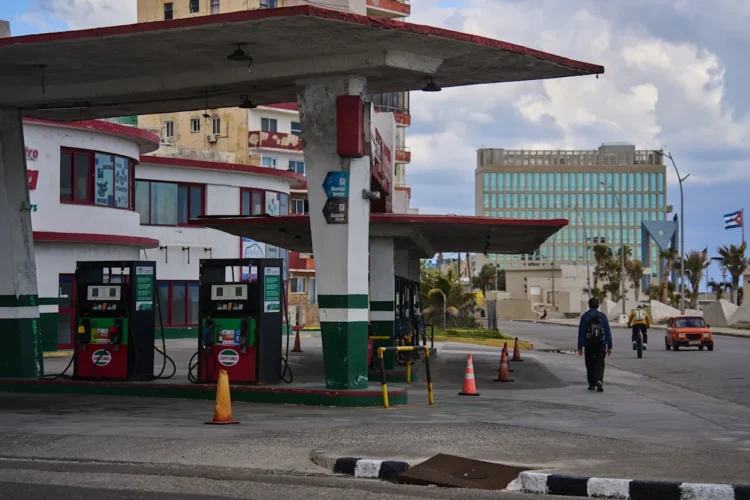
U.S. officials said the sanctions freeze any CUPET assets under American jurisdiction and bar U.S. individuals and companies from conducting transactions with the firm. The move is being justified by Washington as part of efforts to hold accountable what it describes as a network of state-linked entities that sustain Cuba’s political leadership through control of critical energy infrastructure.
The assertion that the announcement comes amid heightened volatility in U.S.-Cuba relations and an expanded use of targeted financial restrictions and secondary sanctions is supported by recent reports, which notes that Washington has intensified sanctions on Cuban officials and state-linked entities as part of a broader effort to restrict access to financial networks and pressure sectors tied to the government, particularly energy and finance.
Similarly reports that U.S. policy toward Cuba has increasingly relied on financial pressure tools and sanctions targeting oil-linked entities and foreign partners, reflecting a broader tightening of economic restrictions.

AD: Capeesh Restaurant
CUPET’s central role in Cuba’s energy system is well documented, with the state-owned company responsible for oil exploration, production, refining, and distribution across the island, making it a key pillar of national energy infrastructure.
Other international reporting have highlighted that Cuba is experiencing severe fuel shortages and rolling blackouts driven by reduced imports, infrastructure strain, and ongoing economic pressure, underscoring the energy sector’s fragility.
The sanctions also follow a string of earlier measures against Cuban officials and institutions, including actions targeting President Miguel Díaz-Canel and entities linked to Cuba’s security and economic apparatus. U.S. officials argue these steps are designed to pressure what they describe as an authoritarian system while limiting access to foreign currency and energy resources that help sustain it.

AD: Oysterian Sea Food Restaurant And Bar
Cuban authorities have not yet issued an official response to the latest sanctions, but they have consistently denounced similar measures in the past as part of what they call an economic blockade that disproportionately harms civilians. It has documented Cuba’s ongoing energy crisis, which has left hospitals, households, and public infrastructure struggling with prolonged outages.
The latest sanctions come as Washington also increases pressure on foreign partners that supply fuel to Cuba, raising concerns that the U.S. strategy is widening beyond bilateral restrictions into a broader extraterritorial enforcement regime. Analysts say this reflects a shift toward more aggressive economic containment measures not seen since the peak of Cold War tensions.
Energy sector becomes focal point of U.S. pressure strategy
According to U.S. officials cited by AP, CUPET is viewed not only as an energy operator but also as a financial pillar of the Cuban state, with alleged links to military and intelligence structures. The sanctions therefore aim to restrict both revenue streams and operational capacity, potentially limiting Cuba’s already constrained ability to import and refine fuel.
The claim that the timing is significant given Cuba’s worsening energy crisis is strongly supported by reporting from Reuters and The Guardian, which describe repeated nationwide blackouts, fuel shortages, and severe strain on the island’s power grid driven by reduced oil imports and aging infrastructure, with some outages lasting up to 20–22 hours a day in parts of Havana.
The United Nations Human Rights Office and independent U.N. experts have also warned that Cuba’s energy shortages are contributing to broader humanitarian impacts, including disruptions to healthcare, water systems, food distribution, and transportation, particularly as fuel scarcity limits essential public services.
In addition, humanitarian monitoring groups and international relief assessments have noted that Cuba’s dependence on imported fuel combined with sanctions-related trade constraints and infrastructure deterioration has intensified the risk of prolonged blackouts and shortages, especially during peak seasonal demand when electricity usage spikes and grid stability weakens further.
Washington, however, maintains that its measures are “targeted” and designed to avoid broad harm to the population, focusing instead on institutions tied to state power. U.S. Secretary of State Marco Rubio, speaking on background in AP reporting, has previously argued that Cuba’s energy sector is being used to reinforce political control and suppress dissent.
The Cuban government has long rejected such claims, insisting that sanctions are the primary driver of economic hardship and that restrictions on fuel imports have crippled its ability to stabilise the grid. Officials in Havana have also accused Washington of intensifying an economic blockade at a time when the country is already struggling to recover from years of recession and supply chain disruptions.
Regional observers note that the dispute over energy has become the central axis of U.S.-Cuba tensions, overshadowing earlier diplomatic efforts to normalise relations. The U.S. has also warned countries supplying oil to Cuba that they may face secondary sanctions, a step that has further complicated Cuba’s ability to secure reliable energy imports.
Both sides harden their positions, the latest sanctions on CUPET suggest little immediate prospect of de-escalation. Instead, they signal a continued reliance on economic pressure as Washington’s primary tool of engagement with Havana an approach that critics argue risks further entrenching the humanitarian crisis on the island while failing to achieve political change.
In Washington, officials maintain that targeted sanctions remain one of the few viable mechanisms to constrain what they describe as a politically entrenched and economically opaque system, arguing that restrictions on state-linked enterprises are intended to limit revenue streams that sustain the Cuban government’s security and administrative apparatus.
Supporters of the policy say such measures are calibrated to avoid broad harm to civilians, focusing instead on entities deemed central to state control, particularly in strategic sectors such as energy, finance, and logistics.
In Havana, however, the response has remained consistent: sanctions are framed as the primary driver of economic instability, compounding structural weaknesses and external shocks. Cuban officials argue that restrictions on fuel imports, financial transactions, and access to international markets have significantly constrained the country’s ability to modernise its energy infrastructure or secure stable supplies of oil.
This, they contend, has left the island vulnerable to prolonged blackouts, transport disruptions, and shortages of essential goods, particularly during peak demand periods when electricity usage strains an already fragile grid.
International observers remain divided over the long-term impact of the policy. Some analysts suggest that sustained economic pressure could eventually force policy concessions, while others argue that decades of sanctions have instead reinforced political entrenchment and deepened economic hardship without producing meaningful political reform.
Humanitarian organisations and UN-linked experts have repeatedly warned that energy shortages in Cuba carry cascading effects across society, disrupting healthcare services, food distribution networks, and water pumping systems.

AD: Heritage And Restaurant Lounge Bar