
By Ben Kerrigan-
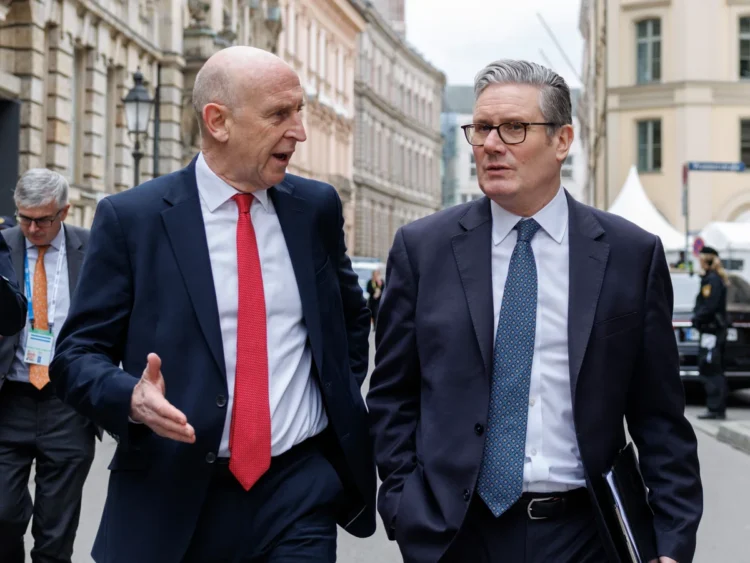
Prime Minister Keir Starmer is under renewed pressure to defend his government’s defence strategy after a senior minister resigned in protest over funding, intensifying a political row that has exposed divisions within the Labour leadership and raised questions about the UK’s long-term security planning.
The resignation comes at a sensitive moment for Downing Street, with the government preparing to publish its long-awaited Defence Investment Plan amid warnings from military chiefs that Britain faces growing threats from Russia, cyber warfare, and global instability.

AD: Capeesh Restaurant
Starmer has insisted the plan “will keep us safe,” arguing that it represents a serious and sustained commitment to national security, even as critics warn that the proposed funding levels fall short of what is needed to meet NATO expectations and modern military demands.
The departure of the minister, who quit over concerns that defence spending is insufficient, has sharpened scrutiny of the government’s priorities at a time when public finances remain tight and competing domestic pressures continue to shape Cabinet decisions.
The resignation has quickly escalated into a broader political controversy, with opposition figures accusing the government of weakening the UK’s defence posture and failing to deliver on earlier commitments to increase military investment.

AD: Oysterian Sea Food Restaurant And Bar
The dispute centres on the scale and timing of planned spending increases, with leaked details of the Defence Investment Plan suggesting defence spending would rise more slowly than some ministers and military leaders had expected, amid internal disagreement over how quickly the UK should boost its military budget.
Critics argue this could leave the UK lagging behind allies who are rapidly expanding defence budgets in response to heightened geopolitical tensions, including rising instability in Europe and concerns over Russia’s military activity.
The resignation of Defence Secretary John Healey has further intensified scrutiny of the government’s approach, with reporting highlighting tensions between the Ministry of Defence and the Treasury over whether current funding plans are sufficient to meet NATO expectations and long-term security needs.
Within government, the row reflects deeper tensions between the Treasury’s fiscal constraints and demands from the Ministry of Defence for faster and larger investment. Reports indicate that the plan’s projected spending trajectory rising to around 2.68% of GDP by 2030 has become a point of contention, with some officials warning it falls short of the level required to meet emerging security challenges. Military leaders have also cautioned that delays and uncertainty over funding risk undermining readiness at a time when global instability is increasing pressure on Western defence systems.
Starmer, however, has defended his approach, describing the strategy as a “realistic” balance between defence needs and economic constraints. Government sources have emphasised that the plan includes significant long-term investment in equipment, personnel, and modernisation, arguing that it represents the most sustained military funding effort since the Cold War era.
The political fallout has been compounded by concerns over Cabinet stability, with the resignation adding to a series of recent departures that have fuelled speculation about internal tensions within the government. Analysts say the episode highlights the difficulty of maintaining unity on defence policy at a time when fiscal pressures are forcing difficult trade-offs across public spending.
Military officials have repeatedly stressed that the UK must accelerate investment to modernise its armed forces, particularly in areas such as cyber defence, air capability, and ammunition stockpiles. Delays to the Defence Investment Plan have already been flagged by senior commanders as a risk to readiness, with concerns that procurement timelines are not keeping pace with evolving threats.
The government faces significant economic constraints. Public spending pressures, including health, welfare, and infrastructure commitments, have limited fiscal flexibility, forcing ministers to consider reallocations and departmental cuts to fund defence priorities.
Economists warn that increasing military spending without raising taxes or borrowing further could require politically difficult trade-offs, adding to tensions within the Cabinet.
Despite the controversy, Downing Street insists that the defence strategy remains intact and that internal disagreements will not derail the broader objective of strengthening national security. Officials argue that the plan is designed to ensure long-term resilience rather than respond to short-term political pressures, and that Britain remains committed to meeting its NATO obligations.
However, the minister’s resignation has ensured that scrutiny of those commitments will continue. With a NATO summit approaching and the Defence Investment Plan still under review, Starmer faces mounting pressure to demonstrate not only that the UK can afford its defence ambitions, but that it can deliver them in practice.
The Prime Minister is seeking to project stability and confidence. Yet the political and strategic questions raised by the resignation are unlikely to fade quickly, ensuring that defence spending and the credibility of the government’s security strategy will remain at the centre of the political agenda in the weeks ahead.
Behind the scenes, officials are now working to contain the fallout and reassure both allies and domestic audiences that the UK’s defence posture remains coherent despite internal disagreement. The timing is particularly sensitive, with Britain expected to reaffirm its commitments to NATO partners amid growing pressure across Europe to increase military readiness in response to global instability. Any perception of division within government risks complicating those diplomatic efforts.
Opposition parties are also likely to keep up pressure, framing the resignation as evidence of wider uncertainty at the heart of government policy. In Parliament, scrutiny is expected to intensify as MPs seek clarity on whether planned spending levels are sufficient to meet long-term defence needs.
Defence analysts warn that uncertainty itself can carry strategic consequences, particularly when procurement decisions and long-term military planning rely on stable funding assumptions. Questions about capability gaps, readiness, and recruitment may therefore continue to shape debate well beyond the immediate political row.
Downing Street is attempting to move the conversation back toward the substance of its defence plan. But with tensions exposed and key figures departing over the issue, the argument over how Britain should fund and prioritise its national security is unlikely to disappear any time soon.

AD: Heritage And Restaurant Lounge Bar