
By Aaron Miller-
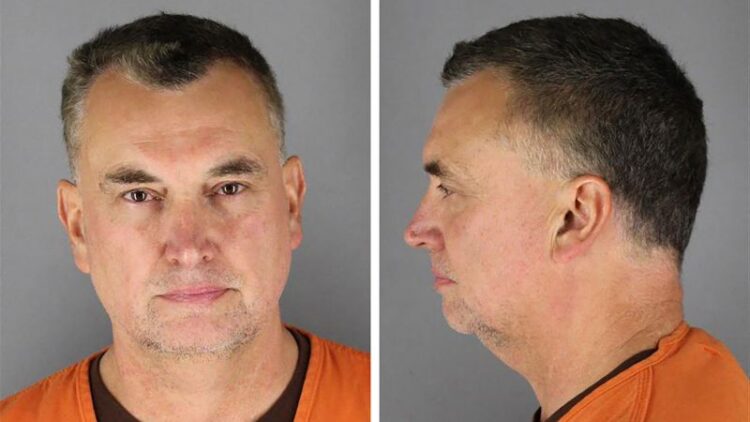
A Minnesota man has pleaded guilty in federal court to the killings of a leading state Democratic lawmaker and her husband, as well as the attempted murders of another state senator and his wife, in an attack prosecutors have described as politically motivated and carried out while the suspect was disguised as a police officer.
The defendant, identified as Vance Boelter, admitted to the June 14, 2025 shootings of Minnesota House Speaker Emerita Melissa Hortman and her husband Mark Hortman, along with the shooting of State Senator John Hoffman and his wife Yvette at their home in Champlin, Minnesota. The attack also included additional attempted violence, according to federal court records and prosecutors.

AD: Capeesh Restaurant
Court documents and federal prosecutors say Boelter arrived at victims’ homes posing as a police officer, using a fake squad vehicle and tactical gear to gain access before opening fire. Authorities also said he carried a list of dozens of Minnesota political figures, intensifying concerns that the attacks were premeditated and politically targeted.
The Hortmans were killed at their home, while the Hoffmans survived but sustained serious injuries. The attack triggered one of the largest manhunts in Minnesota history before Boelter was arrested days later near Green Isle.
During court proceedings, Boelter changed his plea to guilty after federal prosecutors confirmed they would not seek the death penalty, instead pursuing life sentences. The decision was tied to legal negotiations under federal sentencing guidelines and Minnesota’s broader legal framework, which does not permit capital punishment at the state level.

AD: Oysterian Sea Food Restaurant And Bar
The case has shaken Minnesota’s political establishment, a state often described as having a tradition of relatively moderate and civil political discourse. Officials from both parties condemned the killings as a direct attack on democratic institutions and public service.
The guilty plea has reignited a broader national debate about rising political violence and the safety of elected officials in the United States. Analysts say the Minnesota case reflects an increasingly volatile political climate in which public officials are more frequently targeted based on ideological or partisan identity.
Governor Tim Walz previously described the killings as a “politically motivated assassination,” a characterisation echoed by federal prosecutors who outlined the suspect’s planning and targeting of elected Democrats.
The fact that the attacker allegedly impersonated law enforcement has also raised serious questions about public trust and the vulnerability of citizens to deception. Investigators noted that the suspect used police-style equipment and identification tactics to gain entry into victims’ homes before carrying out the shootings.
In the aftermath of the attack, Minnesota lawmakers and security officials have reportedly reviewed protective measures for elected representatives, particularly those in leadership positions or those with high public visibility. The shootings have also prompted renewed discussion in Congress about federal support for state-level protection programs for public officials.
The plea marks a partial moment of legal closure but not emotional resolution. Members of the Hortman and Hoffman families attended court proceedings as details of the attack were read into the record, describing a carefully planned assault that left lasting trauma even for survivors.
While Boelter awaits formal sentencing, prosecutors have indicated they will seek multiple life sentences plus additional years for firearms and stalking-related charges. The state-level case remains ongoing, meaning further legal proceedings are still expected.
The case is likely to remain a reference point in debates over political extremism, security failures, and the growing risks faced by elected officials in the United States. What unfolded in Minnesota has already been described by law enforcement officials and political leaders as part of a broader and increasingly visible pattern of politically motivated violence, where public figures are not only debated in the abstract but targeted in their homes and communities.
Security experts argue that the most unsettling aspect of such incidents is not only their brutality, but their planning. The alleged use of impersonation tactics, including posing as law enforcement, has raised particular concern among investigators because it exploits one of the most basic assumptions in civic life: that uniformed authority figures are to be trusted. When that trust is weaponized, it complicates both public safety and law enforcement response in ways that extend far beyond a single case.
The incident has also intensified scrutiny of how threats against elected officials are monitored and assessed. In recent years, agencies such as the U.S. Capitol Police and the Federal Bureau of Investigation have reported a sharp rise in threats directed at members of Congress and state legislators.
According to publicly available assessments from the U.S. Capitol Police, thousands of threat-related incidents are investigated each year, a figure that has increased significantly compared with previous decades.
While not all threats lead to physical violence, security analysts warn that the overall environment has become more permissive of escalation. Online rhetoric, polarised political discourse, and the rapid spread of conspiracy narratives are frequently cited as contributing factors. In this environment, the boundary between political disagreement and personal targeting can become dangerously blurred.
The Minnesota case has therefore been interpreted by some experts as a warning sign rather than an isolated tragedy. Political scientists studying democratic stability have noted that democracies rarely collapse through a single event; instead, they erode through repeated instances of normalised intimidation, reduced participation, and increasing fear among public officials.
Over time, this can discourage qualified candidates from seeking office or lead to increased reliance on security measures that further distance politicians from the public they serve.
There is an ongoing debate about how to respond without undermining democratic openness. Increased security around elected officials can protect lives, but it can also create physical and symbolic barriers between representatives and constituents. Lawmakers must therefore balance personal safety with accessibility, a tension that has become more visible in the aftermath of high-profile attacks.
Federal and state authorities have also faced questions about coordination. In complex, fast-moving threats, information-sharing between local police departments, state agencies, and federal investigators is critical. Reviews following major incidents often examine whether warning signs were missed or whether intervention could have occurred earlier.
However, officials also caution that it is rarely straightforward to predict which individuals will progress from rhetoric or planning into action. Public trust in U.S. institutions has declined over time, with major polling showing long-term drops in confidence in Congress, political parties, and government more broadly.
Partisan polarisation has increased significantly across recent election cycles, with Democrats and Republicans becoming more ideologically divided and more likely to hold strongly negative views of the opposing party.
While scholars stress that polarisation alone does not directly cause political violence, analyses from policy institutions suggest it can contribute to an environment in which extreme actions become more conceivable for a small minority of individuals already predisposed toward them, particularly when combined with declining institutional trust and heightened political rhetoric.
In Minnesota, officials have stressed that the vast majority of political activity remains peaceful and that public service continues despite the shock of the case.
However, there is recognition that the psychological impact on legislators and their families can be long-lasting. Even when immediate security concerns are addressed, the sense of vulnerability can persist, shaping how officials interact with constituents and conduct their daily lives.
Legal proceedings continue and sentencing approaches, the Minnesota case is expected to be studied in law enforcement training, political science research, and security policy discussions. It highlights not only the dangers faced by public officials but also the evolving nature of those dangers in a digital, highly polarised era.

AD: Heritage And Restaurant Lounge Bar