
By Aaron Miller-
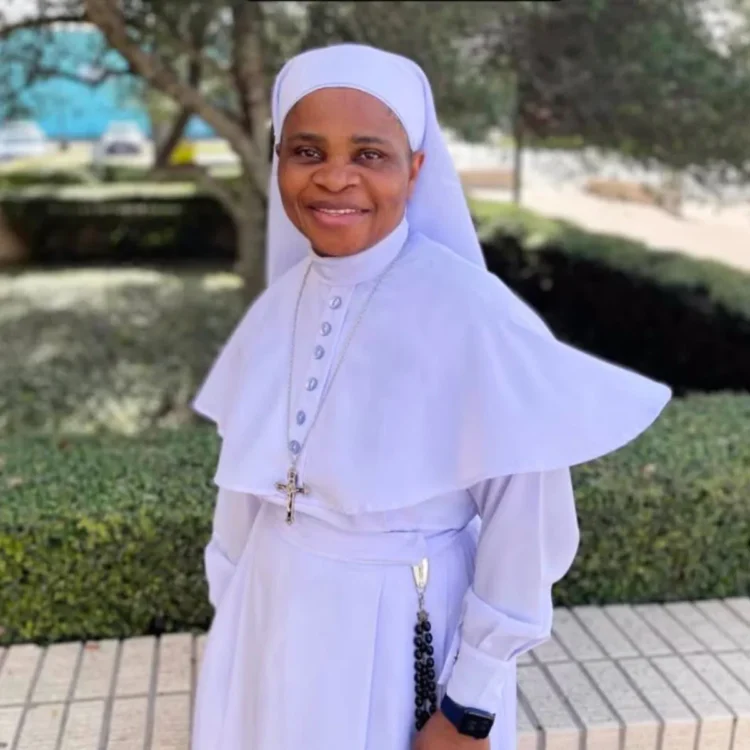
A Catholic nun who was detained by U.S. Immigration and Customs Enforcement (ICE) while walking to Mass in South Texas says her experience reflects the uncertainty faced by many immigrants who have complied with U.S. immigration requirements yet remain vulnerable to detention.
Speaking publicly for the first time since her release, Sister Leticia “Letty” Ugboaja urged immigration authorities to ensure that individuals are given an opportunity to be heard before being taken into custody, saying her case is not unique but part of a broader reality affecting many people living under various forms of legal protection.

AD: Capeesh Restaurant
Ugboaja, a Nigerian-born nun and registered nurse living in McAllen, Texas, was detained by ICE officers on June 28 while walking to Our Lady of Sorrows Catholic Church to attend Sunday Mass.Dressed in her religious habit and carrying a Bible and rosary, she was stopped and taken into custody despite having protection from removal under an immigration ruling that found she could face torture if returned to Nigeria.
She was released several hours later after intervention from members of Congress and local officials, but her case has since drawn national attention and reignited debate over immigration enforcement practices under the Trump administration.
At a news conference held at Our Lady of Sorrows Catholic Church, Ugboaja said she chose to speak publicly because she believes countless others remain in similar circumstances without receiving comparable public attention.

AD: Oysterian Sea Food Restaurant And Bar
“There are many others in this same situation, people who have been given some form of protection under our laws, who have followed every rule asked of them, and who still live with uncertainty,” she said. “I want people to know that this is bigger than me.”
Her attorney has argued that the detention illustrates growing concerns over immigration enforcement involving individuals who have complied with court orders and regularly reported to immigration authorities. According to court records, an immigration judge denied Ugboaja’s asylum application in 2019 but granted her protection under the Convention Against Torture, preventing her deportation to Nigeria because of the likelihood that she could face persecution or torture there.
That status required her to continue checking in periodically with ICE but allowed her to remain legally in the United States under specific conditions. The circumstances surrounding her detention remain unclear. Her attorney has said ICE informed her that officials intended to remove her to a third country rather than Nigeria but did not identify the destination or provide a detailed explanation during the detention. The Department of Homeland Security has not publicly explained why she was detained or whether removal proceedings remain active.
Detebnion Raises Broader Immigration Questions
Ugboaja’s detention occurred amid an intensified federal immigration enforcement campaign that has expanded arrests across the country, including at locations previously regarded as sensitive, such as churches, schools and hospitals. Earlier this year, the Department of Homeland Security rescinded longstanding guidance that generally discouraged immigration enforcement actions at houses of worship except under limited circumstances, a policy change that has prompted concern among religious organisations and immigrant advocacy groups.
Although Ugboaja was detained while walking to church rather than inside a place of worship, religious leaders say the incident has heightened anxiety among immigrant congregations who fear leaving their homes to attend religious services or community events. Officials with the Diocese of Brownsville said Ugboaja serves as a member of the Daughters of Mary Mother of Mercy and volunteers as an Extraordinary Minister of Holy Communion at Our Lady of Sorrows Church.
Outside her ministry, she works as a registered nurse at South Texas Health System and previously spent a decade working as a certified nursing assistant in the Rio Grande Valley. Church leaders described her as a respected member of the local community whose detention came as a shock to parishioners. Following news of the arrest, parish officials shared information on social media, prompting swift responses from local elected officials. Members of Congress representing South Texas contacted federal authorities to inquire about her detention, and she was released later the same day after spending approximately nine hours in ICE custody.
Diocese officials expressed gratitude for the intervention while continuing to seek answers regarding why she had been detained in the first place. Questions surrounding the case have extended beyond the circumstances of Ugboaja’s arrest. Immigration attorneys note that protection under the Convention Against Torture does not provide permanent legal status or a pathway to citizenship.
Instead, it temporarily prevents deportation to a country where an individual is likely to face torture while allowing ICE to pursue removal to another country if one is willing to accept the person and legal requirements are met. Ugboaja’s attorney has maintained that any effort to send her to a third country would require appropriate legal procedures and adequate notice.
Civil rights advocates see her detention as a reflection of broader uncertainty affecting immigrants whose legal protections differ from permanent residency or asylum.Although individuals with withholding of removal or Convention Against Torture protection are permitted to remain in the United States under court orders, they often continue living with periodic immigration check-ins and the possibility of renewed enforcement actions if policies change or new removal options become available.
Ugboaja’s experience has resonated widely within faith communities, particularly along the U.S.-Mexico border, where churches frequently provide humanitarian assistance to migrants and asylum seekers. Religious leaders say many immigrants have become increasingly reluctant to attend worship services or participate in church activities because they fear encounters with immigration authorities.
Catholic organisations have warned that heightened immigration enforcement around religious communities risks discouraging people from exercising their faith openly.Recent border Masses involving bishops, priests, religious sisters and parishioners have emphasised calls for humane treatment of migrants and respect for religious freedom, with Church leaders urging policymakers to balance immigration enforcement with humanitarian considerations.
Ugboaja said she hopes her decision to speak publicly will encourage greater understanding of the legal complexities faced by many immigrants whose cases remain unresolved despite years of complying with immigration authorities. She stressed that she does not view herself as exceptional but instead believes her story represents thousands of people navigating uncertain legal circumstances.
Her remarks focused less on her own detention than on those who lack public visibility or legal assistance. She said many immigrants continue reporting to immigration authorities as required while living with uncertainty about whether they could suddenly be detained despite following the rules established by the courts. Advocacy organisations have called for clearer explanations when individuals with existing legal protections are detained, particularly in cases involving third-country removals.
Attorneys say the absence of publicly available information often leaves families, employers and religious communities struggling to understand why someone has been taken into custody or what legal options remain available. Ugboaja remains in the United States but is expected to continue reporting to ICE as required under the conditions of her immigration status. Her attorney has indicated that additional legal proceedings could occur depending on whether the federal government pursues efforts to transfer her to another country. ICE has not publicly outlined its next steps in the case.
Ugboaja says she hopes her experience will encourage policymakers and the public to remember that many of those affected have spent years following legal procedures while contributing to their communities.Her detention may have lasted only a matter of hours, she said, but for many immigrants living under uncertain legal protections, the fear of detention remains an everyday reality.

AD: Heritage And Restaurant Lounge Bar