
By Segun Ade-
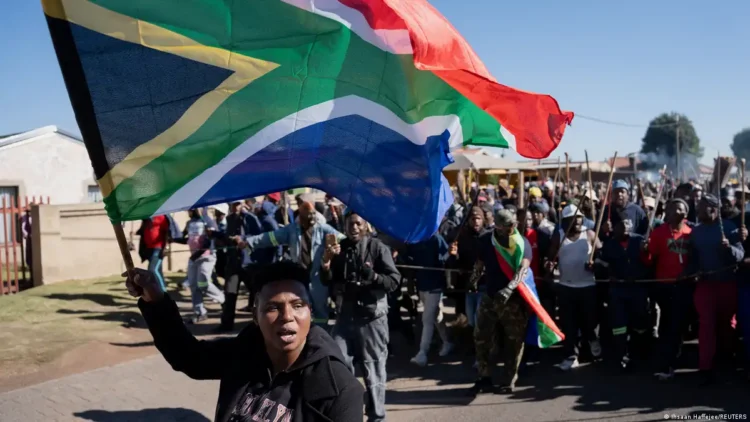
A renewed wave of xenophobic sentiment and violence in South Africa has once again placed thousands of African migrants in a precarious position, forcing many Nigerians and Ghanaians to reconsider their future in the country and, in some cases, flee altogether.
For years, South Africa has remained a major destination for migrants from across the continent due to its relatively advanced economy, developed infrastructure, and perceived employment opportunities. However, recurring outbreaks of anti-foreigner violence have created an atmosphere of fear and uncertainty, raising concerns among governments, human rights organisations, and regional bodies about the safety of foreign nationals living in the country.

AD: Capeesh Restaurant
The latest developments have revived painful memories of previous xenophobic attacks that have periodically erupted in South Africa over the past two decades. Nigerian and Ghanaian communities, among the largest African migrant populations in the country, have increasingly reported intimidation, discrimination, harassment, and threats to their businesses and personal safety.
Community leaders say many families are now living under constant anxiety, uncertain whether tensions could escalate into widespread violence. Some migrants have reportedly begun making arrangements to return to their home countries, while others have relocated to safer areas within South Africa.
The roots of xenophobia in South Africa are widely linked to deep structural socioeconomic challenges that persist decades after the end of apartheid. Despite being one of Africa’s most industrialised economies, the country continues to experience extremely high levels of inequality and unemployment, particularly among young people, with the World Bank identifying South Africa as one of the most unequal societies globally.

AD: Oysterian Sea Food Restaurant And Bar
Statistics South Africa and the International Labour Organisation similarly report persistently high youth unemployment, which contributes to long-term economic exclusion and frustration in many communities.
Human Rights Watch has documented ongoing challenges related to inadequate housing, uneven service delivery, and spatial inequality rooted in apartheid-era urban planning, all of which continue to shape living conditions in townships and informal settlements.
These pressures are compounded by widespread poverty and limited access to essential services, creating environments where competition for scarce jobs, housing, and informal trading opportunities is intense. In this context, research from the Institute for Security Studies notes that foreign nationals are often scapegoated during periods of economic stress, as migrants become visible targets for frustrations linked to broader structural failures in the economy and governance rather than the underlying causes themselves.
Many South Africans who support anti-immigrant rhetoric argue that foreign nationals compete with local citizens for jobs, housing, and business opportunities. Small business owners from Nigeria, Ghana, Somalia, Ethiopia, Zimbabwe, and other African countries have often been accused of undercutting local traders by offering lower prices or operating longer business hours.
Although economists and migration experts frequently point out that migrants contribute significantly to local economies through entrepreneurship, investment, and job creation, these arguments have often struggled to gain traction among communities facing severe economic pressures.
Analysts and rights organisations have repeatedly warned that political discourse in South Africa around migration, crime, and border security has at times contributed to negative perceptions of foreign nationals, even when not explicitly endorsing violence. The Institute for Security Studies notes that political messaging often conflates undocumented migration with crime and unemployment pressures, reinforcing public misconceptions and increasing hostility toward migrants.
Human Rights Watch has similarly reported that inflammatory or loosely framed public statements about migrants can amplify xenophobic sentiment by blurring the line between legal and irregular migration, particularly in contexts of economic strain and weak service delivery.
The African Centre for Migration & Society at the University of the Witwatersrand also highlights how political and media narratives that associate foreign nationals with crime or job scarcity can legitimise discriminatory attitudes and increase the risk of violence during periods of social tension.
In addition, Amnesty International has warned that rhetoric which frames migrants as security threats or economic burdens can contribute to a climate in which xenophobic violence becomes more likely, even without direct incitement from political leaders.
Another factor fuelling tensions is the widespread perception that foreign nationals are responsible for rising crime levels. While criminal activities involving individuals from various nationalities have occasionally received significant media attention, studies have repeatedly shown that crime is a multifaceted issue that cannot be attributed to any single group.
Nevertheless, stereotypes linking migrants to criminal behaviuor continue to circulate in some communities, reinforcing prejudice and mistrust. Nigerians, in particular, have frequently found themselves targeted by such allegations, contributing to strained relations between some local residents and migrant communities.
The impact of xenophobia on Nigerians and Ghanaians living in South Africa has been profound. Business owners have reported attacks on shops, looting, and destruction of property during periods of unrest. Workers have described discrimination in hiring practices and workplace environments, while students have faced social exclusion and hostility.
Families who have lived in South Africa for years often find themselves questioning whether they can continue to build their futures in a country where their safety is not guaranteed. Community organisations say psychological trauma has become increasingly common, especially among children who witness or experience xenophobic incidents.
Diplomatic relations between South Africa and affected countries have occasionally been strained by these developments. The Nigerian government has repeatedly expressed concern over the treatment of its citizens, particularly during major outbreaks of violence.
Previous incidents prompted diplomatic protests, emergency meetings, and calls for stronger protection of foreign nationals. Ghanaian authorities have similarly monitored the situation closely and urged South African authorities to ensure the safety of Ghanaian citizens. While both countries continue to maintain diplomatic engagement with Pretoria, recurring attacks have remained a source of frustration and concern.
Regional organisations and human rights advocates have also voiced alarm. Critics argue that xenophobia undermines the spirit of African unity and regional integration promoted by continental institutions. They point out that millions of Africans live and work outside their countries of origin, contributing to economic development across borders.
Violence against migrants, they warn, threatens efforts to strengthen cooperation, trade, and mobility across the continent. Calls have therefore intensified for stronger education campaigns, community dialogue initiatives, and law enforcement measures aimed at combating xenophobic attitudes.
South African authorities have consistently condemned xenophobic violence and pledged to protect all residents regardless of nationality. Government officials have repeatedly emphasized that criminal acts against foreign nationals cannot be justified and have stressed that law enforcement agencies will take action against perpetrators.
Police operations have been conducted in areas affected by unrest, and arrests have been made in connection with some attacks. However, critics argue that official responses have often been reactive rather than preventive, allowing tensions to build before meaningful intervention occurs.
Recent developments suggest that authorities are increasingly aware of the need for long-term solutions. Discussions have focused on improving community relations, addressing misinformation about migration, and tackling the socioeconomic conditions that contribute to hostility toward foreigners.
Civil society groups have organised awareness campaigns promoting social cohesion and highlighting the contributions migrants make to South African society. Religious organizations, community leaders, and advocacy groups have also sought to facilitate dialogue between local residents and migrant communities in an effort to reduce tensions.
Despite these efforts, challenges remain significant. Economic growth has been slower than many had hoped, and unemployment continues to affect millions of South Africans. As long as these structural problems persist, experts warn that anti-immigrant sentiment may continue to resurface during periods of social or economic stress. The challenge for policymakers lies not only in protecting vulnerable communities but also in addressing the broader conditions that allow xenophobia to flourish.
For many Nigerians and Ghanaians living in South Africa, the immediate concern remains personal safety. Some have chosen to leave voluntarily, returning to their countries of origin after years of residence abroad. Others remain determined to stay, citing business investments, family ties, educational opportunities, and long-established roots in South African society.
However, uncertainty continues to shape daily life for many migrants who fear that future outbreaks of violence could once again threaten their livelihoods and security.
Observers say the situation serves as a reminder that xenophobia is not merely a law enforcement issue but a broader social challenge requiring sustained political commitment, economic reform, and community engagement. Without meaningful progress in addressing unemployment, inequality, and social divisions, experts caution that tensions could continue to erupt periodically, placing both migrants and local communities at risk.
As South Africa seeks to strengthen its position as a leading voice on the African continent, the handling of xenophobic violence will remain a critical test of its commitment to human rights, social justice, and regional solidarity.
The experiences of Nigerians, Ghanaians, and other migrant communities underscore the urgent need for comprehensive solutions that balance legitimate concerns about migration management with the protection of fundamental human dignity. Whether current initiatives will succeed in preventing future violence remains uncertain, but the demand for lasting action has never been more pressing.

AD: Heritage And Restaurant Lounge Bar