
By Kenneth Williams-
The controversy over Ufos or UAP’s(Unexplained aerial phenomena) recently took a sharp turn after a catholic priest took the decision to attribute them to mysterious spiritual phenomena which rocked the boat. he was instantly expelled from the ministry he founded. The mystery for many decades had been conventionally attributed to strange lights appearing in the sky, witnesses reporting impossible maneouvres, and the question was always whether humanity was looking at visitors from another world, or whether these are some other hidden or mysterious objects.
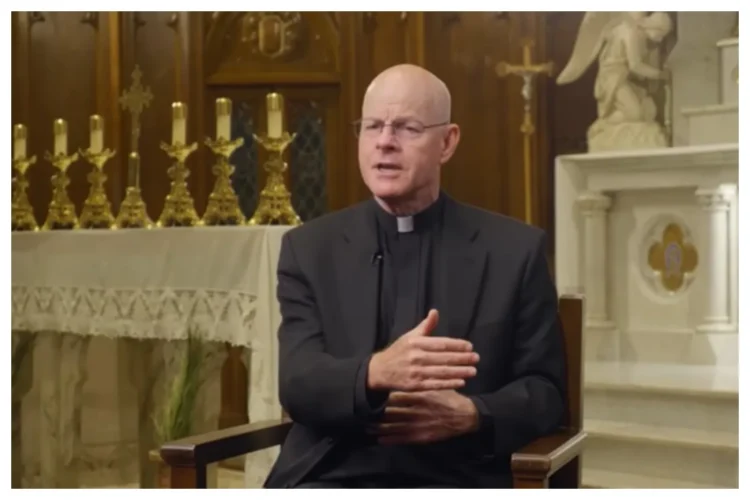
Then Monsignor Stephen Rossetti proposed a different answer. The veteran Catholic exorcist, known internationally in catholic circles for his work in deliverance ministry and spiritual warfare, suggested that many UFO sightings might not be extraterrestrial at all. It is worth noting that there exists no established or verifiable evidence of successful exorcism conducted by Rossetti in his 19 years of ministry. Within the Catholic Church, success is typically defined by spiritual and psychological healing rather than sensational or scientifically verifiable results.

AD: Capeesh Restaurant
In Rosetti’s view, at least some of the phenomena could be demonic manifestations designed to deceive humanity. Within days, Cardinal Robert McElroy removed Rossetti from his position as an exorcist for the Archdiocese of Washington and severed the archdiocese’s ties with the St. Michael Center for Spiritual Renewal- the ministry Rossetti founded. McElroy said Rossetti’s comments linking UFOs to demonic activity “gravely undermine” Church teaching on demons and exorcism.
At first glance, the story appeared to be about a priest who ventured too far into speculation. But beneath the headlines lies a much larger debate. which is the question of who gets to explain the unknown?
Unexplained phenomena were for centuries often interpreted through religious frameworks. Strange apparitions, mysterious lights, voices in the night, and extraordinary encounters were frequently understood as angelic, demonic, or supernatural events. In the modern era, however, governments, scientists, military investigators, and aerospace experts have largely taken over the role of interpreting the unexplained. UFOs—now commonly referred to as UAPs, or Unidentified Anomalous Phenomena—are increasingly discussed through intelligence reports, sensor data, and scientific inquiry rather than theology.

AD: Oysterian Sea Food Restaurant And Bar
Rossetti’s comments represented a direct challenge to that shift. He did not argue that every unexplained sighting was demonic, but he publicly stated that many or most UFO reports could be manifestations of deceptive spiritual forces. The comments immediately thrust a centuries-old religious explanation into a modern debate dominated by discussions of extraterrestrial life, secret technology, and government disclosure. Rossetti was far from the first person to suggest such a connection.
One of the most influential proponents of the “demonic hypothesis” was the late UFO researcher and author John Keel, whose 1975 book The Mothman Prophecies argued that many UFO encounters resembled ancient accounts of supernatural beings more than visits from flesh-and-blood aliens. Keel believed some phenomena appeared capable of deception, shape-shifting, and psychological manipulation, characteristics traditionally associated with spiritual entities rather than extraterrestrial travellers.
Similarly, French computer scientist and astronomer Jacques Vallée has long argued that UFO encounters cannot be easily explained as simple extraterrestrial visitation. Vallée has suggested that whatever lies behind many reports appears to interact with human consciousness and culture in ways that transcend conventional physical explanations. Although Vallée does not describe the phenomenon as demonic, his theories have frequently been cited by those who believe UFO experiences may have a spiritual dimension.
Within Christian circles, the idea has existed for decades. Some evangelical theologians have argued that alleged alien abductions often share characteristics with accounts of spiritual oppression. Certain researchers point to reports in which individuals claim that prayer or invocation of religious figures appeared to end frightening encounters. These accounts remain controversial and are not accepted as evidence by mainstream science, but they have contributed to a persistent belief among some religious communities that at least part of the UFO phenomenon could involve spiritual deception rather than extraterrestrial contact.
Even some Catholic exorcists before Rossetti have entertained the possibility that demonic forces might exploit fascination with aliens. However, Church authorities have generally avoided endorsing such theories as official teaching. That distinction may explain why Rossetti’s removal became so significant.
The Catholic Church teaches that demons exist and that exorcism is a legitimate ministry. In folkore and mythology, demons are perceived to be malevolent spirits, trickster entities, monsters or underworld beings, entities blamed for illness, misfortune, or unexplained events. The Church has never taught that UFOs are demonic. In fact, Catholic theologians have often emphasized that belief in extraterrestrial life is not contrary to the faith. Rossetti himself acknowledged that Catholics are free to believe alien life may exist elsewhere in the universe. His personal conclusion, however, was that many reported sightings were more likely linked to demonic activity.
The controversy therefore was not merely about UFOs. It was about the difference between personal opinion and official teaching.
Supporters of Rossetti argue that he was removed for expressing a theory that falls within legitimate theological speculation. Many online commentators questioned whether his comments alone justified such a severe response and noted that he framed the idea as a personal belief rather than a doctrinal declaration. Some suggested that his growing social-media influence may have amplified concerns within Church leadership about how his views were being perceived by the public.
However, his detractors are adamant that exorcists occupy a uniquely sensitive position within the Church. Because they speak with perceived authority on supernatural matters, speculative claims can easily be mistaken for official doctrine. From that perspective, Cardinal McElroy’s action was less about suppressing discussion and more about maintaining clear boundaries between Church teaching and personal conjecture. The cardinal’s statement specifically cited both Rossetti’s UFO comments and the St. Michael Center’s recent social-media activity as factors in the decision.
Whether removing him was appropriate depends largely on the standard being applied.
If the standard is freedom of theological speculation, critics of the decision argue that Rossetti merely offered an opinion on a mystery that nobody fully understands. The Church has not definitively explained UFOs, and therefore, they argue, discussion should remain open.
If the standard is ecclesiastical responsibility, supporters of the decision note that Church-appointed exorcists are expected to remain closely aligned with official teaching. Because the Church does not teach that UFOs are demonic, and because Rossetti’s comments reached a vast online audience, Church leaders may have concluded that intervention was necessary to prevent confusion among the faithful. Yet, even in religious context, freedom of thought and interpretation of events ought to be a matter of choice
Notably, the action did not remove Rossetti from the priesthood. He remains a priest in good standing of the Diocese of Syracuse. Bishop Douglas J. Lucia quickly affirmed that status, underscoring that the Washington decision concerned Rossetti’s role as an exorcist rather than his standing as a Catholic priest. Rossetti himself responded by expressing sadness over the decision, apologizing for any departure from Church teaching, and pledging continued obedience to ecclesiastical authority.
In the end, the Rossetti affair may be remembered less as a dispute about UFOs than as a struggle over authority in an age of uncertainty. Governments investigate anomalous objects. Scientists search for evidence. Religious leaders consider spiritual explanations. Each claims a different lens through which to view the unexplained.
The question raised by Rossetti’s removal is not whether UFOs are aliens, demons, secret technology, or something else entirely. The deeper question is who has the authority to answer that mystery—and how far a public figure can go in proposing answers before institutions decide the speculation has gone too far.
There is also the separate question of freedom of speech, which in America is a fundamental civil right primarily protected by the First Amendment to the U.S. Constitution, which offers broad, absolute protections for speech, including controversial or offensive expression, and places strict limits on what the government can censor. Those limits automatically extend to institutions and organisations

AD: Heritage And Restaurant Lounge Bar