
By Theodore Brown-
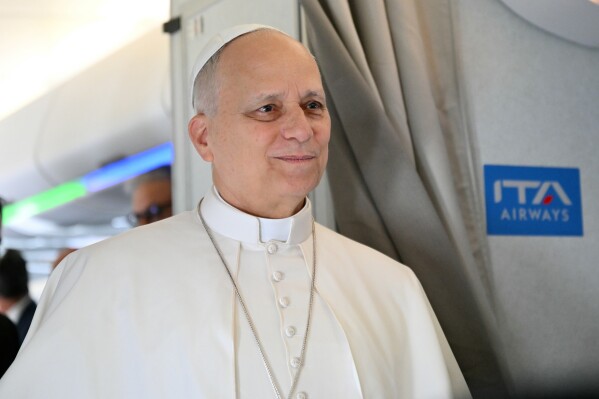
President Donald Trump has refused to apologise to Pope Leo XIV after a controversial AI-generated image and a series of sharp remarks about the pontiff sparked widespread criticism across political and religious circles.
Speaking in Washington, Trump doubled down on his actions, insisting there was “nothing to apologize for,” while defending the intent behind a social media post that depicted him in a religiously symbolic, Christ-like image that was later deleted following backlash.

AD: Capeesh Restaurant
The dispute marks a rare and escalating public clash between the White House and the Vatican, coming after Pope Leo criticised Trump’s rhetoric on foreign policy and warned against the humanitarian consequences of the ongoing U.S. stance toward Iran.
The pope’s comments prompted Trump to accuse him of being “weak on crime” and “terrible for foreign policy,” further intensifying tensions between the two leaders.
The controversy centers on an Artificial Intelligence-generated image Trump posted on Truth Social that showed him in a Christ-like pose, with light emanating from his hands as he appeared to “heal” a figure in distress.

AD: Oysterian Sea Food Restaurant And Bar
The image quickly drew condemnation from religious leaders and commentators, many of whom described it as inappropriate or blasphemous, while some of Trump’s own supporters expressed discomfort with its religious symbolism.
Trump later insisted the reaction was based on misunderstanding, arguing that he believed the image represented him as a “doctor” or humanitarian figure rather than a religious icon.
He said the post was intended to symbolise healing and assistance, not to provoke religious debate or mock Christian imagery. According to Trump, critics had “misread” the intent entirely, turning what he viewed as a positive message into a political controversy.
Despite deleting the post, Trump continued to defend it publicly, framing the backlash as politically motivated and linking it to broader disagreements with Pope Leo over war and foreign policy. He also suggested that criticism of the image was being used to distract from what he described as the pope’s “political stance” on international conflicts.
Pope Leo, meanwhile, has not directly engaged in the social media dispute but has continued to emphasise calls for peace and restraint in global conflicts, particularly regarding the escalating crisis involving Iran. His comments on the moral consequences of war were widely interpreted as indirect criticism of the Trump administration’s approach.
Religious figures across the United States have also weighed in, with some Catholic leaders urging greater respect for religious symbolism in public discourse, while others called for Trump to clarify or apologize for the post. The debate has exposed divisions within Christian communities, particularly among political supporters who remain aligned with Trump despite concerns over tone and messaging.
Trump’s refusal to apologize has further deepened tensions with Pope Leo, who has emerged as a prominent moral voice opposing aspects of U.S. foreign policy. In recent statements, the pope condemned what he described as the “delusion of omnipotence” in wartime thinking and urged political leaders to prioritize diplomacy over escalation.
In response, Trump launched a series of social media posts criticizing the pope’s positions on crime, immigration, and international security, arguing that Leo was too aligned with liberal political views. He also questioned aspects of the pope’s leadership, suggesting disagreement over global security issues such as Iran’s nuclear ambitions.
Speaking to reporters, Trump reiterated that he saw no reason for an apology, stating that his post had been misinterpreted and that critics were exaggerating its meaning for political effect. He maintained that the image was not intended as a religious statement but as a symbolic depiction of healing and leadership during a period of global tension.
The Vatican has not formally responded to Trump’s latest remarks, but Pope Leo has continued to stress that the Church’s role is to advocate for peace and humanitarian principles rather than engage in political disputes. His stance has received support from several international leaders and religious figures, who have echoed his calls for de-escalation and dialogue.
The exchange has widened into a broader cultural and political confrontation, with analysts noting that it reflects deeper divisions between segments of the American political landscape and global religious leadership. Some observers warn that the rhetoric risks further polarising public opinion, particularly among religious voters in the United States.
While the dispute continues, both sides appear unwilling to back down. Trump has maintained his position that the controversy is overblown, while Pope Leo continues to focus on his message of peace, leaving the relationship between the White House and the Vatican increasingly strained and publicly exposed.
The White House has framed the fallout as a media-driven overreaction, with senior aides arguing that the president’s post and subsequent comments have been taken out of context.
Officials have suggested that the image circulating online was intended as symbolic commentary rather than religious provocation, and they have pointed to what they describe as a pattern of selective outrage in coverage of Trump’s social media activity.
In private discussions with reporters, administration figures have also emphasised that the president sees no strategic value in revisiting the matter, viewing continued debate as a distraction from domestic policy priorities.
Trump himself has reinforced that position publicly, repeatedly insisting that the criticism is politically motivated. He has argued that his remarks about Pope Leo were tied to disagreements over international security policy, particularly the Vatican’s emphasis on diplomacy and restraint in conflicts involving Iran.
According to Trump, those policy differences have been overshadowed by what he describes as an exaggerated focus on the imagery he shared. His allies have echoed that view, suggesting that opponents are attempting to turn a digital post into a broader narrative about respect for religious authority.
At the Vatican, Pope Leo has taken a markedly different approach, avoiding direct engagement with the controversy while continuing to emphasize humanitarian themes in his public addresses. His recent speeches have focused on the moral consequences of war, displacement, and economic inequality, reinforcing a message of restraint in global affairs.
Vatican officials have declined to comment on Trump’s specific remarks, signalling an effort to avoid escalating the dispute further. Instead, the pontiff has continued to position the Church as a mediator in global tensions, rather than a participant in political disputes.
Diplomatic observers note that tensions between U.S. administrations and the Holy See are not without precedent, but the current exchange stands out for its public visibility and its rapid escalation through social media.
Analysts say the combination of digital platforms, political polarisation, and global conflict has amplified what might previously have remained a private disagreement into a widely visible confrontation.
The use of viral imagery in particular has raised questions about how modern political communication intersects with religious symbolism and international diplomacy.
Within Catholic communities, reactions remain divided. Some leaders have called for restraint and mutual respect, warning that continued escalation risks deepening misunderstandings between political leaders and religious institutions. Others have defended the pope’s right to speak on moral issues affecting global populations, arguing that such commentary is central to the Vatican’s mission.
Meanwhile, supporters of Trump have largely rallied behind his refusal to apologise, interpreting the controversy as another example of cultural and political overreach by critics.
Neither side signals any intention to soften its stance, the standoff appears set to continue. The White House remains focused on containing domestic political fallout, while the Vatican maintains its emphasis on peace and humanitarian advocacy.
In the absence of direct dialogue between the two parties, the gap between political messaging and religious leadership has become more pronounced, underscoring a broader divide over the role of public figures in shaping moral and geopolitical discourse.

AD: Heritage And Restaurant Lounge Bar