
By Kenneth Brown-
In Washington, renewed political pressure to release classified government files on unidentified anomalous phenomena—commonly known as UFOs—has intensified debate over transparency, national security, and what some lawmakers describe as one of the most opaque areas of federal defence and intelligence activity.
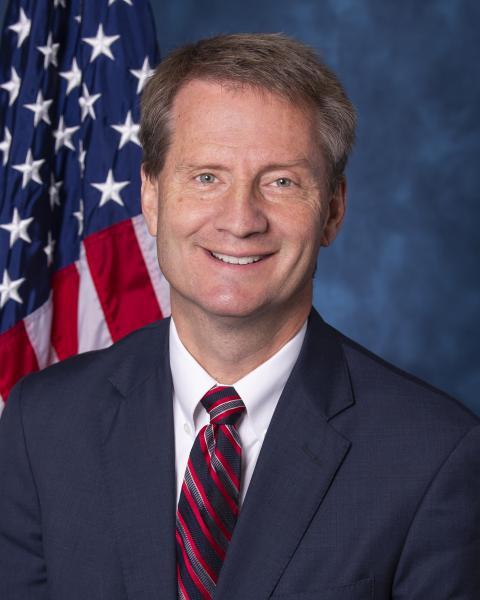
The latest call comes from Republican Representative Tim Burchett, (pictured)who has urged President Donald Trump to order the full release of government records relating to UAPs and alleged non-human technologies. Speaking on Fox News’ The Big Weekend Show, Burchett framed the issue not as science fiction speculation, but as a matter of public accountability and government expenditure.

AD: Capeesh Restaurant
“Peel back the layers of that onion, let America decide if we can handle it. I think we can handle it,” he said, arguing that the American public has been kept in the dark for too long about what he believes are inconsistencies in official reporting on the subject. He also claimed he had been “briefed on some things” he described as “pretty wild,” though he did not provide details.
His remarks add fresh momentum to a growing movement in US politics that has shifted UFO discourse from the fringes into congressional hearings, intelligence oversight debates, and mainstream media coverage. Burchett, who has become one of the most vocal advocates for UAP transparency in Congress, has repeatedly argued that the issue is less about extraterrestrial life itself and more about what he sees as conflicting government narratives and unexplained defence spending.

AD: Oysterian Sea Food Restaurant And Bar
“It’s not about little green men, it’s not about dadgum flying saucers,” he said during the interview. “It’s about what are we spending tens of millions of your dollars on when some alphabet agency tells me they don’t exist and then again, another department within that department tells me they do exist.”
The comments reflect a broader scepticism among some lawmakers about the coherence of the US government’s position on unidentified aerial phenomena. Over the past several years, congressional interest has expanded significantly, particularly following a series of public hearings beginning in 2023 in which military and intelligence witnesses testified about unexplained aerial encounters.
Among the most notable testimonies was that of former intelligence official David Grusch, who told lawmakers that the United States had allegedly operated a “multi-decade” programme to recover and reverse-engineer crashed non-human craft. While Grusch’s claims were widely reported, they were firmly denied by the US government, which has consistently stated that no verified evidence of extraterrestrial technology has been found.
Nevertheless, the hearings marked a turning point. For the first time in decades, UAPs were being discussed not in terms of conspiracy theories or cultural fascination, but as a matter of intelligence oversight and national security transparency. Lawmakers such as Burchett, alongside bipartisan colleagues, have since continued to push for greater disclosure of classified material, citing concerns about secrecy, bureaucratic fragmentation, and lack of public oversight.
Burchett has gone further than most in his public statements. In a separate interview with Newsmax earlier this month, he claimed that full disclosure of what he has seen in classified briefings would alarm the public. “If they would release the things that I’ve seen, you would stay up at night worrying about or thinking about this stuff,” he said, without elaborating on the nature of those briefings.
He also claimed to have been briefed by multiple federal agencies, reinforcing his argument that information is being inconsistently handled across different parts of the US defence and intelligence apparatus. Critics, however, have noted that such claims remain unverified and have not been substantiated with documentary evidence.
The renewed push for disclosure comes amid a broader shift in how UAPs are being treated by the US government. In recent years, the Pentagon has acknowledged hundreds of reports of unexplained aerial encounters, many of them involving military pilots or sensor data capturing objects that appear to defy conventional explanation. However, official reviews have repeatedly concluded that most cases can be attributed to misidentified objects, atmospheric phenomena, or classified testing programmes.
Despite this, public interest has continued to grow, fuelled by high-profile media coverage, whistleblower allegations, and an increasing willingness among lawmakers to treat the subject seriously rather than dismissively.
A number of documentaries released over the past year have further amplified the debate, including productions examining government secrecy, pilot testimonies, and alleged recovery programmes. These programmes have brought the issue into mainstream entertainment and news cycles, helping to normalise discussion of topics that were once considered taboo in political discourse.
One of the key developments underpinning the current wave of interest is the formal rebranding of UFOs as UAPs—Unidentified Anomalous Phenomena—by US defence agencies. This change in terminology was intended to broaden the scope of investigation beyond traditional “flying object” assumptions and to remove stigma from reporting encounters. It also reflects a more systematic effort by the Pentagon and NASA to collect and analyse data on unexplained sightings.
NASA itself has conducted independent reviews of UAP data, concluding in its most recent report that there is no evidence to support claims of extraterrestrial origin, but also acknowledging that some incidents remain unresolved due to insufficient data quality. This ambiguity has helped sustain political and public interest, as unresolved cases continue to fuel speculation and calls for greater transparency.
The political dimension of the debate has been further energised by statements from President Donald Trump, who earlier this year signalled support for the release of government files related to UFOs and UAPs. In a post on Truth Social in February, Trump said he would direct federal agencies to begin identifying and releasing relevant materials, citing “tremendous interest” in the subject and describing the matter as both complex and important.
His remarks were welcomed by disclosure advocates, who interpreted them as a potential turning point in the decades-long debate over government secrecy. However, no comprehensive release of classified material has yet been announced, and the scope of any future disclosure remains uncertain.
Historically, the question of UFO disclosure has deep roots in US political and cultural life. Interest surged during the Cold War era, particularly following incidents such as the 1947 Roswell crash, which became one of the most enduring and controversial events in UFO lore. Government investigations over subsequent decades, including Project Blue Book, ultimately concluded that most sightings could be explained by natural or human-made phenomena.
However, the closure of official investigations did little to dampen public fascination.Instead, UFO discourse migrated into popular culture, conspiracy theory, and periodic resurfacing in media reports. What distinguishes the current era from previous cycles of interest is the level of official engagement. Congressional hearings, intelligence community acknowledgements, and Pentagon reporting mechanisms have collectively moved the subject closer to institutional legitimacy than at any point since the mid-20th century.
Advocates of disclosure argue that this shift is not merely cultural but structural. They point to inconsistencies in government reporting, the classification of defence-related aerospace technologies, and the lack of public access to raw data as reasons to believe that greater transparency is both necessary and overdue.
Burchett’s comments reflect this argument, framing the issue in terms of democratic oversight rather than extraterrestrial certainty.
Sceptics, however, caution against over interpreting anecdotal testimony or unresolved sensor data. They argue that the absence of verifiable evidence of non-human technology should remain the guiding standard and warn that conflating unexplained sightings with extraordinary claims risks undermining scientific and institutional credibility.
Despite this tension, momentum for disclosure appears to be growing rather than diminishing. The combination of congressional advocacy, whistleblower testimony, media coverage, and executive-level attention has created a feedback loop that continues to push the issue into the mainstream.
Many underlying questions remain unresolved as Burchett continues to push for disclosure. whether the phenomenon represents misunderstood technology, intelligence gaps, or something more extraordinary. Unarguably, the political landscape around UAPs has shifted decisively. Once relegated to the margins of public discourse, the subject now sits at the intersection of national security, public accountability, and scientific inquiry.
Whether that trajectory leads to definitive answers or further ambiguity will depend on the extent to which governments choose to open their archives—and whether what lies within them can be fully explained.

AD: Heritage And Restaurant Lounge Bar
-
Share On
- Categories
- Date