
By Charlotte Webster-
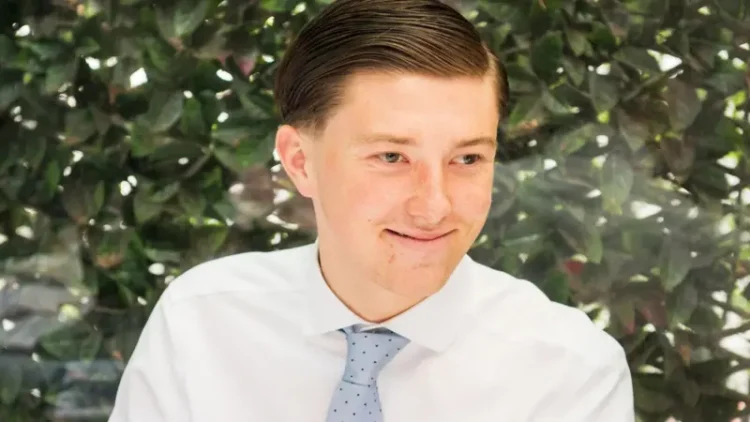
The chief constable of Hampshire police has apologised to the family of Henry Nowak for the student being handcuffed and arrested as he lay dying.
Chief Constable Alexis Boon expressed distress, as others had been by the bodycam footage which showed the 18-year-old repeatedly telling officers that he had been stabbed and could not breathe.

AD: Capeesh Restaurant
Police can be seen in the footage arresting the teenager after his murderer Vickrum Digwa had falsely claimed he had been racially abused by the victim.
One of the police officers involved in the controversial arrest of Henry Nowak resigned on Tuesday, intensifying scrutiny of law enforcement conduct after Prime Minister Keir Starmer said he “felt sick” watching newly released body-worn camera footage showing the teenager being handcuffed as he lay fatally wounded. The resignation came amid a widening political and public debate over police decision-making, accountability, and the treatment of victims during emergency incidents.
The case has become one of the most contentious policing controversies in Britain this year, drawing condemnation from across the political spectrum and prompting an ongoing investigation by the Independent Office for Police Conduct (IOPC).

AD: Oysterian Sea Food Restaurant And Bar
The remaining three officers continue to serve and are currently being treated as witnesses in the watchdog’s investigation- one that will be under close scrutiny in the weeks and months ahead.
Henry Nowak, an 18-year-old finance student, was fatally stabbed in Southampton in December 2025. According to court proceedings, Vickrum Digwa attacked the teenager with a large ceremonial blade before allegedly misleading police by claiming that Nowak had racially abused and assaulted him. When officers arrived at the scene, they treated Nowak as a suspect rather than a victim, despite his repeated insistence that he had been stabbed and was struggling to breathe.
Bodycam footage released this week captured the final moments before Nowak’s death. The recordings show officers placing handcuffs on the teenager while he repeatedly tells them he has been stabbed. At various points, officers are heard expressing scepticism about his claims, believing instead that he was involved in an assault. The footage has triggered widespread outrage across the country and renewed questions about police training, judgment, and emergency response procedures.
Political Pressure Mounts as Investigation Continues
Speaking on Tuesday, Starmer described the footage as “harrowing” and said watching the video left him feeling physically ill. The Prime Minister stated that there were “serious questions” for police to answer and stressed the importance of allowing the ongoing watchdog investigation to establish exactly what happened on the night of the incident.
Starmer’s comments reflect growing concern within Westminster over the circumstances surrounding Nowak’s death. The release of the footage has intensified public demands for accountability, with critics arguing that officers failed to recognise obvious signs of life-threatening injuries.
Others have questioned whether assumptions made at the scene influenced the response officers provided to both Nowak and his attacker. Home Secretary Shabana Mahmood has also called for a thorough investigation while urging restraint amid increasingly heated political rhetoric. She warned against the spread of misinformation and highlighted reports that individuals unconnected to the case had been subjected to online abuse and threats.
Mahmood reiterated that all citizens must be treated equally before the law and said the independent inquiry should be allowed to proceed without interference.
The case has become a focal point in wider debates over policing standards and allegations of institutional bias. Reform UK leader Nigel Farage has argued that the incident raises questions about what he describes as “two-tier policing,” while other politicians have cautioned against drawing conclusions before the investigation is completed.
Conservative figures and Labour representatives alike have called for transparency while emphasising the need to avoid inflaming community tensions. Outside political circles, public anger has been evident. Demonstrations have taken place in Southampton following the release of the footage, with protesters demanding justice for Nowak and accountability from those involved in his arrest. Some gatherings have featured chants referencing the teenager’s final pleas for help, while campaigners have called for reforms to police training and emergency medical response protocols.
Family Seeks Answers as National Debate Grows
The resignation of one officer is unlikely to end calls for accountability. The IOPC investigation remains ongoing and will examine the actions of all officers involved, including whether procedures were followed correctly and whether opportunities to provide medical assistance were missed.
Separately, Hampshire Police have acknowledged public concern and issued statements condemning misinformation circulating online. The force has urged members of the public to await the outcome of the independent investigation, warning that inaccurate claims have already resulted in threats being directed at officers who had no connection to the incident.
Additional scrutiny may also come from a broader review commissioned into police procedures. Officials have announced further examinations of control-room communications, frontline officer training, and responses to knife crime incidents. The review is expected to consider whether officers received sufficient information before arriving at the scene and whether existing protocols adequately prepare officers to identify victims suffering from severe internal injuries.
Meanwhile, attention remains focused on the criminal case itself. Digwa was convicted of murdering Nowak and sentenced to life imprisonment with a minimum term of 21 years. The sentence has prompted debate, with some campaigners arguing that it should be reviewed. Authorities are reportedly examining requests for a reassessment of the minimum term.
With Nowak’s family, however, the central issue remains the treatment their son received in his final moments. Relatives have expressed profound distress after viewing the footage and have called for a full explanation of why his pleas for help were not acted upon more urgently.
Their calls have resonated with many members of the public who view the case not only as a criminal tragedy but also as a test of public confidence in policing. Investigators continue their work, the release of the bodycam footage has ensured that the case will remain at the forefront of the national conversation. The resignation of one officer marks the first significant personnel consequence arising from the controversy, but many questions remain unanswered.
With political leaders demanding accountability, watchdogs conducting detailed inquiries, and a grieving family seeking justice, the outcome of the investigation is likely to have lasting implications for police oversight and public trust across the United Kingdom.
The disturbing matter has already sparked a broader national conversation about how officers assess situations in rapidly evolving and high-pressure environments. Policing experts, legal observers and community leaders have argued that the findings could influence future training standards, particularly in relation to identifying victims, assessing medical emergencies and managing conflicting witness accounts at crime scenes.
Any recommendations issued by investigators may lead to changes in operational procedures designed to reduce the risk of similar incidents occurring in the future. Public confidence in policing is also expected to be a central focus. Many observers, the footage has raised concerns about whether critical decisions were made too quickly and whether sufficient attention was given to signs that Nowak required urgent medical assistance.
Restoring trust may depend not only on the conclusions reached by investigators but also on the transparency with which those conclusions are communicated to the public.
The investigation’s findings could ultimately serve as a defining moment for police accountability in Britain. Whatever the outcome, the case is likely to remain a reference point in future debates about law enforcement standards, institutional responsibility and the balance between public scrutiny and operational decision-making in modern policing.

AD: Heritage And Restaurant Lounge Bar