
By Tony O’Reilly-
Russia has dramatically escalated its rhetoric against Europe and the United Kingdom, publishing what it claims is a list of potential military targets linked to the production of drones for Ukraine—an announcement that has sent ripples of concern through Western capitals already on edge after a surge in deadly attacks.
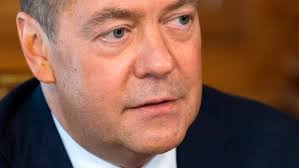
The warning came from Dmitry Medvedev, (pictured)now deputy chairman of Russia’s Security Council, who issued a stark message following the release of the list by the Russian defence ministry. Writing on social media, he suggested the sites identified should be viewed not merely as intelligence disclosures, but as prospective targets in an expanding conflict.

AD: Capeesh Restaurant
“The list of European facilities which make drones and other equipment is a list of potential targets for the Russian armed forces,” Medvedev wrote. “When strikes become a reality depends on what comes next. Sleep well, European partners!”
The statement marks one of the clearest signals yet that Moscow is willing to rhetorically extend the battlefield beyond Ukraine’s borders, at least in terms of strategic messaging. While Russia has previously accused Western countries of acting as proxies in the war, explicitly naming locations across Europe raises the stakes considerably.

AD: Oysterian Sea Food Restaurant And Bar
According to the Russian military, 23 sites across Europe have been identified as being connected, directly or indirectly to Ukrainian drone manufacturing. These include locations in Germany, Denmark, Latvia, Lithuania, the Netherlands and Poland. Notably, three of the sites are said to be in the UK, specifically in London, Leicester and Suffolk.
Russia claims these facilities are either subsidiaries of Ukrainian drone producers or locations where key components are manufactured. Western officials have not publicly confirmed the accuracy of the list, and independent verification remains limited.
Nevertheless, the inclusion of UK-based sites has heightened concern in Britain, where support for Ukraine has been both politically strong and materially significant. The UK has been among Kyiv’s most consistent backers since the full-scale invasion began in 2022, providing military aid, training and diplomatic support.
The implication that such support could make British soil a legitimate military target—even theoretically represents a sharp escalation in tone.
Deadly Backdrop In Europe
The warning comes amid a renewed wave of violence inside Ukraine. President Volodymyr Zelensky condemned Russia after what officials described as the deadliest aerial bombardment in months killed at least 18 people across the country.
Zelensky labelled Russian President Vladimir Putin a “truly global threat,” arguing that the scale and intensity of recent attacks demonstrate that Moscow’s ambitions extend far beyond Ukraine itself.
The strikes, which targeted multiple regions, are part of a broader pattern of escalating aerial warfare. Russia has increasingly relied on missiles and drones to strike infrastructure and urban centres, while Ukraine has expanded its own drone capabilities, including attacks deep inside Russian territory.
This growing reliance on drone warfare has transformed the conflict, making supply chains and manufacturing networks far more strategically significant—and, potentially, more vulnerable.
Europe Deepening Involvement
The publication of the target list confirms Moscow’s long-standing claim that European countries are not merely supporting Ukraine, but actively enabling its war effort. Western governments, for their part, argue that their assistance is defensive and aimed at helping Ukraine resist an unprovoked invasion.
Still, the lines have blurred as the war has evolved. European firms have played roles—sometimes indirect—in supplying components, technology and expertise that feed into Ukraine’s defence sector. In many cases, these are dual-use technologies with civilian applications.
That complexity raises difficult questions. If components are manufactured in one country, assembled Security analysts say the rhetoric should be taken seriously, even if an actual strike on NATO territory remains unlikely in the near term. Direct military action against a NATO member would risk triggering a much wider conflict—something both Russia and the alliance have so far sought to avoid.
However, the language used by Medvedev may serve multiple purposes. It could be intended to deter further Western support for Ukraine, to sow public anxiety in Europe, or to lay the groundwork for potential cyber or covert operations targeting infrastructure.
There is also concern that miscalculation could lead to unintended escalation. As the war becomes increasingly technologically complex, with drones, cyber capabilities and long-range weapons playing larger roles, the risk of incidents crossing borders grows.
The focus on drone production highlights how central unmanned systems have become to the war. Both Russia and Ukraine have used drones extensively for reconnaissance, targeting and direct attacks. Ukraine, in particular, has leveraged drones to offset Russia’s advantages in manpower and heavy weaponry.
Its ability to strike oil facilities, military bases and logistical hubs inside Russia has demonstrated the strategic value of these systems.
In response, Russia has ramped up efforts to protect critical infrastructure. In the Leningrad region, authorities have announced plans to recruit reservists specifically tasked with defending key sites from drone attacks.
Governor Alexander Drozdenko said new units would be deployed to protect “enterprises and critically important infrastructure,” including major Baltic Sea oil ports such as Ust-Luga and Primorsk. While he did not explicitly mention Ukraine, the move follows a series of disruptive drone strikes on Russian energy facilities.
A meeting involving federal and security agencies concluded that air defences over the region needed to be “strengthened and reinforced,” according to statements posted on Telegram.
The intensification of drone attacks on Russian oil infrastructure emphasises the economic dimension of the conflict. Oil exports remain a crucial revenue stream for Moscow, and disruptions can have significant financial implications.
European governments also have with their own challenges to deal with. Continued support for Ukraine comes with economic costs and political risks, particularly as the war drags on with no clear end in sight. The European Union is expected to release between €2.5 billion and €2.7 billion in additional support to Ukraine, following reforms, signalling ongoing commitment, despite mounting pressures to slow down.
If the collective judgement to sustain support for Ukraine to the degree sought is ill judged, the consequences could yet be more dire than ever anticipated. Getting discretion right is always key, but discretion can be compromised by biased perspectives. Should NATO be lowing down and reflecting, or keep the fire burning ? That’s the million dollar question for some.
Debates continue within NATO and EU countries about the scale and nature of assistance. Some leaders have expressed concern about escalation, while others argue that failing to support Ukraine would embolden Russia. Some reasonable boundary and ideal way forward must exist.
Medvedev’s warning fits into a broader narrative promoted by the Kremlin—that the war is not simply a conflict with Ukraine, but a confrontation with the West as a whole.
This framing has been used to justify military actions and to rally domestic support within Russia. By portraying European countries as active participants, the Kremlin can argue that its actions are defensive rather than aggressive. Western officials reject this characterisation, insisting that their involvement is limited to supporting Ukraine’s sovereignty and territorial integrity.
The publication of the list is seen by many observers as a rhetorical move rather than an operational one. There is no indication that Russia is preparing imminent strikes against the named sites in Europe.
Even so, the development adds another layer of tension to an already volatile situation. With both sides increasing their use of drones and long-range weapons, and with political rhetoric hardening, the risk of escalation remains ever-present.
Zelensky has continued to call for sustained international support, warning that the consequences of a Russian victory would extend far beyond Ukraine. “This is not just about our country,” he has said in various addresses. “It is about the security of the entire world.”
With the war entering another phase marked by technological innovation and strategic uncertainty, the question facing Europe is not only how to support Ukraine, but how to manage the risks that come with deeper involvement.
,Medvedev’s chilling message—“Sleep well, European partners”— highlights the rugged truth that the conflict’s boundaries are becoming increasingly blurred, even if the front lines remain, for the moment, within Ukraine.

AD: Heritage And Restaurant Lounge Bar
-
Share On
- Categories
- Date