
By Ben Kerrigan-
The Strait of Hormuz—long regarded as one of the world’s most strategically vital maritime chokepoints—has been declared “completely open” by Iran, following weeks of disruption that shook global energy markets and raised fears of a prolonged supply crisis.
The announcement by Iran’s foreign minister, Abbas Araghchi, comes after a tense seven-week period during which Tehran effectively tightened control over the narrow passage in response to coordinated military pressure from the United States and Israel. That period saw oil and gas flows slow dramatically, hundreds of tankers stranded, and energy prices surge before beginning a fragile decline.

AD: Capeesh Restaurant
Now, with a ceasefire tentatively taking hold in the region, the question facing governments, markets and shipping firms alike is whether the reopening of the strait marks a genuine turning point—or merely a brief pause in a deepening geopolitical confrontation.
A Chokepoint At centre Of Crisis
The Strait of Hormuz has long been one of the most critical arteries of the global energy system. Roughly a fifth of the world’s oil supply passes through its narrow waters, connecting the energy-rich Gulf states to international markets.

AD: Oysterian Sea Food Restaurant And Bar
Before the current crisis erupted, more than 130 vessels a day routinely transited the strait. These included oil tankers, liquefied natural gas carriers, and ships transporting refined fuels from some of the world’s largest refineries.
That flow slowed to a near standstill in recent weeks.
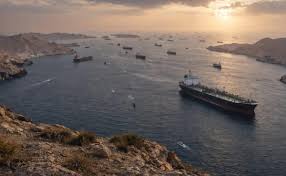
According to industry estimates, around 800 vessels became stranded in the Gulf as tensions escalated. Of these, approximately 300 were oil and gas tankers—ships carrying cargoes worth billions of dollars and vital to the functioning of economies across Europe, Asia and beyond.
The disruption has been described by the International Energy Agency as the most severe energy supply crisis in modern history, reflecting both the scale of the interruption and the central role of the strait in global trade.
Iran’s ability to disrupt traffic through the strait has long been viewed as one of its most potent strategic tools. While it does not formally control the entire waterway, its geographic position along the northern shore allows it to exert significant influence.
During the recent weeks, Iran’s Revolutionary Guards were reported to have issued threats to shipping, effectively deterring many vessels from attempting passage. Only a small number of tankers were able to transit—and even then, under tightly controlled conditions.
The route used by those vessels became informally known as the “Tehran tollbooth,” a narrow corridor south of Iran where ships were reportedly required to follow specific navigation paths. In some cases, operators were said to have paid as much as $2 million for safe passage.
Such measures, whether formalised or not, underscored the extent to which Iran could shape traffic through the strait without resorting to a full closure.
However, this leverage comes with risks. Prolonged disruption threatens not only global markets but also Iran’s own economic interests and its relationships with neighbouring states that depend on stable export routes.
In a statement posted on social media, Araghchi declared that the Strait of Hormuz was now “completely open” for the duration of the ceasefire. However, he added that vessels would still be required to follow designated routes—raising immediate questions about how open the waterway truly is in practice.
There remains significant ambiguity around key details like whether ships will still be expected to pay for safe pass, how quickly traffic can resume at scale, what security guarantees, if any, are being provided. Complicating matters further, Iranian state media offered mixed messaging. Some outlets described the foreign minister’s announcement as “incomplete,” suggesting that access could be revoked if a US naval presence in the region continues.
This lack of clarity has contributed to ongoing caution among shipping companies, many of which are reluctant to risk vessels and crews in what remains a highly volatile environment.
The Role Of The Ceasefire
The reopening of the strait is closely tied to broader diplomatic developments in the region.Former US President Donald Trump stated that Israel had agreed to a ceasefire with Lebanon, a move widely seen as a step forward in ongoing US-led efforts to de-escalate tensions with Iran.
While details of the agreement remain limited, the ceasefire has been interpreted by markets as a signal that the immediate risk of further escalation may be receding.
Oil and gas prices, which had surged during the height of the الأزمة, began to fall following the announcement—reflecting cautious optimism that supply routes could stabilise.
However, analysts warn that the situation remains highly fragile. The durability of the ceasefire will be critical in determining whether the Strait of Hormuz can remain open—and whether confidence among shippers can be restored.
The global shipping industry has responded to Iran’s announcement with guarded relief.
Thomas A Kazakos, head of the International Chamber of Shipping, described the reopening as a “positive step” but emphasised the need for clarity and coordination.
“While this announcement is a positive step there is still much uncertainty around what it means in practice,” he said.
“An orderly and sustained return to normal transit through the Strait will be essential. This will require close coordination between the International Maritime Organization, regional states, naval authorities, and the shipping industry to ensure that vessels can transit safely.”
His comments reflect a broader concern within the industry: reopening a waterway is one thing; restoring confidence is another.
Shipping companies must weigh a range of risks, including Potential renewed hostilities unclear rules governing transit, insurance costs, which have risen sharply, and the safety of crews.Until these issues are resolved, many operators may choose to delay or reroute shipments, prolonging the impact of the situation.
The disruption to flows through the Strait of Hormuz has had far-reaching consequences for global energy markets.
Oil and gas supplies from the Middle East—particularly from Gulf producers—form a cornerstone of global energy security. Interruptions to these flows can quickly translate into price volatility, affecting everything from fuel costs to electricity prices.
During the peak of the closure, Crude oil prices surged amid fears of shortages, liquefied natural gas shipments were delayed, refined fuel exports from Gulf refineries were disrupted.
The recent easing in prices reflects hopes that the situation may stabilise, but markets remain highly sensitive to developments. Even a partial reopening of the strait may not be enough to fully restore supply chains. With hundreds of vessels still waiting to transit, it could take weeks—or longer—for normal flows to resume.
The crisis in the Strait of Hormuz is part of a wider pattern of escalating tensions in the Middle East. Iran’s confrontation with the United States and Israel has played out across multiple fronts, from direct military exchanges to proxy conflicts and economic pressure.
Iran has demonstrated its ability to influence global dynamics far beyond the immediate crisis through its exertion of control over the strait. The response from Western powers has highlighted the limits of military pressure in resolving such disputes.
The tentative ceasefire suggests that diplomacy may still have a role to play. However, deep mistrust between the parties involved means that any progress is likely to be incremental and fragile. The coming days and weeks will be critical in determining whether the Strait of Hormuz can return to something approaching normal operation.
Key factors to watch include whether the ceasefire holds, how quickly stranded vessels begin to move, the response of insurance markets, the level of naval coordination in the region. If traffic resumes smoothly, it could mark a turning point in the crisis, easing pressure on global energy markets and reducing the risk of further escalation.

AD: Heritage And Restaurant Lounge Bar