
By Aaron Miller-
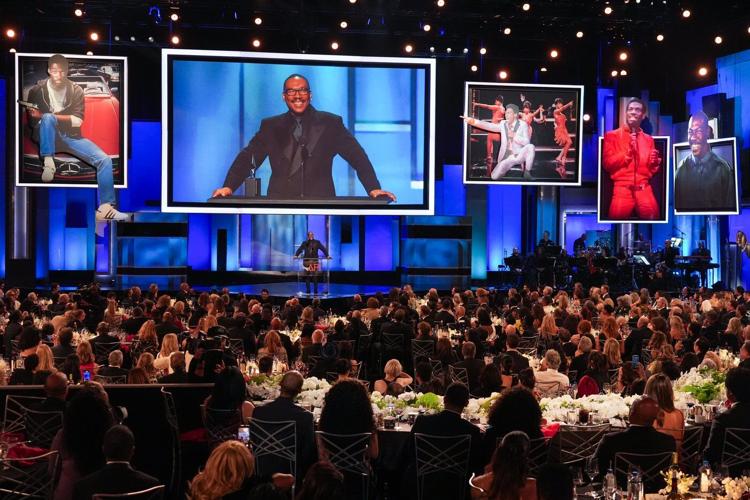
Eddie Murphy was greeted with a standing ovation at the Dolby Theatre in Los Angeles as the American Film Institute (AFI) presented him with its prestigious Life Achievement Award, recognising a career that has shaped modern comedy and film for nearly five decades.
The ceremony drew an A-list audience of actors, directors, and comedians who gathered to celebrate one of the most influential entertainers of his generation.

AD: Capeesh Restaurant
The tribute event unfolded as both a celebration and a reflection on Murphy’s extraordinary rise from teenage stand-up performer to global box office star.
His breakthrough years on “Saturday Night Live” in the early 1980s to blockbuster films such as Beverly Hills Cop, Coming to America, The Nutty Professor, and the Shrek franchise, Murphy’s impact was repeatedly highlighted by speakers who described him as a trailblazer who reshaped Hollywood comedy.
The night carried a festival-like atmosphere, with emotional speeches, comedic storytelling, and musical performances woven throughout the programme.

AD: Oysterian Sea Food Restaurant And Bar
While Murphy made his entrance, the audience rose to its feet in a prolonged ovation that followed him across the room. The reaction reflected both admiration and nostalgia, with many in attendance having worked alongside him during different phases of his career.
Spike Lee, who presented the award, described Murphy as a cultural force whose work helped redefine representation in American cinema. The audience included prominent figures such as Dave Chappelle, Chris Rock, Martin Lawrence, Kevin Hart, and Arsenio Hall, many of whom credited Murphy with opening doors for a generation of Black performers in mainstream entertainment.
The ceremony blended humour with heartfelt reflection, as several of Murphy’s long-time collaborators shared personal stories about his influence on and off screen. Martin Lawrence and Kenan Thompson spoke about his pioneering presence in comedy, while Mike Myers appeared in full Shrek makeup to honour Murphy’s iconic voice performance as Donkey in the animated franchise.
Jennifer Hudson delivered a musical tribute featuring songs from Dreamgirls, the 2006 film that earned Murphy an Academy Award nomination and marked one of his most acclaimed dramatic performances. The performance drew one of the night’s biggest responses, underscoring the breadth of Murphy’s career beyond comedy.
Stevie Wonder also contributed a playful moment, performing impressions tied to Murphy’s famous “Saturday Night Live” sketches, highlighting the mutual admiration between the entertainer and his peers. The blend of music and comedy gave the evening a celebratory tone that mirrored Murphy’s own career style.
In his acceptance remarks, Murphy expressed gratitude to his family, collaborators, and friends who had gathered for the occasion. He described the moment as deeply emotional, noting how rare it is to see so many parts of his life represented in one room. His speech mixed humour with sincerity, staying true to the tone that has defined much of his public persona.
Recognition of a 50-year cultural legacy
The AFI Life Achievement Award is one of the highest honours in the film industry, presented annually to individuals whose work has had a lasting impact on American culture. Murphy, now in his mid-sixties, joins a distinguished list of past recipients that includes Tom Hanks, Meryl Streep, Denzel Washington, and George Clooney.
This year’s ceremony also highlighted the scale of Murphy’s influence across multiple generations. His work has spanned stand-up comedy, television, live-action films, and voice acting, making him one of the few entertainers to achieve sustained success in so many areas of the industry.
Beyond the tributes and standing ovations, the evening served as a reminder of Murphy’s enduring cultural footprint. Many speakers noted that his work not only entertained audiences but also shifted expectations of what comedy and leading roles could look like for Black performers in Hollywood.
The event is scheduled to be released for streaming on Netflix later this year, allowing global audiences to experience the full tribute. With the evening came to a close, the ambiance within the Dolby Theatre stayed filled with appreciation. The cheers that accompanied Murphy as he left the stage reflected the feeling echoed all night: his career has shaped periods of entertainment and still impacts the future.
Even after the formal programme ended, many attendees lingered in their seats, continuing conversations about his influence and the scale of his achievements. The sense inside the venue was less like a conventional awards ceremony ending and more like the closing of a cultural chapter that had been carefully revisited and honoured.
Outside the theatre, guests filtered into the warm Los Angeles night still discussing standout moments from the tribute. Some reflected on Murphy’s early years as a teenage breakout on “Saturday Night Live,” while others pointed to his box office dominance in the 1980s and 1990s as a turning point for studio comedy films.
His ability to shift between sharp stand-up, character-driven sketch comedy, and mainstream Hollywood roles was repeatedly cited as part of what made his career unusually versatile and enduring.
Within the industry, the AFI honour has also prompted renewed reflection on Murphy’s legacy at a time when Hollywood continues to reassess its history and evolving standards of representation. Many observers noted that his early success helped open doors for a wider range of Black leads in major studio productions, influencing casting decisions and storytelling approaches that followed in later decades.
His presence at the centre of commercial cinema during a period when such visibility was far less common was frequently referenced throughout the night’s tributes.
Several guests also highlighted how Murphy’s comedic style has remained influential across generations of performers. His rapid-fire character shifts, physical comedy, and improvisational energy have been echoed in the work of comedians who rose to prominence years later.
Even in contemporary streaming-era comedy, references to his performances continue to appear, whether in direct homage or in the structural style of character-based sketch work.
The emotional tone of the evening carried into post-ceremony interviews and informal remarks made by attendees leaving the venue. There was a shared recognition that while Murphy’s career has already spanned nearly five decades, his influence remains active rather than historical.
The ongoing popularity of his films on streaming platforms, along with continued interest in potential new projects, suggests that his connection with audiences has not diminished with time.
Inside the theatre, production staff began the quiet process of dismantling the stage set used for tributes, while a handful of guests remained behind to take photographs and exchange final greetings.
The lingering atmosphere suggested that the event had functioned not only as an award presentation but also as a collective acknowledgement of a body of work that continues to resonate across different eras of entertainment.
The sentiment that followed the evening was consistent. Murphy’s career was not being framed as something completed, but rather as an ongoing presence within the industry’s creative landscape. The standing ovation that greeted him earlier in the night seemed to echo beyond the walls of the Dolby Theatre, underscoring a legacy that remains visible in contemporary film, comedy, and popular culture.

AD: Heritage And Restaurant Lounge Bar