
By Charlotte Webster-
A major food safety scare has erupted in Austria after samples of baby food produced by the well-known brand HiPP tested positive for rat poison, prompting an urgent recall and a cross-border investigation involving multiple European authorities.
The incident has triggered alarm among parents and regulators, with officials stressing that the affected products may have been deliberately tampered with rather than contaminated during manufacturing.

AD: Capeesh Restaurant
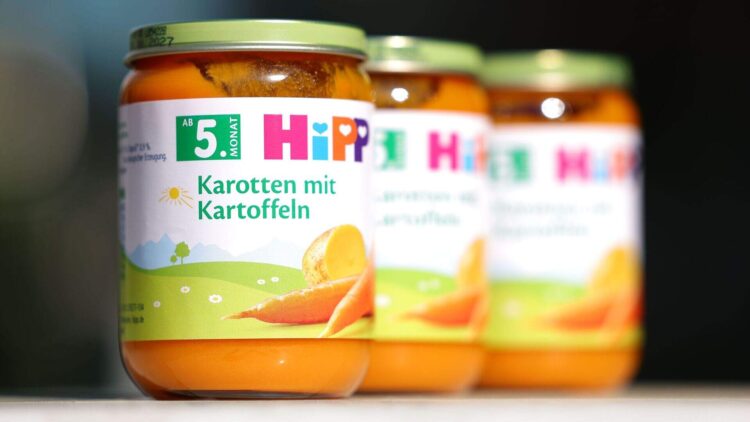
HiPP confirmed that it is withdrawing specific jars of baby food from circulation after Austrian authorities detected traces of anticoagulant rat poison in laboratory tests. The products in question are 190-gram jars of vegetable purée made with carrots and potatoes, intended for infants as young as five months old.
The recall has been expanded to cover hundreds of supermarket locations, with retailers instructed to remove the items immediately from shelves while investigations continue.
Authorities in Austria, supported by agencies in Slovakia, the Czech Republic and Germany, are treating the case as a potential criminal act rather than a production failure. HiPP has insisted that all affected jars left its production facilities in proper condition and that no internal contamination occurred during manufacturing.

AD: Oysterian Sea Food Restaurant And Bar
The company has stated that early findings point towards external interference, raising concerns that the products may have been deliberately altered after distribution.
Possible Tampering And Cross- Border Distribution Concerns
Police in the Austrian region of Burgenland reported that at least one contaminated jar was identified after a customer raised concerns about its condition.
Laboratory analysis confirmed the presence of a toxic substance consistent with rat poison. Investigators believe the contamination was not accidental, pointing to signs of tampering such as damaged seals, unusual odours, or missing safety indicators on affected jars.
Authorities are also examining whether the contamination could be linked to a broader extortion attempt or coordinated criminal activity. Early statements suggest that similar suspicious samples seized in neighbouring countries showed traces of toxic substances, prompting a wider European alert.
Officials have not ruled out the possibility that the incident spans multiple jurisdictions, with food products potentially altered after leaving controlled distribution channels.
Retailer SPAR, which distributed the affected products in Austria, has removed all HiPP baby food jars from its stores as a precautionary measure. The recall includes major supermarket chains under its umbrella, and customers have been advised not to consume any of the implicated products. Refunds are being issued regardless of receipt, as authorities attempt to prevent further risk exposure.
Health officials have warned that ingestion of rat poison can be extremely dangerous, as many formulations interfere with blood clotting and may cause internal bleeding. Symptoms may not appear immediately, sometimes taking days to develop, which has heightened concern among regulators about any potential exposure before the recall was issued.
The incident has sparked widespread concern among parents across Austria and neighbouring countries, particularly given the vulnerability of the affected consumer group. Infant food safety is heavily regulated within the European Union, and any breach involving potential poisoning is treated as a high-priority public health risk.
Food safety agencies have urged anyone who purchased the affected jars to return them immediately and monitor for signs of tampering. Officials have also encouraged consumers to report any suspicious packaging, particularly jars with broken seals or unusual smells, as these may indicate interference.
The Austrian Agency for Health and Food Safety has emphasised that the investigation is ongoing and that further laboratory testing is being carried out on products already removed from circulation. Authorities in multiple countries are sharing data to determine whether the contamination is isolated or part of a broader pattern affecting supply chains.
HiPP, one of Europe’s largest baby food producers, has stated that it is cooperating fully with law enforcement and regulatory bodies. The company has reiterated that it views the situation as a criminal incident outside its production system, while acknowledging the seriousness of the findings and the urgency of the recall process.
Food safety experts say the case highlights ongoing vulnerabilities in distribution networks, where products can be accessed after leaving factories but before reaching consumers. While such incidents are rare, they can have significant consequences due to the scale of modern supply chains and the difficulty of tracking tampering once products are widely distributed.
No injuries have been reported, and authorities continue to stress that the recall is precautionary. However, the presence of rat poison in baby food has intensified scrutiny across Europe’s food safety systems, with regulators expected to review security procedures for packaged goods in retail supply chains.
The investigation remains active, and officials have indicated that updates will follow as forensic analysis and cross-border cooperation continue. Authorities across Austria and several neighbouring countries are now working through a detailed evidence trail that includes laboratory results, distribution records, and surveillance data from retail and logistics networks.
The central question being examined is whether the contamination occurred at a single point of interference or whether multiple products were deliberately targeted across different locations.
Forensic specialists are conducting advanced chemical testing on seized jars to confirm the exact composition and concentration of the toxic substance detected in initial screenings. These results will help determine not only the nature of the contamination but also how and when the substance was introduced.
Investigators are also reviewing packaging integrity, including seals and batch markings, to establish whether tampering occurred before or after products reached retail shelves.
Cross-border cooperation has become a key element of the inquiry due to the international distribution network involved. Food safety and law enforcement agencies in Germany, Slovakia, and the Czech Republic are sharing shipment data and retailer records to trace the movement of affected batches.
This includes mapping delivery routes, warehouse storage points, and retail distribution timelines in an effort to identify any common link between the contaminated samples.
Retailers have been asked to retain all stock from the relevant production batches, even if already removed from shelves, to assist with further analysis.
Investigators are also interviewing supply chain personnel, including warehouse staff and logistics contractors, to determine whether any irregular activity was observed during handling or storage. Particular attention is being paid to any gaps in surveillance coverage or access control at distribution centres.
Consumer safety agencies have stressed that while the situation is being treated with urgency, there is currently no evidence of widespread contamination across all HiPP products. The focus remains on isolating the affected batches and determining whether the incident is an isolated criminal act or part of a broader pattern targeting packaged food products.
Officials are also working closely with public health authorities to ensure that clear guidance is issued to consumers as new findings emerge. Communication strategies are being reviewed to prevent misinformation and ensure that parents receive timely, accurate updates regarding product safety.
In parallel, law enforcement agencies are exploring possible motives, including whether the incident could be linked to extortion, targeted sabotage, or another form of criminal interference. While no group or individual has yet been publicly identified, investigators have not ruled out the possibility of coordinated activity involving multiple actors across borders.
Further updates are expected as forensic reports are finalised and international data-sharing efforts progress. Authorities have emphasised that the investigation will remain a priority until the source and circumstances of the contamination are fully understood and any responsible parties are identified.

AD: Heritage And Restaurant Lounge Bar