

By Isabelle Wilson-
American forces reportedly struck a vessel in the Caribbean suspected of transporting narcotics, according to disclosures from a US official to the Reuters news agency. Crucially, the strike resulted in an unknown number of survivors. This incident is believed to be the first time an attack in this military operation, which began in September, has left individuals alive. This latest action adds urgency to the ongoing debate over the legality and rationale behind the controversial campaign.
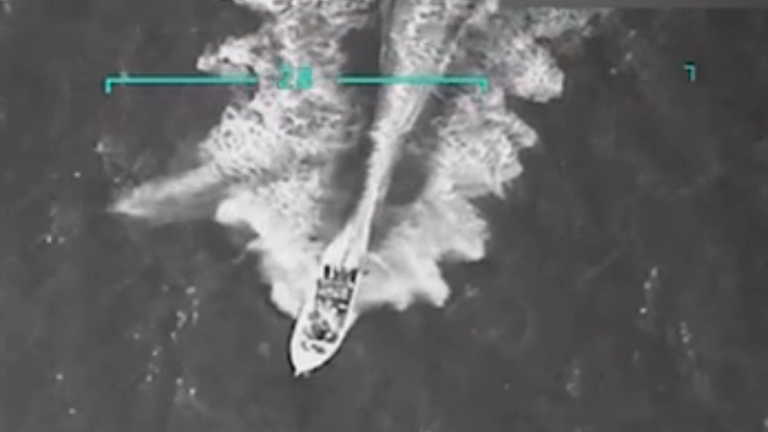
Donald Trump posted images earlier this week of a suspected Venezuelan vessel targeted by the US military. Pic: @realDonaldTrump/Truth Social
At least 27 people have tragically been killed by American forces across several strikes conducted off the coast of Venezuela in recent weeks. It remains unknown whether US forces rendered aid to the survivors from Thursday’s reported strike or whether those individuals are currently in custody. The Pentagon, which has controversially labeled those targeted in the strikes as “narcoterrorists” and “unlawful combatants,” did not immediately issue a public statement when contacted for comment.

AD: Capeesh Restaurant
The Trump administration has consistently framed alleged drug traffickers in the region as unlawful combatants, arguing they must be met with decisive military force. US officials contend that lethal strikes are regrettably necessary because conventional efforts, such as attempting to detain crew members and seize cargoes, have historically proven ineffective at stemming the flow of narcotics into the United States. Furthermore, previous videos of these US attacks have shown vessels being completely destroyed, and there had been no prior confirmed accounts of any survivors.
The intensified action is taking place against the backdrop of a significant US military buildup in the Caribbean. This force includes guided missile destroyers, F-35 fighter jets, a nuclear submarine, and approximately 6,500 troops, reflecting a strong escalation in the standoff with the Venezuelan government.
President Donald Trump confirmed on Wednesday that he had authorized the CIA to conduct covert operations inside Venezuela, fueling speculation in Caracas that the US aims to topple President Nicolas Maduro. Mr. Maduro has long been accused by the US of having strong links to drug trafficking and criminal groups, allegations he vehemently denies. The policy driving these Caribbean anti-drug strikes prioritizes destruction over detention to achieve policy objectives.

AD: Oysterian Sea Food Restaurant And Bar
International reaction to the aggressive tactics used in these Caribbean anti-drug strikes has been swift and highly critical, with some observers questioning whether the actions violate international law. On Thursday, Venezuela’s ambassador to the UN, Samuel Moncada, unequivocally condemned a recent US strike on a small boat that killed six people, labeling it “a new set of extrajudicial executions.” He urgently called upon the UN Security Council to launch a formal investigation into the five lethal attacks and the 27 reported deaths that have occurred since September. Mr. Moncada also cited the tragic case of two fishermen from Trinidad and Tobago believed to have been killed in a strike earlier in the week.
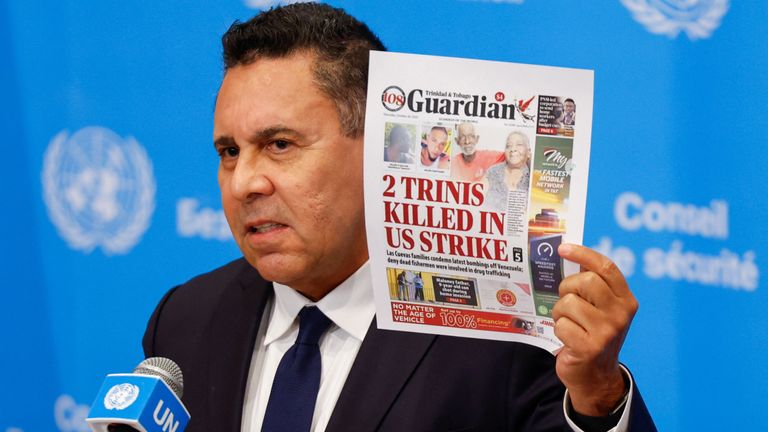
Venezuela’s ambassador to the UN condemns a recent US military strike in Caribbean waters. Pic: Reuters
Only a few miles separate Venezuela and neighboring Trinidad and Tobago at their closest point, making these waters a highly sensitive area for naval operations. Interestingly, Trinidad and Tobago’s Prime Minister Kamla Persad-Bissessar praised the initial strike on a boat suspected of carrying drugs in the southern Caribbean, stating that all traffickers should be killed “violently.”
The Trump administration has provided scant information about the strikes, including the identities of those killed or the specifics of the cargo seized. Former military lawyers argue the legal justification for killing suspected drug traffickers at sea, instead of apprehending them, fundamentally fails to satisfy requirements under the law of war. The Pentagon, insisting the strikes are legitimate, has formally framed the operation as “a non-international armed conflict” against drug cartels.
The reporting of survivors introduces a new and potentially legally challenging element into the controversial operation. The lack of clarity surrounding the survivors’ fate means the legal and diplomatic scrutiny over the US use of lethal force in the Caribbean will only intensify.

AD: Heritage And Restaurant Lounge Bar


