
By Gavin Mackintosh-
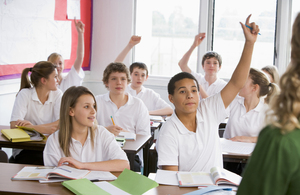
Young people across England, Wales and Northern Ireland will be given the opportunity to study a new Ukrainian GCSE from 2028, in a landmark education move designed to help thousands of Ukrainian children preserve their language, heritage and cultural identity while opening doors to future opportunities.
The new qualification will allow pupils to develop formal qualifications in Ukrainian for the first time through the UK education system, marking a significant milestone for families who have rebuilt their lives in Britain after fleeing Russia’s full-scale invasion of Ukraine.
AD: Capeesh Restaurant
Although the GCSE will be available to all pupils, it is expected to be particularly important for Ukrainian children and teenagers who have grown up or continued their education in Britain while maintaining connections with their homeland.
The ability for many young UKranians to study their mother tongue in a British classroom will represent more than an additional academic qualification. It will provide an opportunity to maintain a connection with their families, cultural traditions and national identity while developing skills that could benefit them throughout their education and working lives.
The Government said the initiative forms part of its wider commitment to supporting Ukraine and strengthening the longstanding relationship between the two countries.

AD: Oysterian Sea Food Restaurant And Bar
Education Secretary Lucy Powell said Ukrainian families who had made their homes in Britain should have every opportunity to maintain their connection to their heritage and take pride in their identity.
She said the new qualification would allow pupils to develop their language skills, celebrate Ukraine’s rich culture and history, and gain opportunities for further education and employment.
Powell also highlighted the importance of building lasting relationships between the two countries through education, describing young people as central to strengthening connections that would continue across future generations.
Education Secretary, Lucy Powell, said: ”As they build their lives here in the UK, it is right that Ukrainians and their children should have every opportunity to maintain that connection to their heritage and to be proud of who they are.
‘This new qualification is available to all pupils and will give them the chance to develop their language skills and celebrate Ukraine’s rich culture and history, while also opening pathways to future study and employment and strengthening our partnership with Ukraine.
Through that enduring partnership, we are building the lasting ties between our countries that will see the young minds of the future move forward together, and foster connections that transcend borders”.
Minister for Europe, Lord Stewart Wood, said: ”The introduction of a Ukrainian GCSE is a powerful symbol of the deep and enduring bonds between our two countries. It will give young Ukrainians in the UK the opportunity to celebrate their language and heritage, while gaining a qualification that recognises their skills. Through our 100 Year Partnership, the UK and Ukraine are investing in the ties between our people that will last for generations.
”The announcement has also been welcomed by Ukraine’s education authorities, who described the development as an important step towards recognising the educational and cultural needs of Ukrainian children living in Britain. Ukraine’s Minister of Education and Science, Andrii Butenko, said the qualification had been long requested by the Ukrainian community in the UK.
He expressed gratitude for the support provided by British schools, which opened their doors to thousands of Ukrainian children following the outbreak of Russia’s full-scale war, and welcomed the opportunity for those pupils to make educational choices while retaining their cultural identity. The qualification will follow the structure of other modern foreign language GCSEs, assessing pupils across four key areas: listening, speaking, reading and writing.
However, the course will go beyond language skills alone by recognising the historical and cultural influences that have shaped Ukrainian. This will give pupils a broader understanding of the language and the society in which it is spoken.
The examination board AQA has been appointed to lead the next stage of development, working alongside language specialists and education experts to create a qualification that meets academic standards while reflecting the needs of Ukrainian learners and the wider community.
AQA chief executive Colin Hughes said the organisation was pleased to be working with the Department for Education on the project. He said the GCSE would give young people, including those displaced by the war, an opportunity to gain formal recognition for their Ukrainian language abilities while encouraging greater understanding of Ukrainian culture across Britain.
The qualification is expected to be available for first teaching in September 2028, with the first examinations scheduled to take place in 2029.
The move builds on the UK-Ukraine 100-Year Partnership, which aims to establish lasting relationships between the countries, as well as the UK-Ukraine Schools Partnership, which encourages educational collaboration and cultural exchange between schools.
More than 300 schools across the two countries are now involved in the schools programme, which connects teachers and pupils through joint educational projects, reading initiatives and opportunities to develop language skills. The partnerships are designed to strengthen cultural understanding while allowing children in Britain and Ukraine to learn from one another and develop friendships that extend beyond national borders.
The GCSE announcement also comes as the Government prepares to launch a consultation on a revitalised national curriculum. The proposed changes aim to maintain strong academic foundations while giving young people a broader range of skills and opportunities to prepare them for employment and further education.
Language learning is expected to form an important part of the changes, with a renewed emphasis on helping pupils communicate confidently, understand different cultures and develop a stronger foundation for future study. T
The new Ukrainian qualification also arrives against the backdrop of Britain’s continuing financial and military support for Kyiv. The Government has announced a further £10 billion package of economic and military assistance, described as its largest ever package of support for Ukraine.
Minister for Europe Lord Stewart Wood said the GCSE represented a powerful symbol of the deep relationship between the two nations and would help Ukrainian young people celebrate their heritage while gaining recognition for their abilities.
The announcement also sends a wider message about the role schools can play in helping young people maintain their identities while becoming part of a new society.
When the first pupils sit the Ukrainian GCSE in 2029, they will be doing more than demonstrating their ability to read, write and communicate in another language. They will be gaining formal recognition for a cultural heritage that remains an important part of their lives.
The qualification could also encourage more British pupils to discover Ukrainian language and culture, strengthening understanding between communities and creating educational connections that may last for generations.
Thousands of Ukrainian children who now call Britain home, will see the new GCSE represents an opportunity to look towards their future without having to leve an important part of their past behind. The announcement offers an important educational opportunity.Ukrainian families who have experienced the upheaval of war, displacement and rebuilding their lives in another country.
It also confirms the role schools can play in helping young people maintain their identities while becoming part of a new society. When the first pupils sit the Ukrainian GCSE in 2029, they will be doing more than demonstrating their ability to read, write and communicate in another language. They will be gaining formal recognition for a cultural heritage that remains an important part of their lives.
The qualification could also encourage more British pupils to discover Ukrainian language and culture, strengthening understanding between communities and creating educational connections that may last for generations. The new GCSE represents an opportunity to look towards their future without having to leave an important part of their past behind.
There us also the question of whether the idea risk seperating Ukranian children in the UK from their British counterparts, if they are allowed to take separate GCSE’s from the rest of their classmates. How then will the grades be a suitable determinant
A spokesperson fromThe Departmet Of Education told The Eye Of Media.Com: ”This new introduction will open to anybody who wants to study the Ukraine language at GCSE’s, a spart of our commitment to supporting Ukraine.
AD: Heritage And Restaurant Lounge Bar
-
Share On
- Categories
- Date