
By Gabriel Princewill-
Tyson Fury has offered a deeply personal insight into his battle with mental illness, revealing how he was diagnosed with mild schizophrenia after reaching the pinnacle of professional boxing in 2015. The former world heavyweight champion has spoken candidly about the psychological struggles that threatened to destroy his career, describing a period of overwhelming darkness, crippling anxiety and frightening experiences that left him fearing for his life and sanity.
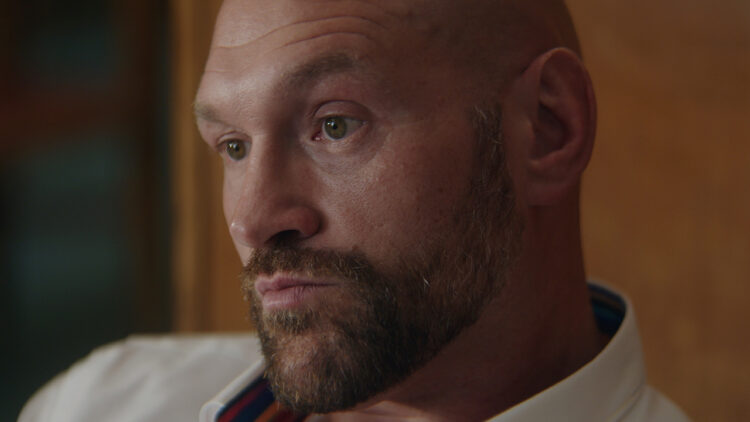
The revelations feature in a new feature-length Netflix documentary, TYSON FURY, which explores the boxer’s remarkable journey from heavyweight champion to personal crisis and eventual return to the sport. The documentary, scheduled for release on November 27, provides an intimate account of the challenges Fury faced away from the boxing ring, offering a different perspective on a man widely recognised for his confidence, resilience and outspoken personality.

AD: Capeesh Restaurant
Fury’s mental health struggles emerged following his career-defining victory over Wladimir Klitschko in November 2015. The British heavyweight stunned the boxing world by defeating the Ukrainian, ending his long reign as world champion and establishing himself as one of the leading fighters of his generation. However, behind the celebrations and sporting success, Fury was beginning to experience a serious deterioration in his mental health. He was scheduled to face Klitschko in a rematch in October 2016, but withdrew after being declared medically unfit to fight. In the months following his historic victory, Fury had spoken openly about his struggles with alcohol and drug addiction, alongside significant weight gain. His personal difficulties eventually became so severe that he was admitted to hospital in June 2016 with a suspected heart attack.
It was during this period that Fury began experiencing disturbing symptoms, including hearing voices that appeared to come from external sources. Recalling the frightening experience in the documentary, the boxer described the mental anguish that consumed him.

AD: Oysterian Sea Food Restaurant And Bar
“Words can’t explain the darkness I was in,” Fury said. “It was like a living version of the pits of hell.” He admitted that his anxiety became increasingly unbearable, leaving him terrified about what his future might hold. At one stage, he feared that his condition would eventually result in him being confined to a psychiatric institution.
“I thought I would end up in a padded room with the door locked, and that scared me so much,” he explained. Fury eventually sought professional psychiatric assistance in London after recognising that he could no longer manage his symptoms alone. During an extensive assessment, he was asked a series of questions about his mental health and experiences, with the boxer recalling that he identified with symptoms associated with depression, anxiety and bipolar disorder.
His experiences in hospital were particularly distressing. Fury explained that he believed the radio had started talking directly to him, while the voices he heard threatened to kill him and his family. The frightening episodes left him struggling to distinguish between what he was experiencing mentally and the reality around him, he says. His wife, Paris Fury, who married the boxer in 2008, witnessed the deterioration in his condition first-hand. Visiting him in hospital, she said she could see that her husband was struggling with something far beyond the ordinary pressures associated with professional boxing. Paris recalled being told by doctors that Fury had experienced an anxiety attack, but admitted that she initially struggled to understand the wider diagnosis.
She revealed that medical professionals had described her husband as having mild schizophrenia, although the terminology was unfamiliar to her at the time. Paris acknowledged that she had misconceptions about the condition and initially found it difficult to associate the diagnosis with the man she knew. However, after receiving a clearer explanation of bipolar disorder and its symptoms, she began to recognise how closely the descriptions reflected her husband’s behaviour and experiences.
According to the NHS, schizophrenia is a long-term mental health condition associated with psychosis, which can affect how individuals interpret reality. Symptoms may include hallucinations and delusions. Bipolar disorder, meanwhile, can involve significant changes in mood, including episodes of depression and periods of elevated mood.
Despite the severity of his struggles, Fury eventually began the difficult process of rebuilding his life and returning to professional boxing. Three years after defeating Klitschko, he returned to the sport and continued his journey towards the top of the heavyweight division. In December 2018, he claimed the WBC heavyweight championship following his victory over Deontay Wilder, marking an extraordinary chapter in his comeback. His journey has since become an important part of his public identity, with Fury repeatedly speaking about the importance of mental health awareness and seeking professional support when struggling psychologically.
The gypsy king has been notorious for several below public comments which can now been attributable to the bipolar and mental health issues he describes.
Following his victory over Wladimir Klitschko, Fury attracted widespread criticism after making remarks about women’s place in society. Speaking about women in sport, he said: “A woman’s best place is in the kitchen and on her back.” The comments provoked considerable criticism, particularly because they came shortly after he had become world heavyweight champion.
Fury also attracted criticism for comments about Olympic champion Jessica Ennis-Hill. When asked about the British athlete, he questioned whether she was a runner before commenting on her appearance. He said she looked attractive in a dress, adding that she “slaps up good”. The remarks were criticised as sexist and inappropriate, particularly given Ennis-Hill’s considerable sporting achievements. In a November 2015 interview with the Mail on Sunday, Fury made comments linking homosexuality, abortion and paedophilia to biblical predictions about the end of the world.
He said: “There are only three things that need to be accomplished before the devil comes home.” He then listed homosexuality being legalised, abortion and paedophilia. The remarks generated widespread condemnation and prompted calls for him to be removed from the BBC Sports Personality of the Year shortlist. Fury also demonstrated his confrontational approach when challenged about his controversial remarks. Speaking to boxing broadcaster iFL TV, he dismissed his critics with the insult: “They can suck my b***s.” This comment was particularly crass and unacceptable, but the public had become used to the former chamion’s unfiltered comments. many found his unpredictability both exciting and funny, whilst others felt their needed to be tighter oversight of his public comments. The outspoken boxing warrior argued that his achievements in defeating Klitschko gave him the right to defend himself against criticism. He also attacked supporters of a petition calling for his removal from the BBC award shortlist.
HIlarious and often engaging, tyson fury has always sounded forthright and confident when expressing his intentions about upcoming bouts. H e is expected to repeat the same against Joshua
Ahead of his anticipated showdown with fellow British heavyweight Anthony Joshua on December 11, the documentary offers a timely reminder that sporting success does not necessarily reflect what someone is experiencing privately. While Fury continues to prepare for one of the biggest contests of his career, his story extends beyond championship belts, knockouts and sporting rivalries. Reflecting on everything he has achieved, Fury made it clear that his greatest source of pride is not his success inside the ring but the people who stood beside him during his darkest moments. Fury added: “If you look at my life, there’s a lot of achievements, a lot of good stuff, a lot of success,” he said. “But the most successful thing I have in my life is my family, my kids and my wife.”

AD: Heritage And Restaurant Lounge Bar