
By Aaron Miller-
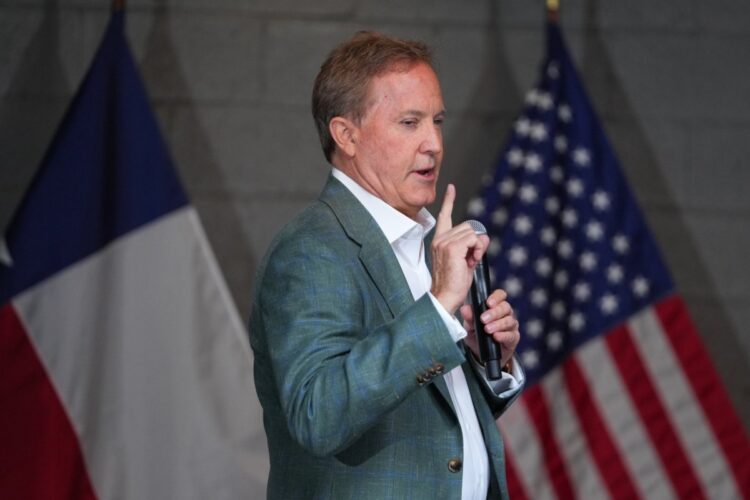
Former President Donald Trump has thrown his political weight behind Ken Paxton in Texas’s fiercely contested Republican Senate runoff, delivering a major boost to Paxton’s campaign against longtime incumbent Sen. John Cornynand intensifying an already bitter battle within the GOP.
Trump’s endorsement, announced just days before the May 26 runoff election, marks one of the most consequential interventions of the 2026 primary season. The former president praised Paxton as a “true MAGA warrior” and signalled that he sees the Texas attorney general as the candidate most aligned with the populist conservative movement that continues to dominate Republican politics.

AD: Capeesh Restaurant
The endorsement is widely viewed as a setback for Cornyn, a four-term senator who has long represented the party’s traditional conservative establishment. Although Cornyn has supported many of Trump’s legislative priorities during their years in Washington, the relationship between the two men has often been uneasy.
Trump previously criticised Cornyn over bipartisan legislation, including gun safety measures passed after the 2022 school shooting in Uvalde, Texas, and questioned his loyalty during key moments of Trump’s legal and political battles.
In months, Republican strategists had speculated over whether Trump would endorse either candidate. The former president initially avoided taking sides, despite pressure from allies of both campaigns.

AD: Oysterian Sea Food Restaurant And Bar
Cornyn supporters hoped Trump would ultimately back the incumbent in the interest of party stability, while Paxton’s campaign aggressively courted Trump’s base and portrayed Cornyn as disconnected from grassroots conservatives. Trump’s decision now appears to have reshaped the final days of the runoff campaign. Political analysts say the endorsement could energise conservative turnout and further consolidate support among Republican voters who remain intensely loyal to Trump.
Texas remains one of the strongest Republican states in the country, but the primary battle has exposed deep divisions between establishment Republicans and hardline MAGA conservatives.The race has also become one of the most expensive Senate contests in recent history. Millions of dollars have poured into advertising and voter outreach efforts from campaigns, super PACs and outside political groups. Cornyn entered the runoff with significant institutional support from Senate Republicans in Washington, while Paxton relied heavily on grassroots activists and conservative media allies.
The Texas runoff is increasingly being viewed as a referendum on Trump’s continued dominance over Republican politics. By endorsing Paxton over a sitting senator with decades of experience, Trump has once again demonstrated his willingness to challenge establishment Republicans whom he believes are insufficiently loyal to his political movement.
Paxton has built his campaign around close alignment with Trump and conservative populist causes. During Trump’s presidency and after the 2020 election, Paxton emerged as one of Trump’s most outspoken defenders.
He backed legal efforts challenging the 2020 election results and frequently used his office as Texas attorney general to fight Democratic policies on immigration, voting rights and federal regulation. Paxton’s political rise has been shadowed by years of controversy. He survived an impeachment trial in 2023 after being accused by fellow Republicans in the Texas House of corruption and abuse of office.
He also faced a long-running securities fraud case that was eventually settled. Critics within the GOP have argued that Paxton’s legal troubles could weaken Republicans in a general election against Democrats.
Cornyn has repeatedly highlighted those concerns during the campaign, presenting himself as the safer and more electable Republican option. Allies of the senator warned that nominating Paxton could give Democrats an opening in a state that, while still Republican-leaning, has become increasingly competitive in recent election cycles.
Despite those warnings, Paxton has maintained strong support among conservative activists who view him as a fighter against the political establishment. Trump’s endorsement is expected to strengthen that image and potentially push undecided Republican voters toward the attorney general in the final stretch of the race.
The clash between Cornyn and Paxton reflects a broader struggle inside the Republican Party over its future identity. Across the country, Trump-backed candidates have increasingly challenged incumbent Republicans seen as too moderate or too connected to traditional party leadership. Texas, long a cornerstone of Republican power, has become the latest battleground in that internal ideological war.
Democrats See Opportunity in Divided GOP Race
While Republicans remain focused on the bruising runoff, Democrats are watching closely and hoping the divisive primary could create an opening in November. State Rep. James Talarico, the Democratic nominee, has emerged as an unexpectedly strong fundraiser and has attracted national attention from party strategists eager to compete in Texas.
Recent polling has suggested that Talarico could mount a competitive challenge against either Republican nominee, particularly if the GOP emerges from the runoff deeply fractured. Democrats believe Paxton’s controversies could alienate moderate suburban voters and independents, while Republicans argue that Trump’s endorsement could help unify conservatives before the general election.
The national stakes are significant. Republicans are defending several Senate seats in the 2026 midterms, while Democrats are seeking a path back to Senate control. A competitive Texas race, once considered unlikely, could force Republicans to spend heavily in a state they typically dominate. Trump’s endorsement also sends a message beyond Texas.
It reinforces the idea that loyalty to Trump remains a defining factor in Republican primaries, even for veteran lawmakers like Cornyn who have largely supported the former president’s agenda.
With GOP incumbents across the country, the Texas contest may serve as a warning that establishment credentials and Senate seniority are no guarantee of political security in the Trump era. Cornyn has responded cautiously to Trump’s endorsement, emphasising his conservative record and arguing that he remains the strongest candidate to keep the seat in Republican hands.
His campaign has continued attacking Paxton over ethics concerns and electability issues, while Paxton’s supporters have portrayed the senator as part of an outdated Republican establishment increasingly rejected by the party base. Early voting continues across Texas, Republicans now face a defining question: whether the party’s future belongs to experienced institutional conservatives like Cornyn or to Trump-aligned insurgents like Paxton.
Trump has made his preference unmistakably clear, and the outcome of the runoff could shape not only the future of Texas politics but also the direction of the Republican Party heading into the 2026 midterm elections.

AD: Heritage And Restaurant Lounge Bar