

By Tony O’Reilly-
Super Typhoon China Hong Kong is approaching. This severe storm has caused significant destruction in Taiwan, resulting in at least 14 fatalities and 152 people reported missing.. The devastation was most severe in the eastern county of Hualien, a popular tourist destination. A resident described a “tsunami” of water hitting the town of Guangfu when a barrier lake burst, releasing 60 million tonnes of water. In Taiwan, over 7,000 people were evacuated, and a village called Dama was completely flooded. Many locals are still stranded among mud and rocks.
Rescue efforts are now underway. Regions across Taiwan have sent at least 340 soldiers to Hualien to assist with rescue operations. Troops are seen handing out water and instant noodles to survivors. The super typhoon China Hong Kong also impacted the northern Philippines, where at least four people were killed and nearly 700,000 were affected in the Luzon region.

AD: Capeesh Restaurant
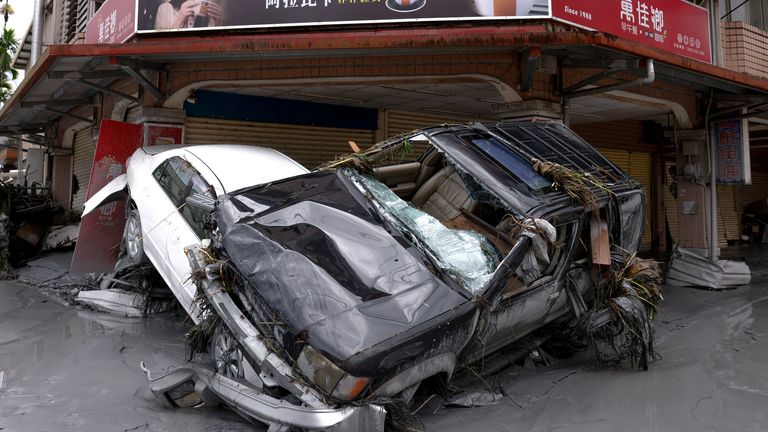
Hualien in Taiwan in the aftermath of Super Typhoon Ragasa. Pic: Reuters
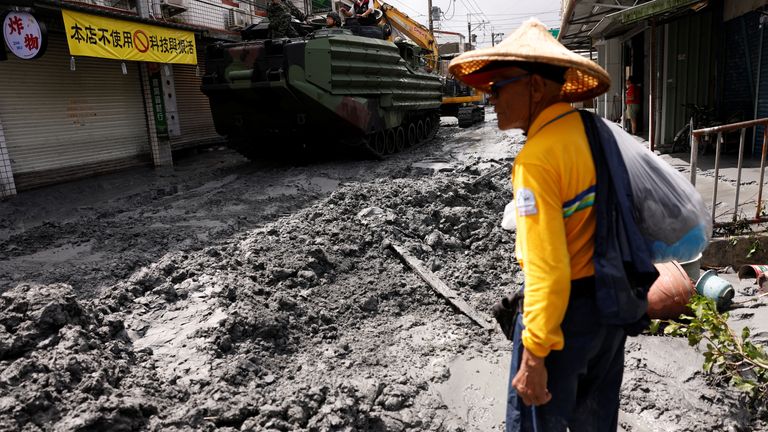
A road filled with mud brought by flooding in Hualien, Taiwan. Pic: Reuters
Super Typhoon China Hong Kong: Preparations and Impact
In Hong Kong, authorities have raised the storm level to its highest level of 10. The city is experiencing fierce winds exceeding 120 mph. The wind tore off parts of a pedestrian bridge’s roof. Hundreds of trees were knocked down, and over 60 injured people received treatment at local hospitals. A video showing waves flooding a hotel went viral, underscoring the storm’s severe impact.
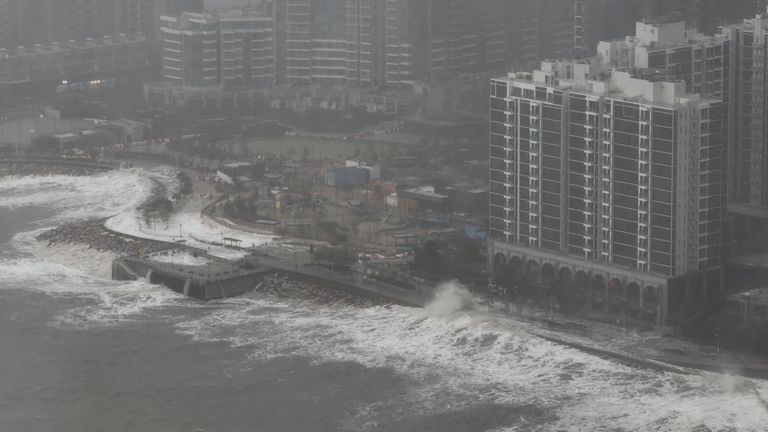
Waves crash onto the shore at Tseung Kwan O, in Hong Kong. Pic: Reuters
Meanwhile, mainland China is preparing for a direct hit in Guangdong province. Officials have evacuated over 370,000 residents, and nearly 1.9 million people have been relocated to safer areas. This massive super typhoon, China Hong Kong, is expected to cause more widespread flooding and infrastructure damage in the coming hours. The storm’s trajectory highlights the increasing intensity and unpredictability of extreme weather events in the region.
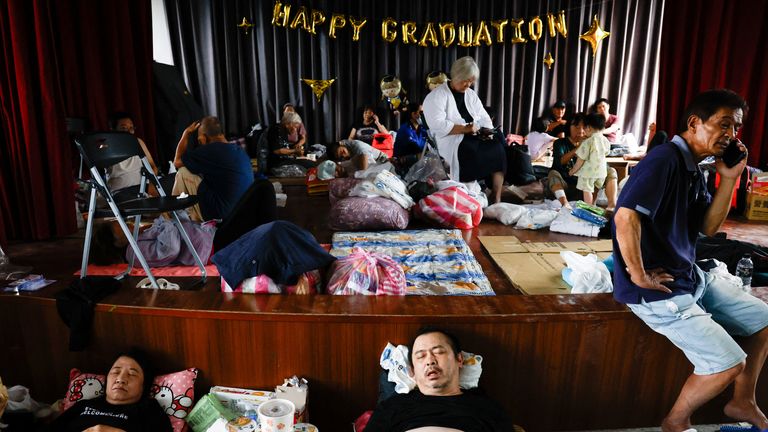
People shelter inside a school in Hualien, Taiwan. Pic: Reuters
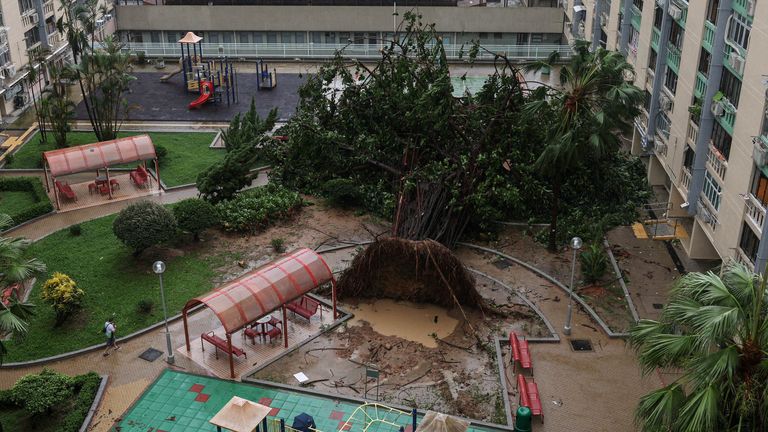
A tree lies toppled in Hong Kong. Pic: Reuters
The ongoing crisis in the Pacific region serves as a stark reminder of the global threat posed by extreme weather. The ongoing crisis in the Pacific region serves as a stark reminder of the significant global threat posed by extreme weather events. As we witness the increasing severity and frequency of storms, floods, and other natural disasters, it becomes increasingly clear that no area is immune to the effects of climate change. The situation in the Pacific not only affects local communities and ecosystems but also underscores the interconnectedness of our world. Each extreme weather event reverberates across borders, impacting economies, displacing populations, and straining resources. This crisis reminds us of the urgent need for collective action and collaboration on a global scale to address the underlying issues contributing to these environmental challenges. Governments, organisations, and individuals need to unite in their efforts to mitigate the impacts of extreme weather and work towards a sustainable future for all.

AD: Oysterian Sea Food Restaurant And Bar
For real-time updates on the storm’s path, you can visit the Sky News live blog.

AD: Heritage And Restaurant Lounge Bar


