

By Lawal Abdulmalik-
The picturesque yet remote landscapes of the British Isles might seem like a peaceful setting, but for Deborah Haynes, a journalist with Sky News, it became the backdrop to an alarming personal health crisis. Known for her sharp insights and dedication to reporting the news, Haynes faced an unexpected enemy: a rare and debilitating disease that left her critically ill. Sky News’s security and defence editor, Deborah Haynes, is recovering after being left critically ill by an extremely rare disease. This first-person account details her harrowing battle with atypical Haemolytic Uremic Syndrome (aHUS). Her story is one of sheer determination and also a testament to the heroic efforts of a dedicated medical team.
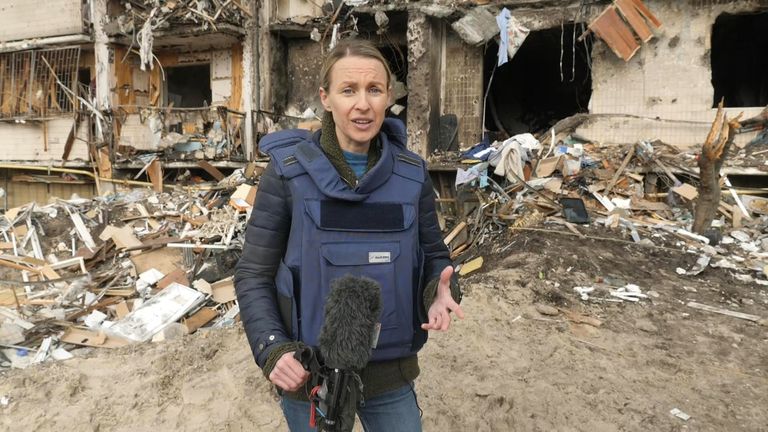
Deborah Haynes covers some of the biggest foreign stories around the world. She also hosts The Wargame podcast. Sky News
Her ordeal began subtly while she was on the remote Channel Island of Sark. Deborah initially experienced fatigue that she chalked up to her demanding work schedule. However, as additional symptoms emerged—persistent pain and a general sense of unwellness—she realised something was seriously wrong. She quickly became severely unwell. The typical narrative of seeking medical advice took a darker turn as she encountered misdiagnoses and the bewilderment of healthcare professionals. A life-threatening condition threatened to overwhelm her. Deborah Haynes’ illness required an incredibly swift response from local volunteers and medical staff. It took an extraordinary effort to get her from her sickbed on the island to an intensive care unit in London. Her journey involved a series of unconventional transports, including a tractor-towed ambulance cart, a lifeboat, and a private jet.

A some 100-metre-high ridge connects the rock islands on Sark. File pic: AP
Deborah’s symptoms were puzzling, leading her on a harrowing journey through a medical maze. The rarity of her condition meant she encountered doctors who were ill-equipped to handle such an unusual illness. With only a handful of cases documented globally, each step toward a proper diagnosis felt like stepping into uncharted territory. The challenge heightened as Deborah struggled not only with her health but also with the overwhelming reality of being part of such a select group of patients.
Faced with an uncertain prognosis, she sought out specialists but found that many were unfamiliar with her specific illness. The isolation and despair that often accompany rare diseases weighed heavily on her. It became clear that in addition to physical healing, raising awareness about her condition was paramount—not just for her own journey, but also for others grappling with similar rare health challenges.
The Nature of Deborah Haynes’ Illness
Deborah Haynes’ illness is incredibly serious. Atypical Haemolytic Uremic Syndrome (aHUS) is an ultra-rare disease that causes the immune system to attack and destroy the body’s own blood cells. It can rapidly harm vital organs, particularly the kidneys. Haynes, who had a previous attack of the condition eight years ago, emphasises that a quick diagnosis and treatment were crucial to her survival this time. She credits the rapid response of Sark’s sole doctor, volunteer rescuers, and a specialist team at University College Hospital (UCH) for her life. The illness is treated with a drug called eculizumab. Deborah Haynes’ illness is a stark reminder of how quickly health can deteriorate without warning. In her own words, Haynes hopes that by sharing her story, she can raise crucial awareness about the disease.
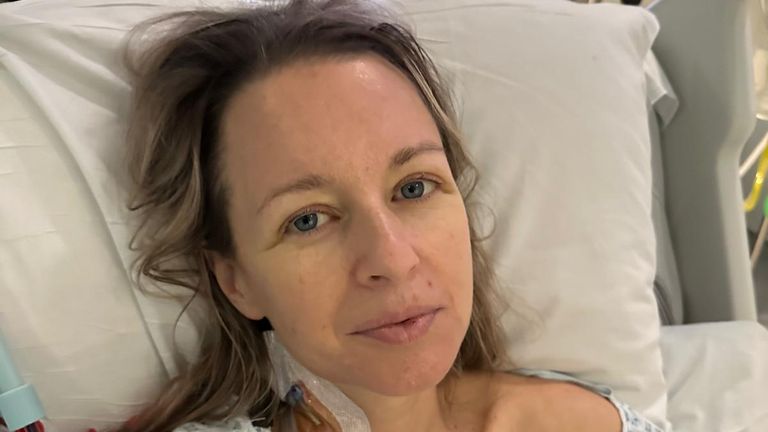
Deborah Haynes in the ICU after falling ill with atypical Haemolytic Uremic Syndrome (aHUS). Sky News
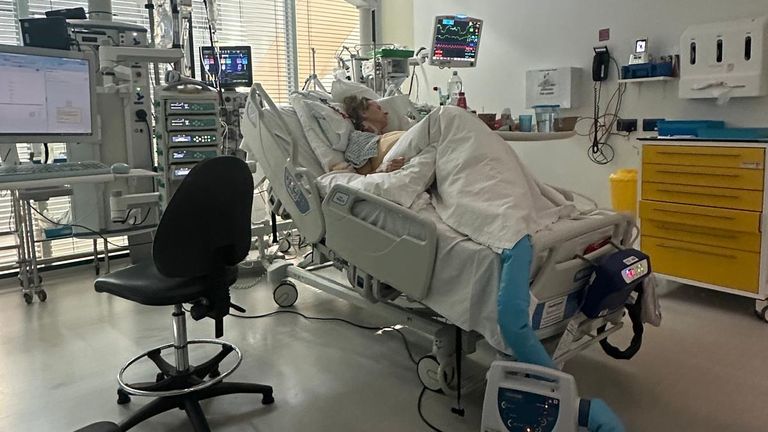
The ‘ultra-rare’ condition is caused by part of the immune system becoming overactive. Sky News
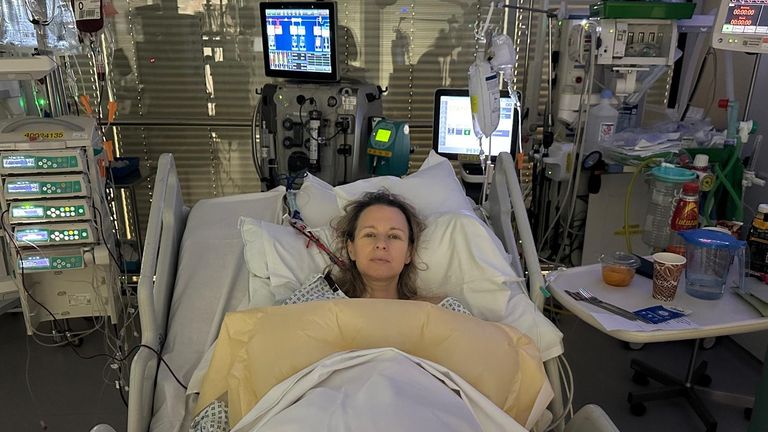
An aHUS attack can be fatal, so the speed of diagnosis is key. Sky News
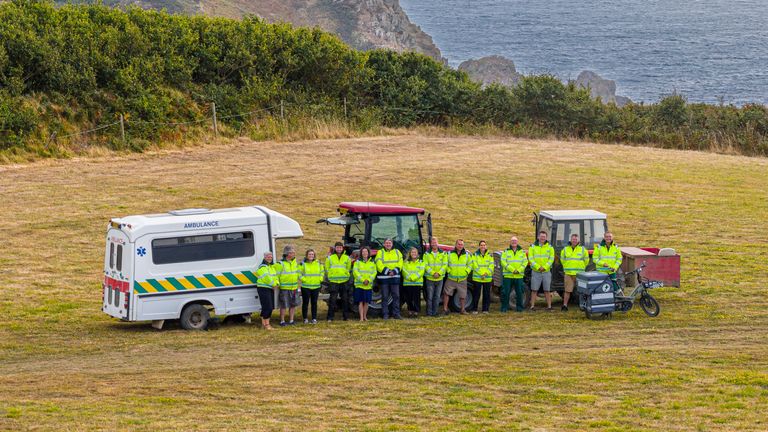
The Sark medical team, who helped save Deborah’s life. Sky News
I inquired with a physician about my chances of survival.
Within moments of the alert from Dr Jenkins, a tractor towing a white ambulance cart arrived at our hotel, and the emergency responders assisted my husband and me onto it. They transported us to the port to await the “Flying Christine,” an ambulance boat staffed by two paramedics and operated by St John’s Ambulance and Rescue Service. This team took us across the sea to Guernsey hospital before we were moved to a specialist medical aircraft to be flown to Luton airport. The final segment involved a more traditional ambulance ride to UCH, where critical care doctors, along with Professor Scully and her team, were ready to begin my treatment.
This swift action by the NHS and a network of volunteers ensured that I was taken from my sickbed in Sark to life-saving care in London in less than 11 hours. At that point, the aHUS attack had led to a drop in my haemoglobin and platelet levels, and my kidneys were failing. The primary treatment was eculizumab, given intravenously, but I also required blood transfusions and needed to be placed on a machine that functions as a form of dialysis. The comfort of being in the best possible facility for my condition was overwhelming, but the following days were still daunting as my body required time to react.

AD: Capeesh Restaurant
At one moment, I asked a doctor if I was going to die—she reassured me that I would not.
Deborah has since been released and states that she is ‘recovering.’ On another occasion, while filled with medication, connected to various machines, and drifting in and out of consciousness, I dreamed that I was under missile attack—an occupational hazard for a journalist covering war—and attempted to leap out of bed into an imaginary shelter, prompting the nurse attending to me to spring into action and ensure I remained still.
However, over time, the treatment began to take effect. After nearly two weeks in the hospital, including one week in intensive care, I was stable enough to be discharged. Today, I am recovering and deeply thankful to everyone who contributed to saving me from my condition.

AD: Oysterian Sea Food Restaurant And Bar

AD: Heritage And Restaurant Lounge Bar
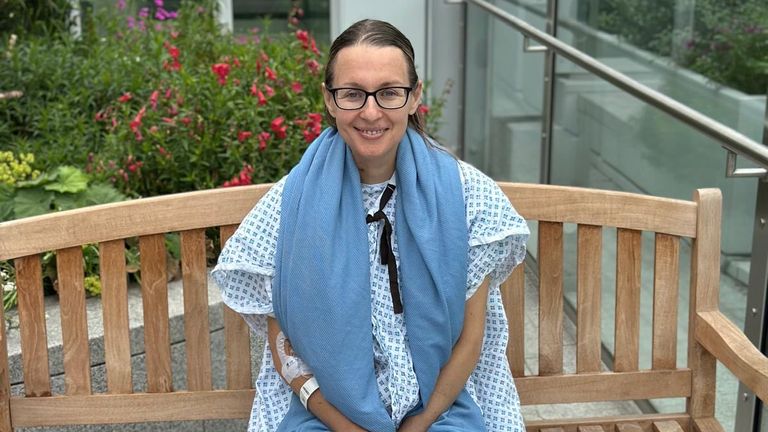
Deborah has now been discharged and says she is ‘on the mend’. Sky News
Sharing Her Story
In sharing her story, Deborah transformed from journalist to advocate. She documented her experiences in various formats, aiming to provide insight and support for those who might feel alone in their struggles. Her narrative not only sheds light on the personal trials she faced but also emphasises the broader implications of treating rare diseases, urging the medical community and society to pay attention.
The plight of those with rare diseases often goes unnoticed, creating a sense of despair and helplessness. Through her advocacy, Deborah Haynes is not merely recounting her struggles; she is pushing for the necessary changes in how healthcare addresses these obscure yet impactful conditions. By spotlighting her journey, she aims to foster a deeper understanding and compassion among both doctors and the public.
As she continues to navigate her health challenges, Deborah remains committed to advocating for greater awareness and support for rare diseases. Her story is a reminder of the importance of patient voices and highlights the ongoing need for research and understanding in the medical field. Through her courage and openness, she hopes to inspire others to not only share their stories but to advocate for the recognition and treatment of rare diseases, emphasising that no one should have to fight such battles in silence.
You can find more information about the disease itself from the National Organisation for Rare Disorders (NORD), It is a a reputable source for medical information.
Read more on Sky News.


