

By Aaron Miller-
The Philippines has tragically declared a national state of emergency following the catastrophic impact of Typhoon Kalmaegi, which ripped through the central provinces and became the deadliest natural disaster to strike the archipelago this year.
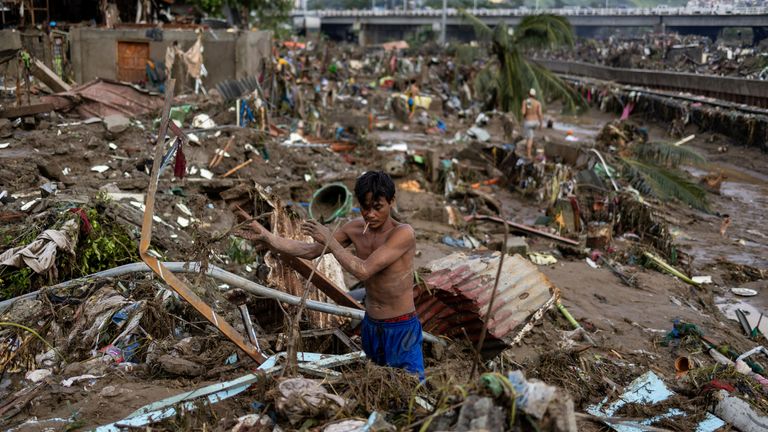
A man picks through the remains of his home after Typhoon Kalmaegi in Talisay, Cebu, Philippines. Pic: Reuters
The latest reports confirm a grim death toll of at least 114 people, with a further 127 individuals still reported missing across the heavily affected regions. President Ferdinand Marcos Jr. officially issued the “state of national calamity” declaration after convening an urgent meeting with senior disaster response officials on Thursday. This critical declaration allows authorities to mobilize the military and release vital emergency funds immediately to accelerate relief efforts across the devastated provinces.
Among the dead were six people who were killed in a separate incident when a Philippine air force helicopter crashed in the southern province of Agusan del Sur on Tuesday while en route to help provide humanitarian help to provinces battered by Kalmaegi, the military said without providing other details, including what could have caused the crash.
Deputy administrator of the Office of Civil Defense, Bernardo Rafaelito Alejandro IV, and provincial officials said most of the deaths were reported in the central province of Cebu, which was pummelled by Kalmaegi on Tuesday, setting off flash floods and causing a river and other waterways to swell.
Residents climbed up to their roofs, pleading for rescue.

AD: Heritage And Restaurant Lounge Bar

AD: Capeesh Restaurant
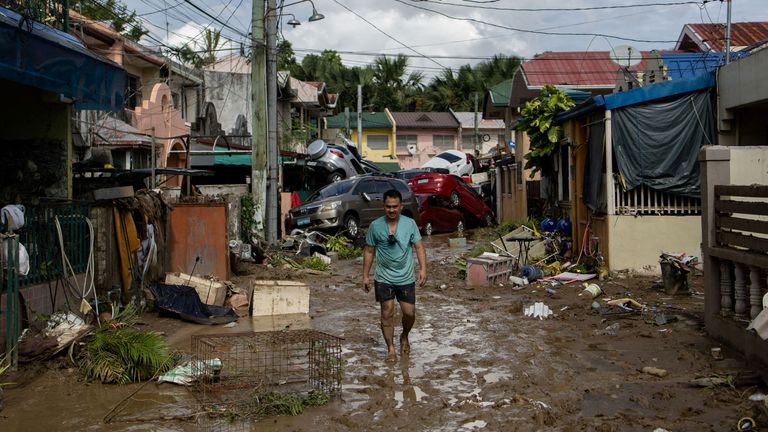
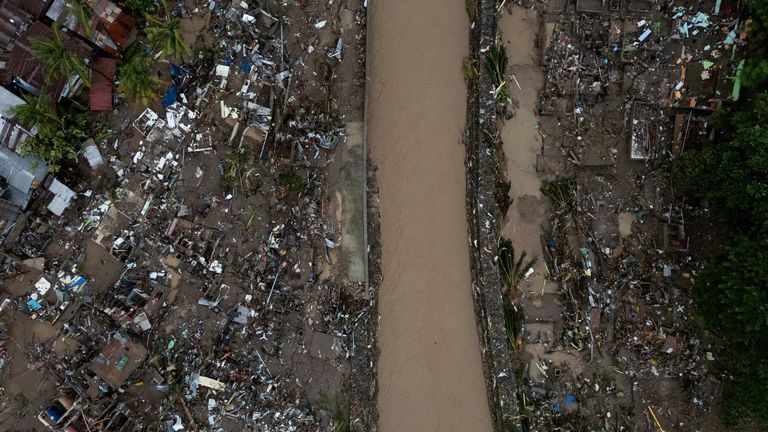
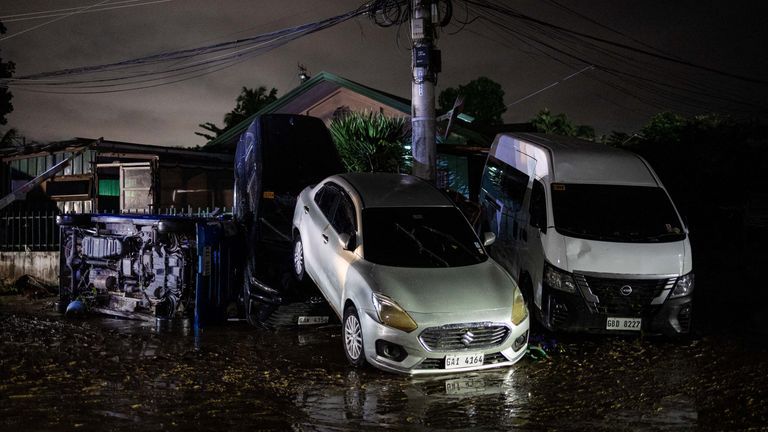
Cebu province was hit hard by the typhoon, with at least 71 dead. Pics: Reuters
Typhoon Kalmaegi made initial landfall on Tuesday, striking the country with destructive force. The central provinces experienced sustained winds measuring 87 miles per hour, with powerful gusts reaching up to a terrifying 121 miles per hour. Tragically, the majority of the recorded deaths resulted from sudden, overwhelming flash floods, which inundated communities with little warning. Hundreds of northern Cebu residents who were displaced by the earthquake were moved to sturdier evacuation shelters from flimsy tents before the typhoon struck, disaster-response officials said.
Ferries and fishing boats were prohibited from venturing out to increasingly rough seas, stranding more than 3,500 passengers and cargo truck drivers in nearly 100 seaports, the coast guard said. At least 186 domestic flights were cancelled.
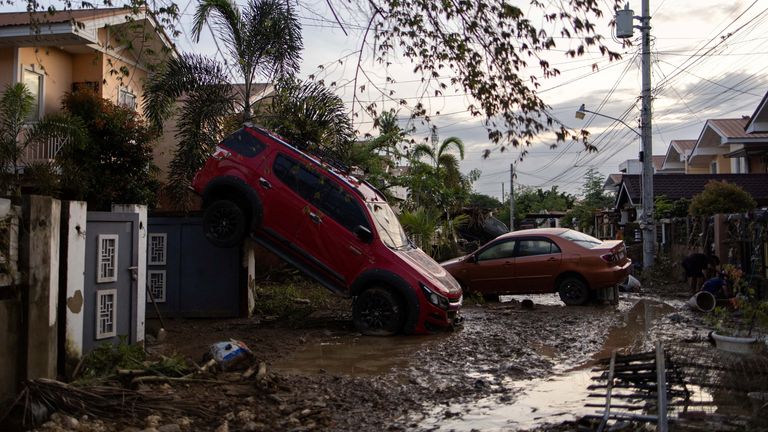
Cars swept away by floods brought by Typhoon Kalmaegi are left on a street in Cotcot, Liloan, Philippines. Pic: Reuters
The country’s civil defense office confirmed that at least 71 fatalities occurred in the hard-hit province of Cebu. Almost two million residents were severely affected by the tropical cyclone, necessitating massive displacement figures. Over 560,000 people became displaced from their homes, and nearly 450,000 citizens sought refuge in officially designated emergency shelters. The sheer scale of the Philippines Typhoon Kalmaegi Disaster overwhelmed local resources, prompting the national government’s intervention.
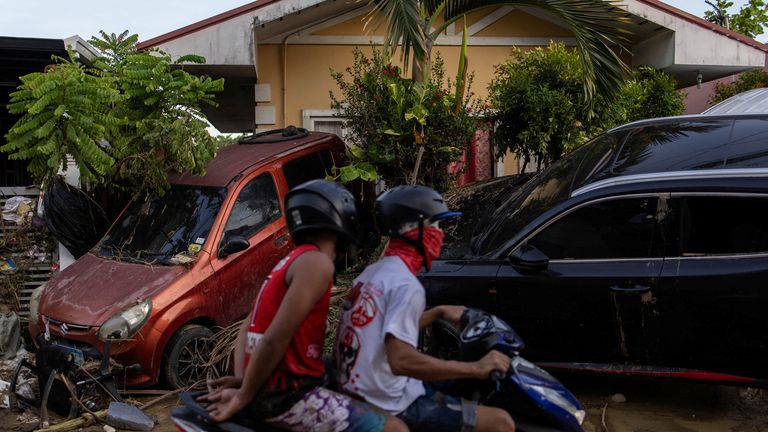
Abandoned vehicles were also seen across Cotcot, in Liloan. Pic: Reuters
Rescue and recovery teams are working non-stop through debris and mud as they desperately search for those still unaccounted for. Providing aid and emergency shelter remains the absolute priority following the devastation caused by the Philippines Typhoon Kalmaegi Disaster.
The widespread death toll and destruction highlight the critical vulnerability of key regions, particularly Cebu, a populous province home to more than 2.4 million people. Cebu was already struggling to recover from a 6.9 magnitude earthquake that struck just weeks earlier on September 30, claiming at least 79 lives.
Local authorities had previously declared a state of calamity in Cebu following the seismic event, intending to disburse emergency funds more rapidly to help residents rebuild. Governor Pamela Baricuatro expressed deep frustration to the Associated Press, saying, “We did everything we can for the typhoon but, you know, there are really some unexpected things like flash floods.” The suddenness and sheer volume of the water proved too much for the already weakened infrastructure to handle.
Further tragedy compounded the severe impact of the Philippines Typhoon Kalmaegi Disaster when a Philippine air force helicopter crashed while on a humanitarian mission. The unfortunate incident, which occurred in the southern province of Agusan del Sur on Tuesday, resulted in the deaths of six people. The military confirmed the crew was en route to deliver essential humanitarian aid to provinces affected by the typhoon; however, the specific cause of the crash has not yet been released.
Simultaneously, as the Philippines begins its slow, difficult recovery, authorities in neighboring Vietnam are bracing for Kalmaegi’s approach. Forecasters warned that the major metropolitan hub of Ho Chi Minh City faces a heightened risk of severe flooding, anticipating that high tides will unfortunately coincide with the expected heavy rainfall from the typhoon. The massive Philippines Typhoon Kalmaegi Disaster serves as a terrible reminder of the devastating power tropical storms hold over the region, demanding international attention and sustained aid.
The National Disaster Risk Reduction and Management Council (NDRRMC) coordinates the country’s response to these frequent, devastating natural hazards; they are the key agency for coordinating aid and information during the Philippines Typhoon Kalmaegi Disaster.
The devastating events caused by Kalmaegi are a stark reminder of the Philippines’ perennial status as one of the world’s most disaster-prone countries. The archipelago is routinely affected by approximately 20 typhoons and storms each year, enduring annual battles against powerful tropical cyclones. Beyond the hydro-meteorological threats, the nation is frequently struck by destructive earthquakes and hosts more than a dozen active volcanoes. This geographical position places the Filipino people under constant threat from nature’s extremes.
Understanding the difference between these massive weather systems is important for context. Typhoons, hurricanes, and cyclones are essentially the same phenomenon, categorized only by where they form geographically. The powerful nature of a category-four equivalent storm like Kalmaegi brings winds capable of flattening homes and triggering widespread landslides, in addition to flash flooding.
Global support will be vital to help communities rebuild resilience before the next inevitable storm season arrives. The severity of the Philippines Typhoon Kalmaegi Disaster demands significant international attention and resources to aid the displaced and assist in restoring critical infrastructure.


