

By Aaron Miller-
Billionaire entrepreneur Elon Musk launched a deeply personal and provocative attack against NASA’s acting administrator, Sean Duffy, claiming he lacks the necessary intelligence for the critical role. This extraordinary public outburst followed NASA’s recent announcement that it would begin accepting proposals from rival aerospace companies for lunar landers, stepping away from its previous singular reliance on Musk’s company, SpaceX.
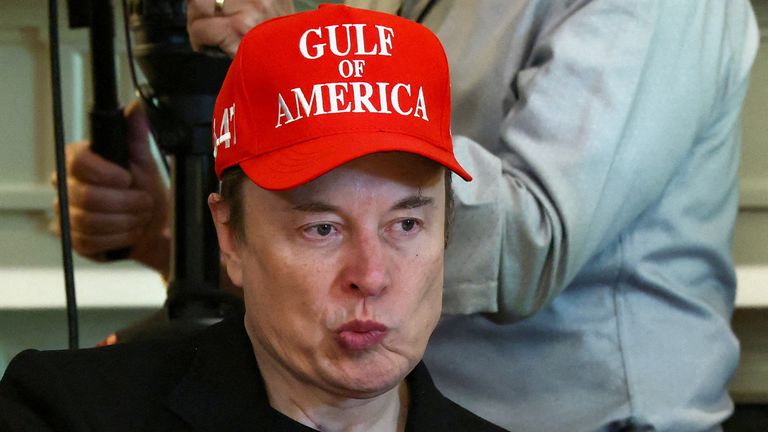
Elon Musk. Pic: Reuters
Duffy had earlier confirmed NASA’s pivot to CNBC, stating plainly, “We’re not going to wait for one company. We’re going to push this forward and win the second space race against the Chinese.” This strategic decision, born out of necessity due to SpaceX’s persistent schedule setbacks, was the clear trigger for the fury that saw Elon Musk criticize NASA boss on the social media platform X.

AD: Capeesh Restaurant
Musk did not mince words, accusing Duffy of actively “trying to kill NASA” and writing, “The person responsible for America’s space program can’t have a 2 digit IQ.” This inflammatory statement, which directly questions Duffy’s competence and intellect, immediately escalated the tension between the space agency and its most crucial commercial partner.
For years, the collaboration between NASA and SpaceX, known as the commercial partnership model, has been the foundation of American space strategy, dramatically reducing launch costs and hastening access to orbit. Now, the public feud underscores a crisis of confidence in that partnership’s most ambitious project: returning American astronauts to the Moon. The administrator’s measured response focused on the spirit of competition rather than the personal slight. Duffy simply countered, “Love the passion. The race to the Moon is ON. Great companies shouldn’t be afraid of a challenge. When our innovators compete with each other, America wins!” This professional retort underscored the severity of the challenge the agency faces, even as Elon Musk criticizes NASA boss.
The root cause of this high-profile conflict lies entirely in the Artemis III mission schedule, which aims to return astronauts to the lunar surface. NASA previously awarded SpaceX a crucial $2.9 billion contract to develop its massive Starship rocket system specifically as the Human Landing System (HLS) for this mission. The deadline, however, has proven elusive. Starship has experienced a series of explosive failures during test flights this year, demonstrating that its complex, fully reusable architecture is taking longer to mature than initially projected. The repeated setbacks have cast a shadow of doubt over the timeline.

AD: Oysterian Sea Food Restaurant And Bar
The urgency is political as well as technical; the United States government remains acutely focused on achieving the lunar landing within Donald Trump’s second presidential term and, crucially, before China completes its own crewed mission to the Moon. NASA Administrator Duffy is acting under immense pressure to deliver the Artemis program on time, necessitating the decision to diversify the landing system contracts. His statement about not waiting for a single company was a direct acknowledgment that sole reliance on Starship carries unacceptable schedule risks for such a high-stakes, geopolitically significant goal. Therefore, NASA is now actively seeking proposals from competing aerospace firms, hedging its bets against further delays with the Starship program.
The decision to open the contract ensures resilience in the HLS program. Despite the failures, Musk staunchly defended his company’s pace, writing, “SpaceX is moving like lightning compared to the rest of the space industry.” He remained confident, asserting, “Moreover, Starship will end up doing the whole moon mission. Mark my words.” This determination to succeed, even while facing regulatory hurdles and design challenges, fuels the complex narrative when Elon Musk criticizes NASA boss. The need for a viable alternative remains paramount.
The public spat highlights a foundational tension in the American space program’s reliance on private industry. While the commercial model has fostered unprecedented innovation and speed, it also introduces a single point of failure and subjects crucial government missions to the volatile public personality of Musk. The administrator’s decision to accept rival proposals effectively opens the second phase of the HLS program, ensuring multiple viable pathways to the Moon. This move protects the long-term viability of the Artemis program, which is seen as essential for establishing a sustained human presence on the Moon and later moving on to Mars.
Musk’s strong reaction, particularly the personal nature of the critique, is often viewed through the lens of political influence. Reports indicate that Duffy, who is currently the acting administrator, desires to secure the role permanently. Musk has previously endorsed billionaire Jared Isaacman, who has already flown on two private SpaceX missions, for the top job.
This history suggests that the ongoing battle concerning the HLS contract and the public dispute where Elon Musk criticizes NASA boss may have roots in the political maneuvering for NASA’s permanent leadership. Ultimately, the success of the Artemis program hinges on NASA’s ability to manage its contracts effectively and ensure all partners, including SpaceX, meet their obligations. This latest clash demonstrates the high stakes involved in the new era of public-private space exploration. The administrator’s calm response emphasizes a focus on national success over personal feuds, reinforcing the agency’s commitment to winning the space race.

AD: Heritage And Restaurant Lounge Bar


