

By Tony O’Reilly-
An Afghan migrant has been found guilty of making threats to kill Nigel Farage in a TikTok post. The defendant, Fayaz Khan, aged 26, elected not to present evidence during his trial, wherein he was charged with issuing threats against the Reform UK leader between October 12 and 15 of the previous year via a video uploaded to the social media platform.
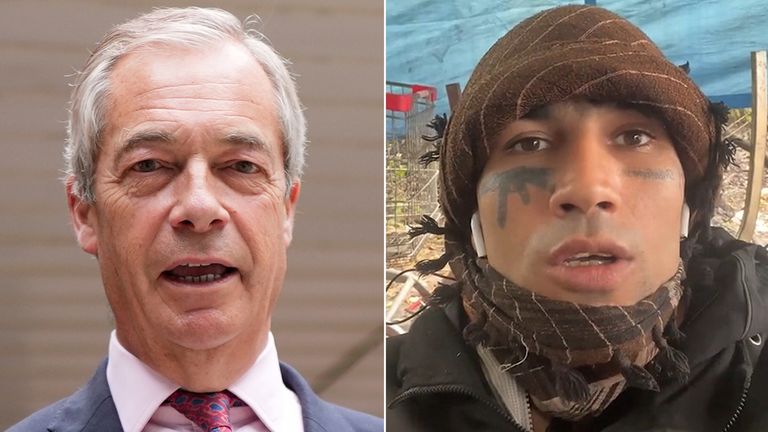
Pic: Sky News
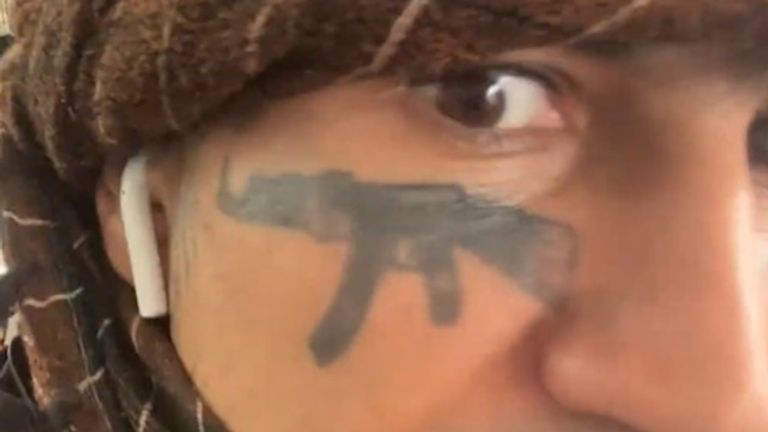
Fayaz Khan posted a TikTok video of himself appearing to threaten to kill Nigel Farage. Pic: PA
A jury has delivered a guilty verdict against a defendant who was accused of making death threats against veteran politician Nigel Farage, bringing a high-stakes court case to a close. The case attracted national attention not only due to the target’s political prominence but also the aggressive imagery associated with the defendant, including an unmistakable AK-47 face tattoo.

AD: Capeesh Restaurant
The jury was informed that on October 12th of the previous year, Mr Farage had uploaded a YouTube video entitled “The journey of an illegal migrant,” which featured Khan and made reference to “young males of fighting age coming into our country about whom we know very little.”
Khan countered with a video two days later, in which he appeared to state: “Englishman Nigel, don’t talk s**t about me. You not know me. I come to England because I want to marry with your sister. You not know me. Don’t talk about me more.
Delete the video. I’m coming to England. I’m going to pop, pop, pop.” During the video, he made gun gestures with his hand and headbutted the camera, while pointing to the AK-47 tattoo on his face to “emphasise he wasn’t joking,” according to Mr Ratliff.

AD: Oysterian Sea Food Restaurant And Bar
The court heard compelling evidence detailing the specific and explicit nature of the threats made against Mr Farage, who is a well-known, often controversial, figure in British public life. Consequently, the conviction underscores the severity with which the legal system views direct threats against public officials.
Mr Farage, having attended the trial, characterised the video as “pretty chilling.” He further stated, “Given his proximity to guns and love of guns, I was genuinely worried.” He added, “He says he’s coming to England and he’s going to shoot me.” Subsequently, in a TikTok post, Khan wrote, “I mean what I say,” accompanying an image of a GB News report regarding the threat against Mr Farage.
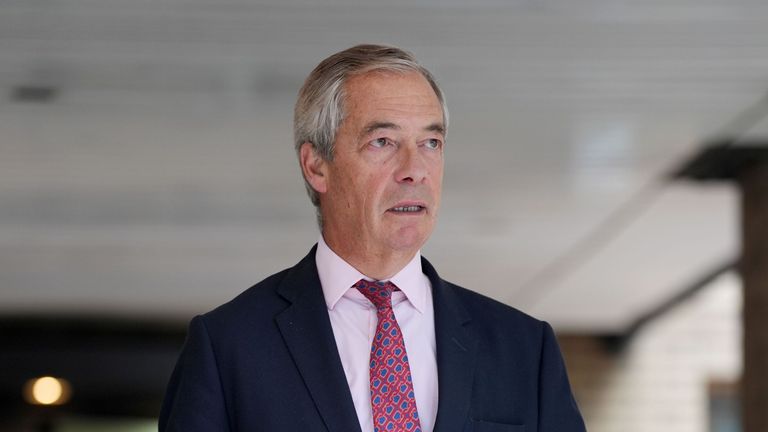
Nigel Farage outside Southwark Crown Court. Pic: PA
Throughout the trial, prosecutors argued that the defendant intended to cause genuine fear and panic, leveraging their appearance to amplify the menace of the communication. The defence attempted to mitigate the intent behind the threats, claiming they were hyperbolic or made under duress, arguments the jury ultimately dismissed.
Additional videos exhibited to the jury, which had been posted by Khan on social media platforms, depicted him making “pop, pop, pop” sounds and performing analogous gun hand gestures. Following his apprehension in November, Khan stated to police, “It was just a video; it was never my intention to threaten him.
It was never my intention to kill him or anything – this is my character, this is how I act in my videos. In every video I make those sounds, I say ‘pop, pop pop’.” Prosecutor Peter Ratliff said the threat to kill was “not some off-the-cuff comment” and the video was “sinister and menacing”.
The prosecutor asserted that Khan, who pleaded not guilty, was a “dangerous man with an interest in firearms” and possessed AK-47 tattoos on his arm and face. Defence attorney Charles Royle contended that Khan was “remonstrating in his own idiosyncratic, moronic, comedic, eye-catching, attention-seeking way” rather than issuing a direct threat to kill in the TikTok video.
He informed the jury that the trial was “not about your views on illegal immigration, nor about your views on face tattoos, Brexit or Reform.” Concerning Khan’s decision not to present evidence, Mr Royle remarked, “You shouldn’t hold any silence against him.”
Security experts have frequently highlighted the increasing risks faced by public figures in the digital age, where lines between heated rhetoric and physical menace become blurred. The case surrounding the threats to Nigel Farage serves as a stark reminder of these serious, evolving security challenges.
The migrant convicted of threatening to kill Nigel Farage will now face sentencing, an event that will likely be watched closely by political security organisations. Many analysts believe the unique details of the case, specifically the AK-47 face tattoo and the defendant’s immigration status, sadly turned it into a flashpoint for broader debates about border security and political rhetoric.
Mr Farage, consistently outspoken on immigration policy, has often been a target of hostility, making his security a constant concern for authorities. This conviction validates the constant need for protection provided to figures in the public eye.
Following the verdict, Mr Farage released a statement through his representatives, expressing gratitude to law enforcement and emphasising that public figures should not have to tolerate threats of violence as a consequence of their political activities.
The political environment remains highly polarised, and this conviction may fuel further debate regarding the need for better systems to track and manage individuals who pose a potential threat to national figures..

AD: Heritage And Restaurant Lounge Bar


