

By Lawal AbdulMalik-
The breakthrough regarding the highly anticipated First phase of the Gaza peace plan was announced late last night, sparking immediate global reactions across the political spectrum. This historic agreement represents the first concrete step toward de-escalation since the conflict began, focusing initially on a humanitarian hostage release and a period of sustained calm.

Pics: AP/Reuters

Pic: Reuters
Crucially, the First phase of the Gaza peace plan only commences after the Israeli government concludes its scheduled ratification vote this evening, Prime Minister Benjamin Netanyahu confirmed. An Israeli government spokesperson further clarified in a news conference that the expected ceasefire would take effect “within 24 hours” of the crucial cabinet meeting.

AD: Capeesh Restaurant
He hailed the development as a “great day for Israel,” suggesting the agreement represents a significant victory for the nation’s security and diplomatic efforts, ensuring the initial return of certain categories of hostages held by Hamas.
The agreement explicitly mandates the initial release of these Israeli hostages in exchange for Palestinian prisoners currently held in Israeli jails. While the precise, final number of individuals to be exchanged in this initial phase remains confidential pending official ratification, the deal involves a reciprocal exchange intended to build confidence.
We’ve received this image of Benjamin Netanyahu taken before the Israeli security cabinet meeting began in Jerusalem this afternoon. The full cabinet is expected to meet later today to ratify the Gaza ceasefire agreement. In the image, Netanyahu can be seen walking past a picture of the hostages. The first phase of the deal will result in the release of all Israeli hostages, both alive and deceased, by Hamas. Israel reports that of the 250 initially taken captive in Hamas’s October 7 attack, 20 of the hostages remaining in Gaza are believed to be alive, while 28 are confirmed dead.
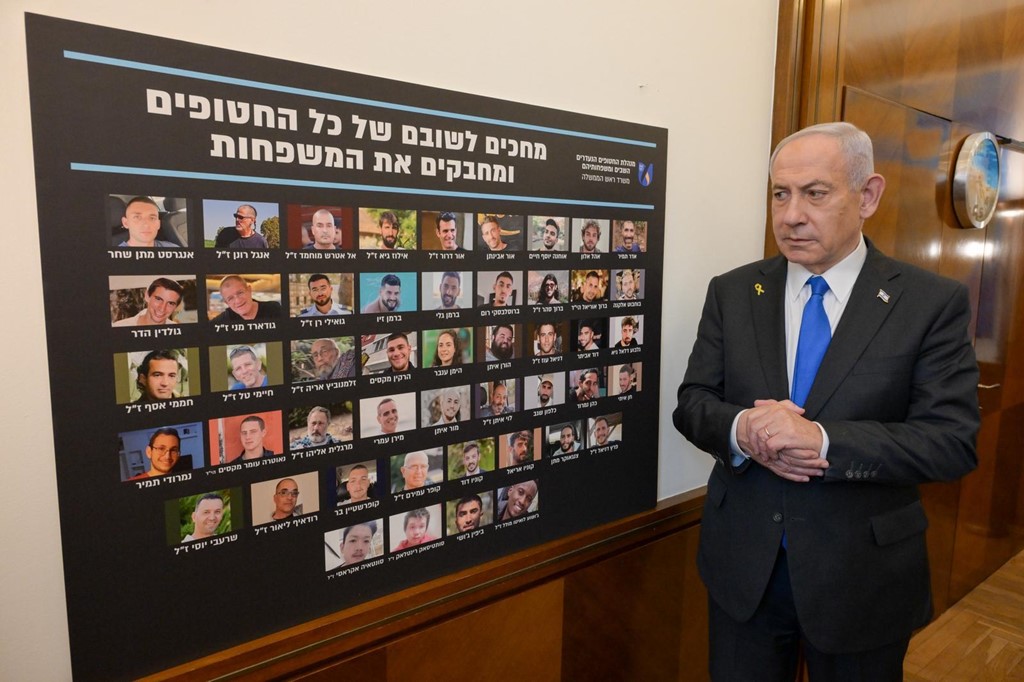
Netanyahu before meeting his security cabinet. Pic: Maayan Toaf/Israel GPO
Despite the celebratory tone from the Prime Minister, the process was immediately met with high-level political resistance from within the Israeli coalition. Notably, Finance Minister Bezalel Smotrich publicly voiced his strong disagreement with the peace deal, articulating deep concerns that the terms of the agreement provided too many concessions to Hamas without securing all of Israel’s strategic goals.

AD: Oysterian Sea Food Restaurant And Bar
Smotrick’s opposition clearly shows the delicate political tightrope Prime Minister Netanyahu walks, balancing international pressure with domestic hardliner demands.
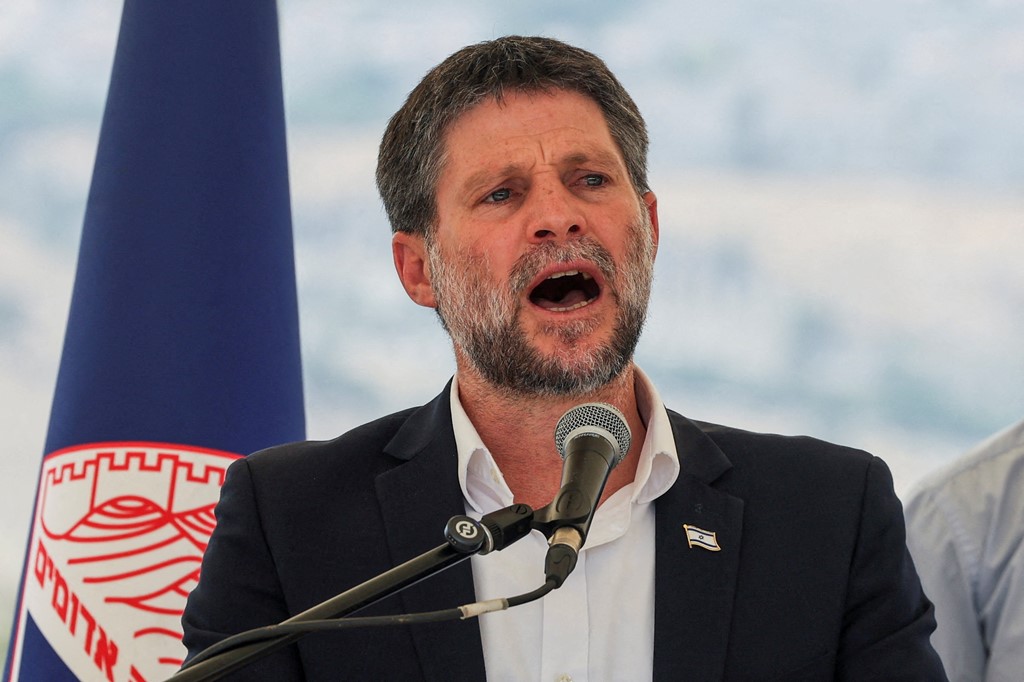
Pic: Reuters
For the agreement to reach this critical stage, it required the tireless efforts of key international mediators. Qatar, Egypt, and the United States have played indispensable roles, working discreetly and continuously to bridge the vast communication gaps between the warring parties.
Crucially, Turkey’s President Recep Tayyip Erdogan announced that his government would also join the effort, stating that Turkey would take part in the mission force to monitor the agreement’s implementation in the field and contribute to rebuilding Gaza. This expanded circle of international guarantees provides a potential safeguard against future violations. Their collaborative diplomatic efforts were crucial not only for achieving consensus on the First phase of the Gaza peace plan but also for coordinating the logistics necessary to locate and safely secure the return of the hostages.
A senior Turkish official confirmed the core mediating countries—Israel, the US, Qatar, Turkey, and Egypt—will establish a joint task force specifically to help Hamas locate the bodies of deceased hostages in Gaza, a vital step given that approximately 28 of the 48 remaining hostages are tragically believed to be dead or buried under rubble in unknown or contested areas.
President Donald Trump announced the details of the comprehensive proposal for the First phase of the Gaza peace plan late last night via Truth Social, defining the exact steps toward a truce. He emphatically stated that “ALL of the Hostages will be released very soon, and Israel will withdraw their Troops to an agreed upon line as the first steps toward a Strong, Durable, and Everlasting Peace.” This bold vision sets a clear sequence of events contingent upon the successful ratification by the Israeli government, expected this evening.
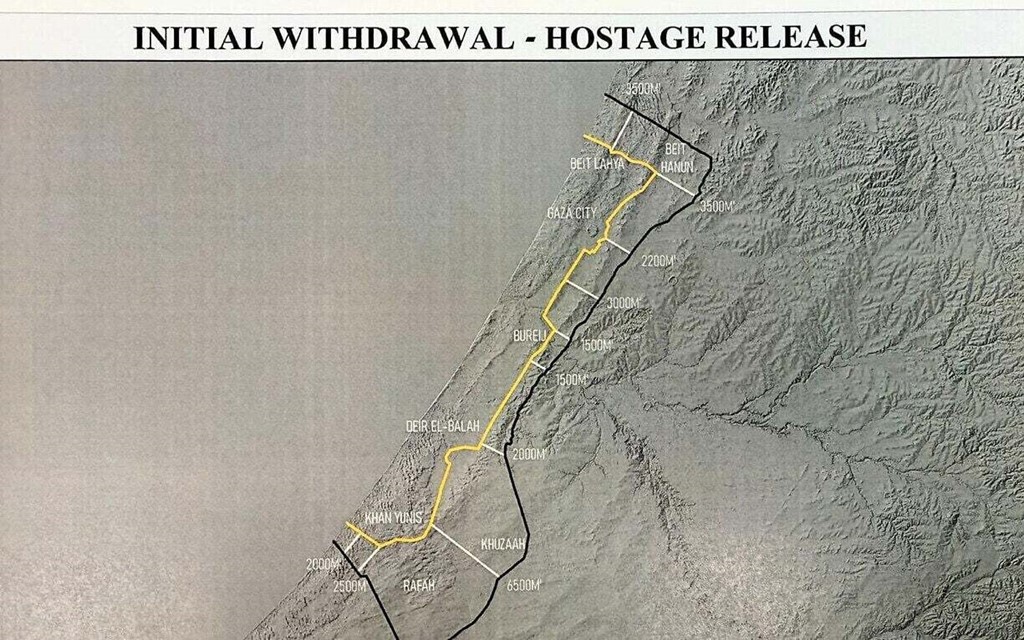
The initial withdrawal line Israel agreed to, according to Trump. Pic: Truth Social/Donald Trump
The timeline ensures that the First phase of the Gaza peace plan transitions rapidly from diplomatic paper to ground reality, minimising further conflict risk. This phase establishes several key immediate outcomes
Israel will need to withdraw its forces within 24 hours to the agreed-upon line; Hamas confirmed this action should occur tomorrow. Within 72 hours after the withdrawal, all the Israeli hostages, both alive and deceased, will be released by Hamas, with Israel estimating this could happen on Sunday or Monday.
Hamas say the mediators have provided guarantees to ensure that the agreement won’t be violated once its main negotiation leverage is gone. According to the plans second phase, Hamas will eventually have to disarm, but has yet to discuss this crucial and complex requirement publicly.
Gaza’s future governance remains uncertain, as Hamas says it will only relinquish its rule to a Palestinian government, not the plan’s proposed international board.
The announcement triggered an intensely emotional response across the affected regions, highlighting the human cost of the prolonged conflict. Gazans were filmed rejoicing in the streets as news of the expected ceasefire spread, expressing a heart breaking mix of despair and profound relief at the thought of a reprieve from the fighting.
Speaking outside Al Aqsa Martyrs hospital, paramedic Saeed Awad said he had not closely followed the recent negotiation proceedings, as he was accustomed to their ineffectiveness.. In response to the unanticipated agreement between Hamas and Israel, Awad stated: “For sure, it is a feeling of joy. We have been in this war and in this suffering for two years.”
“As soon as we heard the news, we didn’t believe it because we were so happy. We had to ask for confirmation.
“Now we wait for the news to come into effect, so that this war and this suffering and ethnic cleansing in Gaza ends.”
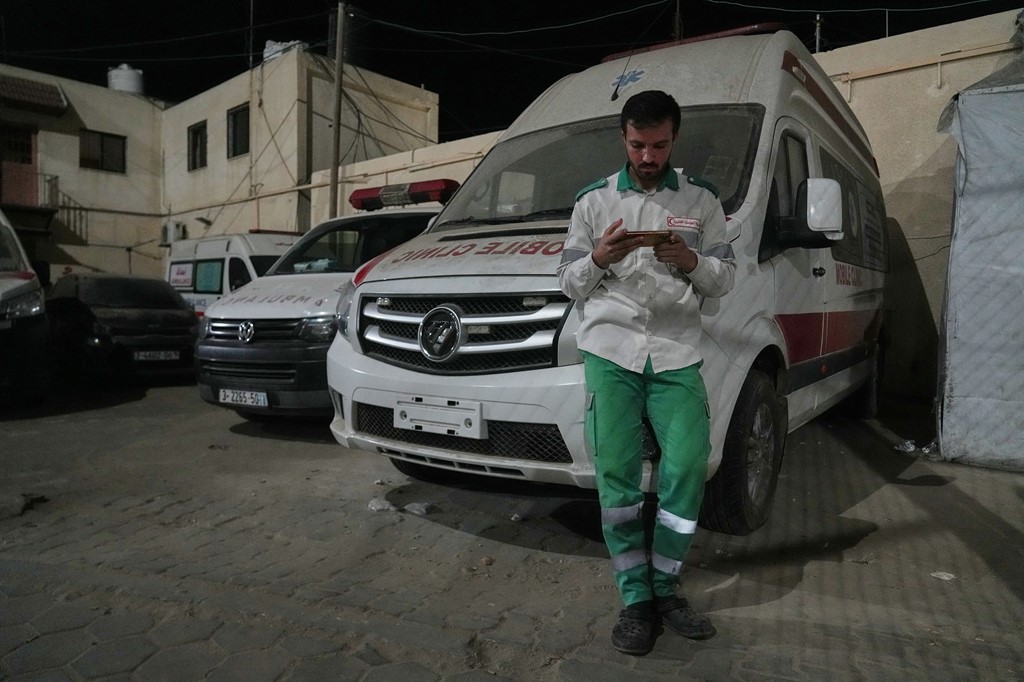
Palestinian paramedic Saeed Awad. Pic: AP
One resident eloquently stated the paradoxical hope felt by many: “There’s no home, but we still want to go home.” This statement powerfully encapsulates the collective trauma and desperate longing for peace experienced by the population, where safety has become the greatest commodity.
Alaa Abd Rabbo, a displaced Palestinian from Jabaliya, said: “We want to go home, to tend to our affairs, to check on our homes.
“Even though there are no more homes, but we still want to go home. We want to work. We have been sleeping and staying in the streets.”
On the other side of the conflict, US President Donald Trump, who was actively involved in supporting the efforts, offered direct comfort to the relatives of Israeli hostages. He reportedly assured them of his unwavering commitment, telling them their family members would be brought home safely and swiftly.
The involvement of the US President immediately triggered deep political speculation regarding the true timing and motivations behind the deal. Analysis suggests the ceasefire announcement may be a strategically timed move by all parties, seeking to maximise political gain from the success.
Experienced reporters, including Yalda Hakim, have openly questioned the sudden diplomatic progress, asking: “Why now for Netanyahu?” His actions suggest that a combination of internal dissent and external pressure from the mediating countries finally forced the long-awaited compromise and the official signing of the First phase of the Gaza peace plan.
Moreover, the successful agreement has reignited chatter in international circles about the possibility of President Trump claiming credit and the subsequent speculation that he could be nominated for the Nobel Peace Prize.
Critics, however, suggest that despite the momentary breakthrough, genuine, long-term stability remains challenging given the deeply entrenched hostilities and the high stakes involved in subsequent negotiations.
Read about the previous major diplomatic efforts in the region:
Trump’s Peace Plan: White House Pressure Mounts for Gaza Ceasefire Deal
Why Donald Trump Accepted the Hamas Peace Plan Response
Trump Vows to Block West Bank Annexation as Netanyahu Prepares UN Address
Greece Prime Minister Vows To Support Gaza Diplomatic Efforts

AD: Heritage And Restaurant Lounge Bar


