
By Isabelle Wilson-
A Virginia judge has dismissed all criminal charges against a former elementary school administrator accused of failing to act before a six-year-old student shot his teacher in a case that shocked the United States and reignited debate over accountability in schools after shootings.
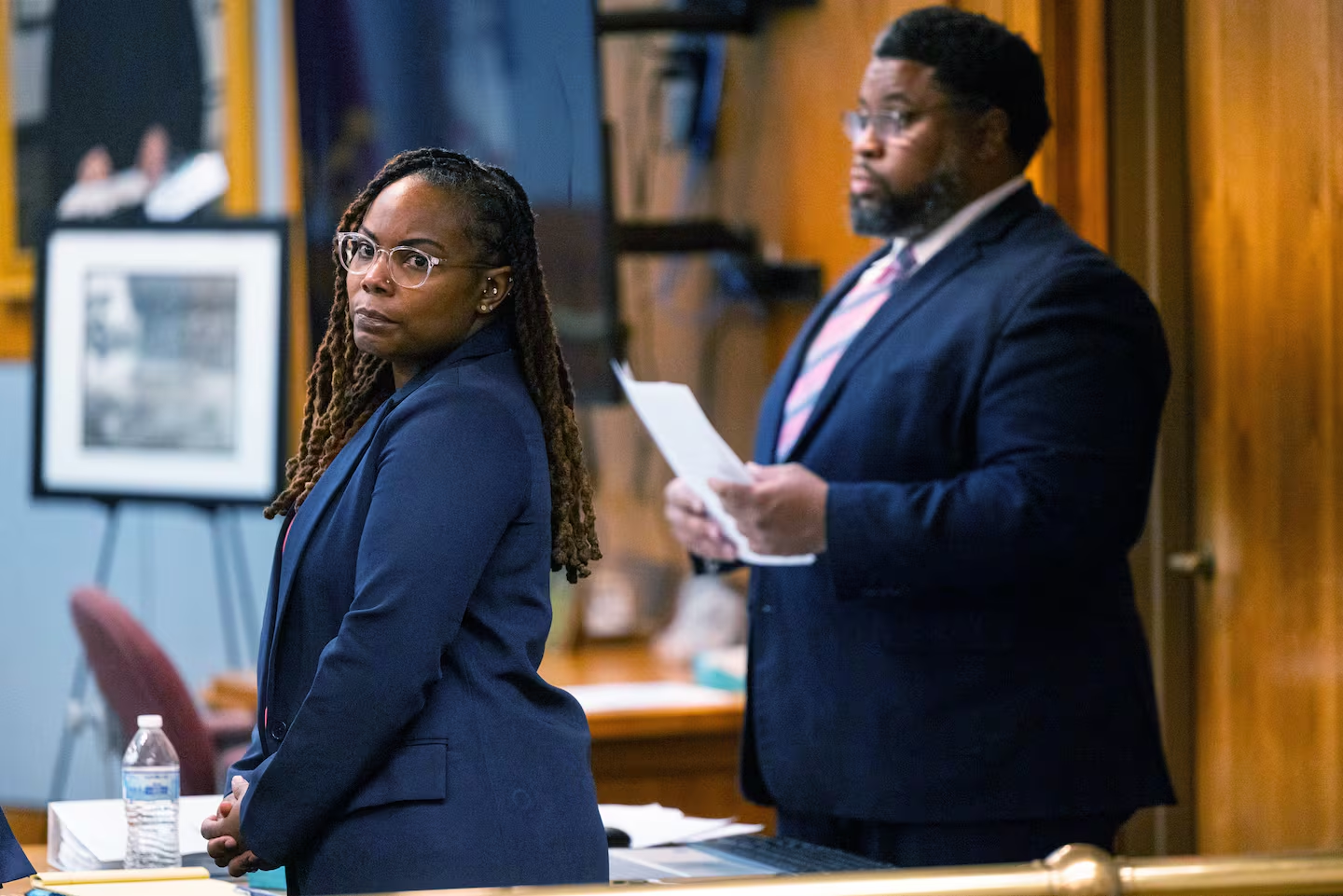
Circuit Judge Rebecca Robinson ruled Thursday that prosecutors had not established a legal basis for charging former assistant principal Ebony Parker with felony child neglect over the 2023 shooting of teacher Abby Zwerner at Richneck Elementary School in Newport News, Virginia. The ruling ended the closely watched trial before the defense had even begun presenting its full case.

AD: Capeesh Restaurant
Prosecutors argued that repeated warnings from teachers and staff members about the child possibly carrying a firearm were ignored, creating the conditions that led to the shooting. Parker’s legal team countered that while mistakes may have occurred that day, her actions did not amount to criminal conduct under Virginia law.
“The court is of the legal opinion that this is not a crime,” Robinson said while granting the defense motion to dismiss, according to courtroom reports.

AD: Oysterian Sea Food Restaurant And Bar
The decision marks a major development in one of the most scrutinised school violence cases in recent years. The shooting stunned educators, lawmakers and parents across the country because of the age of the student involved and because staff members had reportedly warned administrators that the child might have been armed before the incident occurred.
Teacher Abby Zwerner was seriously injured after the student shot her while she sat at a reading table inside her classroom. She spent nearly two weeks hospitalised, underwent multiple surgeries and has said she continues to suffer permanent physical and emotional damage from the attack. A bullet remains lodged near her chest, according to testimony presented during the proceedings.
The criminal case against Parker represented an unusual legal attempt to hold a school official personally responsible for alleged inaction leading up to a school shooting. Legal analysts closely followed the proceedings because prosecutors rarely pursue criminal charges against administrators or educators after campus violence incidents.
Questions Over Accountability and School Safety
During the trial, prosecutors described a chain of warnings delivered to Parker by teachers and school employees on the day of the shooting. According to testimony, several students allegedly reported seeing a gun, while staff members expressed concern about the child’s behavior and the possibility he was armed. Prosecutors argued that Parker failed to conduct a proper search or call police despite mounting warnings.
Evidence presented during the trial included a recorded interview of Ebony Parker that jurors watched in court. In that video, Parker acknowledged she had heard reports suggesting the 6-year-old student may have had a gun in his backpack, but said she did not personally search him because she was occupied with school testing duties and believed other staff members were handling the situation.
She also stated she assumed the student’s mother would arrive at school and take responsibility for inspecting his belongings before he went home.
Defense attorneys argued throughout the trial that prosecutors were attempting to criminalize poor judgement rather than intentional wrongdoing. Parker’s lawyer, Curtis Rogers, told the court that there was no evidence she believed the student definitely possessed a firearm or consciously disregarded a known threat.
Outside the courtroom, Parker’s attorneys called the dismissal a vindication, saying the law did not support the prosecution’s theory. The ruling also means prosecutors cannot retry Parker on the same charges because jeopardy had already attached once the trial began.
The case nevertheless leaves unresolved questions about school safety systems, administrative responsibility and the legal boundaries of negligence in educational settings.
The Richneck Elementary shooting rapidly became a national flashpoint after details emerged about repeated warnings before the attack. Public outrage intensified when reports indicated that teachers and staff had voiced concerns about the child’s behaviour and possible access to a weapon earlier that day. The shooting prompted renewed scrutiny of how schools respond to safety threats involving very young children.
The child’s mother, Deja Taylor, previously pleaded guilty to federal gun charges and child neglect offences related to the shooting. She was sentenced to nearly four years in prison. Prosecutors said the handgun used in the attack had been legally purchased by Taylor but was not properly secured at home.
Separate civil litigation stemming from the shooting has already produced major financial consequences. Last year, a Virginia jury awarded Zwerner $10 million in damages in a negligence lawsuit tied to the shooting, with Parker named as a defendant. The civil verdict relied on a lower legal threshold than the criminal case dismissed Thursday.
The dismissal also adds to a growing national conversation over whether school officials, parents and law enforcement officers should face criminal liability when warning signs precede acts of mass violence or school shootings.
Similar legal questions have surfaced in cases connected to the Uvalde school shooting in Texas, the Parkland shooting in Florida and other incidents where authorities were accused of failing to intervene in time.
Legal scholars say the Virginia ruling may reinforce how difficult it is to prosecute individuals for omissions or failures to act unless state law clearly defines criminal responsibility. Judge Robinson reportedly emphasised that such liability would need to be established by lawmakers rather than expanded through courtroom interpretation.
The case has highlighted the impossible decisions administrators sometimes face in chaotic school environments where information may be incomplete or conflicting. However, the dismissal may deepen frustration over the absence of accountability after repeated warnings appeared to go unheeded.
Zwerner, who testified emotionally during the trial, described the child’s unusual behavior before the shooting, including wearing an oversized jacket and keeping his hands in his pockets during recess. She said she alerted other staff members about her concerns shortly before returning to the classroom where the shooting occurred.
The Richneck Elementary shooting remains one of the most disturbing examples of gun violence involving a child in an American school. Although Thursday’s ruling closes the criminal case against Parker, the broader debate over school safety, accountability and firearm access among children is unlikely to fade.

AD: Heritage And Restaurant Lounge Bar