
By Kenenth Williams-
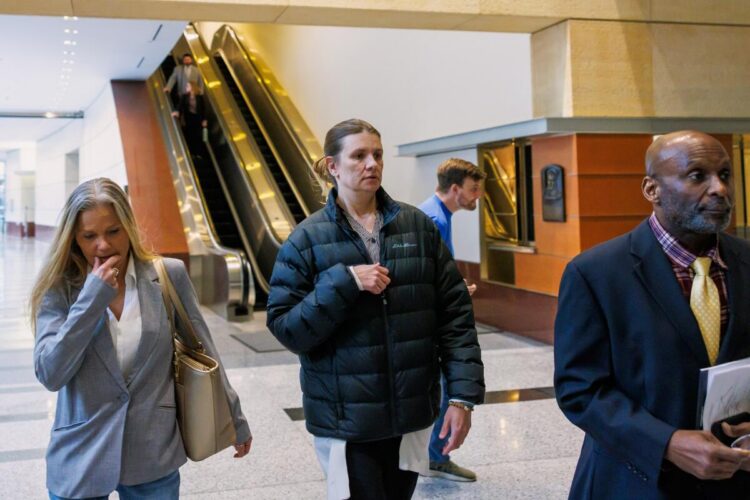
A federal judge on Thursday sentenced the woman at the center of Minnesota’s massive pandemic fraud scandal to nearly 42 years in prison, delivering one of the harshest punishments ever handed down in a COVID-era financial crime case and closing a dramatic chapter in what prosecutors called the largest pandemic fraud scheme in American history.
Aimee Bock, founder and former executive director of the Minnesota nonprofit Feeding Our Future, received a 41-and-a-half-year sentence after being convicted on multiple counts of wire fraud, conspiracy and bribery tied to a sprawling scheme that stole roughly $250 million from a federally funded child nutrition program during the coronavirus pandemic.

AD: Capeesh Restaurant
Federal prosecutors argued that Bock orchestrated a criminal network that exploited emergency relief measures intended to feed children in need while schools were closed.
The sentence, delivered in a Minneapolis federal courtroom by U.S. District Judge Nancy Brasel, marks the most severe punishment so far in the years-long Feeding Our Future investigation, which has ensnared nearly 80 defendants and shaken public confidence in Minnesota’s oversight of pandemic aid programs.
During sentencing, Brasel described Bock as being at the “epicenter” of a “vortex of fraud,” rejecting defence arguments that she was merely negligent or manipulated by others.

AD: Oysterian Sea Food Restaurant And Bar
The case centered on allegations that Feeding Our Future and its network of affiliated meal distribution sites fabricated records claiming to have served millions of meals to children across Minnesota during the pandemic.
Prosecutors said the nonprofit used fake attendance sheets, falsified invoices and bogus food purchase receipts to siphon taxpayer money into personal bank accounts, luxury purchases and overseas investments.
Federal investigators said many of the fraudulent sites never served meals at all, despite submitting reimbursement requests for thousands of children each day. Authorities described the operation as a sophisticated criminal enterprise that exploited loosened oversight rules adopted during the public health emergency, when federal agencies rushed funding to organisations helping vulnerable communities.
According to court filings, Bock’s nonprofit received more than $200 million in federal nutrition funds during 2021 alone, a staggering increase from the comparatively modest grants the organisation handled before the pandemic. Prosecutors argued that the explosive growth should have raised immediate red flags among regulators.
Bock, 45, addressed the court before sentencing and expressed remorse for her actions, telling the judge she had “failed the public” and her family. She maintained that she was unfairly portrayed as the mastermind behind every aspect of the fraud operation. Her attorneys sought a sentence of no more than three years, arguing she cooperated with investigators and was influenced by other participants in the scheme.
Federal prosecutors sought a 50-year prison sentence for Aimee Bock, arguing that she directed a sprawling network of fake meal distribution sites that fraudulently obtained millions of dollars from a federal child nutrition program during the COVID-19 pandemic.
Prosecutors said the scheme allowed participants to profit personally while funds intended to feed vulnerable children were diverted into luxury purchases, businesses and real estate investments.
In court filings, the government also argued that the fraud inflicted broader societal damage by eroding public trust in government assistance programs and undermining confidence in public institutions responsible for delivering emergency aid during a national crisis.
The sentence also included a restitution order requiring Bock to repay hundreds of millions of dollars to the federal government. Prosecutors said they intend to continue seizing assets connected to the scheme, including luxury homes, vehicles and overseas property purchases allegedly financed with stolen funds.
A Pandemic Program Turned Into a Criminal Enterprise
The Feeding Our Future scandal emerged as one of the most shocking examples of pandemic-related fraud in the United States. During the COVID-19 crisis, the federal government relaxed certain rules surrounding child nutrition programs to ensure meals reached children while schools and community centers were shut down.
The temporary flexibility allowed nonprofit organisations and food distribution sites to expand quickly and claim reimbursements for meals provided outside traditional school settings.
Prosecutors said Bock and her associates exploited those emergency measures by creating dozens of fake food distribution locations throughout Minnesota, many of which existed only on paper.
Some sites falsely claimed to serve thousands of children each day from small storefronts, apartments or empty lots. Others allegedly reported impossible meal counts that exceeded the population of nearby neighborhoods.
Authorities accused participants in the scheme of using shell companies and falsified invoices to make the fraudulent operations appear legitimate. Investigators said stolen funds were laundered through complex financial transactions before being spent on luxury vehicles, expensive jewelry, real estate and international travel.
The investigation intensified after the FBI and IRS conducted raids across the Minneapolis-St. Paul area in 2022, seizing documents, electronics and financial records linked to Feeding Our Future and associated organizations. Since then, dozens of defendants have pleaded guilty or been convicted at trial. Several have received prison sentences ranging from probation to more than two decades behind bars.
The scandal also fueled political controversy in Minnesota and beyond. State auditors later concluded that the Minnesota Department of Education had received repeated warnings and complaints about Feeding Our Future but failed to intervene aggressively enough. Critics accused state officials of ignoring obvious signs of fraud while millions of dollars continued flowing to suspicious meal sites.
The fallout reached national politics as well. Former President Donald Trump repeatedly referenced the case during speeches and social media posts criticising immigration and government spending oversight.
Many defendants in the case were members of Minnesota’s Somali-American community, civil rights advocates warned that political rhetoric surrounding the investigation risked stigmatising immigrant populations not connected to the fraud.
Federal officials insist the investigation remains ongoing. Shortly after Bock’s sentencing, authorities announced new criminal charges against 15 additional individuals accused of defrauding Medicaid and other state-administered social service programs in Minnesota.
Prosecutors said the alleged schemes involved another $90 million in fraudulent claims tied to childcare services, housing subsidies and autism therapy programs.
Assistant Attorney General Colin McDonald said federal investigators would continue pursuing every individual involved in public aid fraud, promising to recover taxpayer money wherever possible. “We will claw back every dollar,” he said during a post-sentencing news conference.
Legal experts say Bock’s punishment reflects a broader shift toward tougher penalties in major white-collar crime cases, particularly those involving pandemic relief funds. While federal sentencing guidelines theoretically allowed for life imprisonment because of the scale of the fraud, observers said the nearly 42-year sentence still stands out as exceptionally severe for a nonviolent financial crime.
The case has also intensified scrutiny over how emergency federal funds are monitored during national crises. Watchdog groups argue the government’s rush to distribute pandemic aid created vulnerabilities that sophisticated fraud networks exploited nationwide. Similar investigations into fraudulent COVID-era loans, unemployment claims and relief programs continue across the country.
With Minnesota residents, however, the Feeding Our Future scandal has become symbolic of something larger: the collapse of oversight within programs intended to protect vulnerable communities during one of the darkest moments in recent American history.
Bock was led from the courtroom after sentencing, prosecutors described the judgment as a warning to anyone considering similar crimes involving public assistance programs. But for many families who relied on food aid during the pandemic, the staggering scale of the fraud remains difficult to comprehend.
What began as a national emergency feeding initiative ultimately evolved into one of the most consequential financial crime investigations in modern Minnesota history one that exposed deep failures in oversight, fuelled political division and forever changed the state’s approach to monitoring public welfare programs.

AD: Heritage And Restaurant Lounge Bar