
By Aaron Miller-
Minnesota authorities have opened a sweeping investigation into the arrest of a Hmong American man by federal immigration agents, a case now being examined as a possible kidnapping and one that has ignited national debate over the limits of federal enforcement power.
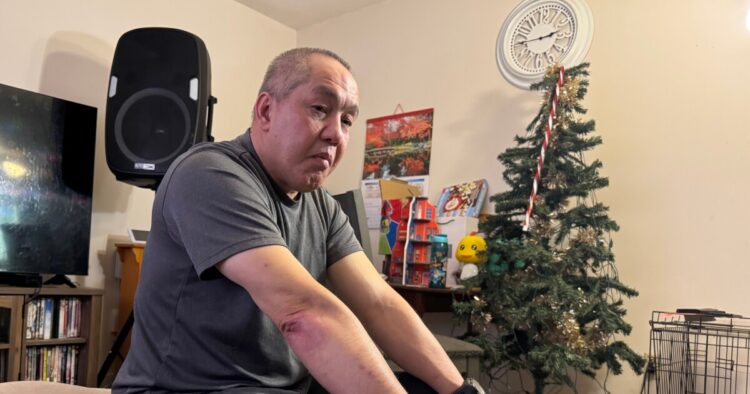
The incident centers on ChongLy “Scott” Thao, a 56-year-old U.S. citizen who was forcibly removed from his home in St. Paul by agents from Immigration and Customs Enforcement (ICE) during a January operation. What began as a controversial arrest has evolved into a high-stakes legal and political confrontation between local officials and the federal government.

AD: Capeesh Restaurant
According to authorities in Ramsey County, the events of January 18 unfolded with startling force. ICE agents reportedly broke down the front door of Thao’s home, entered with weapons drawn, and removed him into subfreezing temperatures while he was dressed only in underwear and a blanket.
Officials now say they have found no evidence that agents possessed a warrant at the time of the entry. The operation was part of a broader federal immigration crackdown in the Minneapolis–St. Paul area, where officers were searching for two convicted sex offenders believed to be linked to the address.
Thao, however, was not one of those individuals. He is a longtime U.S. citizen with no criminal record, a fact that law enforcement leaders say was never in dispute.

AD: Oysterian Sea Food Restaurant And Bar
Despite this, agents handcuffed him and transported him away from his home for several hours before determining that he was not a suspect. He was later returned without charges.
Video footage of the arrest, captured by neighbors, shows a chaotic scene as bystanders shouted at armed officers and demanded explanations. The images quickly spread, fueling outrage within Minnesota’s Hmong community and drawing condemnation from local officials.
In public statements, Ramsey County Sheriff Bob Fletcher questioned the legitimacy of the operation, asking whether forcibly removing an American citizen from his home without clear cause could be considered lawful policing.
Thao himself has described the experience as deeply traumatic. In interviews conducted shortly after the incident, he said agents ignored his attempts to provide identification and instead detained him while trying to verify his identity elsewhere.
The Department of Homeland Security, which oversees ICE, has maintained that the operation targeted dangerous individuals and that agents acted within protocol. Officials suggested Thao may have matched the description of one of the suspects or been associated with the property under investigation.
That explanation has done little to quell criticism, particularly as evidence has emerged that at least one of the intended targets may not have been living at the residence at all.
Legal scrutiny And a Broader reckoning
The case has now entered a new phase, with Ramsey County Attorney John Choi confirming that prosecutors are examining whether the actions of federal agents could constitute crimes under state law, including kidnapping, burglary and false imprisonment.
Ramsey County Attorney John Choi emphasised that the investigation is focused on establishing facts rather than advancing any political agenda, stating that it is intended to “seek the truth and to investigate the facts.”
His office has formally requested records and cooperation from federal agencies, including Immigration and Customs Enforcement and the Department of Homeland Security, seeking detailed operational information tied to the arrest.
Officials confirmed that a deadline of April 30 has been set for federal authorities to comply, warning that prosecutors could pursue legal action including filing a lawsuit or convening a grand jury if the requested materials are not provided. So far, officials say federal authorities have been slow to respond.
The lack of cooperation has become a central issue in the investigation. Local leaders argue that without access to operational details, including whether a warrant existed or how targets were identified, it is impossible to determine whether laws were broken.
The controversy arrives amid heightened scrutiny of federal immigration operations in Minnesota. The January arrest occurred during a large-scale enforcement effort known as “Operation Metro Surge,” which saw thousands of individuals detained across the state.
Data released after the operation indicated that a significant portion of those arrested had no criminal record, raising concerns about the scope and accuracy of enforcement tactics.
The Thao case is not isolated. Civil rights groups and local officials have documented multiple incidents in which U.S. citizens or lawful residents were detained during the same operation, often due to mistaken identity or insufficient verification procedures.
Legal experts say the central question in the investigation will be whether federal agents exceeded their authority. While immigration officers are granted powers to arrest and detain individuals suspected of violating immigration law, those powers are not unlimited and remain subject to constitutional constraints.
Explained by legal analysts, the Fourth Amendment protects against unreasonable searches and seizures, meaning agents generally cannot enter private homes without a judicial warrant or clear consent. Experts also note that immigration enforcement is still bound by constitutional safeguards, including protections against unlawful entry and detention, even when federal agencies are acting under immigration authority.
Legal scholars have further raised concerns that expanded enforcement practices in recent years risk testing those limits, particularly in situations involving warrantless entry or mistaken identity, making the question of whether agents stayed within lawful bounds central to cases like this.
If prosecutors determine that crimes were committed, the case could set up a rare legal confrontation between state authorities and federal agents, testing the boundaries of jurisdiction and accountability.
The Hmong community in Minnesota, the incident carries additional weight. Many families trace their roots to refugees who supported U.S. efforts during the Vietnam War and later resettled in the United States. Community leaders have described the arrest as not only a legal issue but also a breach of trust.
Public protests and calls for reform have followed, with demonstrators demanding greater oversight of federal immigration operations and clearer protections for citizens.
The political fallout has extended beyond Minnesota. Lawmakers at both the state and federal levels have called for hearings, while civil rights organisations are preparing potential lawsuits on behalf of Thao and others affected by similar incidents.
While the investigation continues, the stakes remain high. A determination that the arrest constituted kidnapping or unlawful detention would represent a significant escalation in the legal consequences facing federal immigration authorities.
The case stands as a stark example of how a single mistaken arrest can ripple outward, raising fundamental questions about civil liberties, law enforcement accountability and the balance of power between local and federal governments.
What happened inside Thao’s home on that January morning is no longer just a matter of individual grievance. It has become a test case one that could shape how immigration enforcement is conducted, scrutinised and challenged in the years ahead.

AD: Heritage And Restaurant Lounge Bar