
By Aaron Miller-
A senior official at a Texas summer camp where 27 children and counsellors died in a catastrophic flood has told a court he never saw critical weather warnings issued in the hours leading up to the disaster, intensifying scrutiny over the camp’s preparedness and response.
The testimony, delivered Monday by Camp Mystic director Edward Eastland, comes as multiple investigations and lawsuits seek to determine how one of the deadliest youth camp tragedies in recent U.S. history unfolded.

AD: Capeesh Restaurant
Eastland’s account, given during a court hearing tied to ongoing civil litigation, paints a picture of a camp reliant on limited communication systems as severe weather warnings escalated across central Texas.
He told the court he depended primarily on mobile weather apps and a local emergency alert system known as CodeRED, but did not monitor alerts from federal or state agencies such as the National Weather Service or the Texas Division of Emergency Management. With a result, he said, he never saw warnings issued on July 2 and July 3 cautioning of heavy rainfall and potential flash flooding.
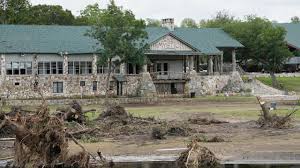
The storm struck overnight on July 4, 2025, sending a wall of water down the Guadalupe River and overwhelming the historic all-girls camp. Within hours, cabins were inundated and evacuation efforts were thrown into chaos. Twenty-five campers, two counselors, and Eastland’s father camp co-owner Richard Eastland were killed.

AD: Oysterian Sea Food Restaurant And Bar
Eastland testified that no formal staff meeting was held to discuss the worsening weather conditions in the hours before the flood. He also acknowledged that he missed a key emergency alert sent to his phone at approximately 1:14 a.m. because he was asleep.
Lawyers representing victims’ families have seized on that admission. During questioning, one attorney challenged Eastland directly, stating: “You were warned,” according to courtroom reporting.
Compounding the issue, communication within the camp itself was limited. Campers were not allowed to have mobile phones, and only a small number of staff members carried walkie-talkies. This left many counselors and children without real-time information as conditions rapidly deteriorated.
The disaster unfolded with extraordinary speed. According to official accounts, the Guadalupe River rose more than 20 feet in less than an hour, leaving little time for organised evacuation once flooding began.
The courtroom testimony is part of a broader legal and political reckoning that continues nearly a year after the tragedy. Families of the victims have filed multiple lawsuits alleging negligence, arguing that camp leadership failed to act on available warnings and did not implement an effective evacuation plan despite operating in a known flood-prone region.
One case centers on the death of an eight-year-old camper, whose parents claim the camp ignored repeated alerts and failed to move children out of high-risk areas in time.
State authorities have also launched parallel investigations. The Texas Rangers are conducting a criminal probe, while health regulators are reviewing whether Camp Mystic violated safety standards required for youth camps. Officials have received hundreds of complaints related to the camp’s operations, and some political leaders have urged regulators to block its license renewal until all inquiries are complete.
Central to these investigations is whether the tragedy was the result of human error, systemic communication failures, or a combination of both.
A federal watchdog report released in the aftermath found inconsistencies in how flood warnings were distributed across the region, with some communities receiving significantly more lead time than others.
That finding has added nuance to the debate. While some experts argue that warnings were issued with sufficient urgency, others point to gaps in how those alerts were delivered and whether they were actionable in a rural setting with limited connectivity.
The camp’s reliance on mobile alerts has come under particular criticism. Experts note that such systems can fail at night, in areas with poor signal, or when devices are turned off conditions that were all present during the flood.
Eastland defended the camp’s approach, telling the court that staff believed the systems they used were adequate and that they did not anticipate the scale of the flooding. “We did not expect what was going to happen,” he said, according to reports from the hearing. That assertion has done little to ease the anger of grieving families, many of whom filled the courtroom during the proceedings.
The legal battle has also extended to the physical site of the camp. A judge has ordered that flood-damaged cabins and other areas be preserved as evidence, temporarily halting renovations. Camp operators have appealed the decision, arguing that they should be allowed to repair and reopen unaffected parts of the property.
Despite the controversy, the camp has indicated it plans to resume operations at a separate section of its grounds, with hundreds of families reportedly expressing interest in returning. That prospect has sparked further backlash, with critics arguing that reopening before the conclusion of investigations risks undermining accountability.
The tragedy has also prompted broader questions about disaster preparedness in regions vulnerable to flash flooding. Central Texas, often referred to as “Flash Flood Alley,” has long been known for its rapid-onset floods, yet warning systems and evacuation protocols remain inconsistent.
In the case of Camp Mystic, historical records show the site had experienced flooding in previous decades, and concerns had been raised about its location near the river. That many observers, the disaster represents a convergence of known risks, missed signals, and systemic shortcomings.
While the court proceedings continue, the focus remains on a central question: whether the deaths could have been prevented. The families of those who died, the answer carries profound consequences not only for potential legal outcomes, but for how future tragedies might be avoided.
Their demands are straightforward: a clear accounting of what went wrong, and assurances that no other families will endure a similar loss.
The testimony from Eastland, while offering new insight into the camp’s decision-making, has also underscored the complexity of the case. It reveals a chain of missed information and assumptions that, in the span of a few hours, turned a summer camp into the site of a national tragedy. While this investigations unfold and legal arguments intensify, the story of Camp Mystic continues to evolve shaped by evidence, memory, and the enduring search for accountability in the wake of disaster.

AD: Heritage And Restaurant Lounge Bar