
By Aaron MIller-
A fragile pause in one of the Middle East’s most volatile conflicts is now hanging by a thread after a wave of Israeli airstrikes on Lebanon killed hundreds and triggered urgent diplomatic maneuvering across the region. Within hours of the bombardment, Israeli Prime Minister Benjamin Netanyahu authorised direct talks with Lebanon an abrupt shift that underscores how quickly the situation is evolving.
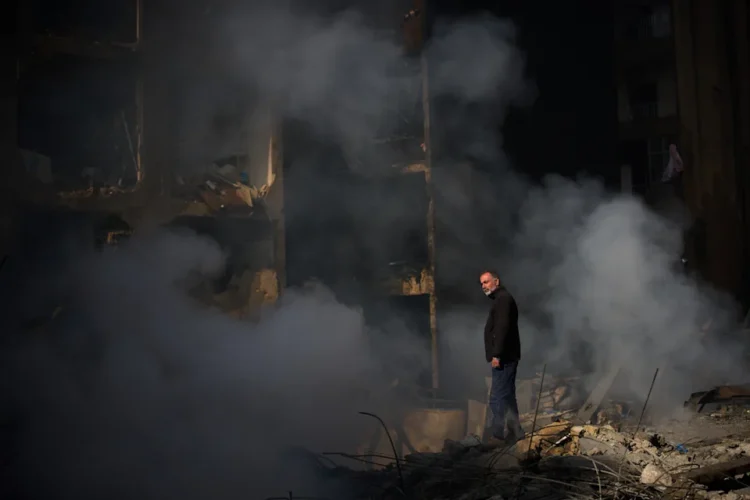
The strikes, described by regional officials as among the deadliest in recent weeks, hit multiple locations across Lebanon, including densely populated urban areas. Lebanese health authorities reported more than 200 deaths and over 1,000 injuries, with civilian neighboruhoods caught in the blast radius during peak hours.

AD: Capeesh Restaurant
Israel maintains that the targets were linked to Hezbollah, the Iran-backed militant group that has been engaged in ongoing hostilities with Israeli forces. But the scale and timing of the strikes coming just as a U.S.-Iran ceasefire took hold have raised alarm among international observers and policymakers alike.
The ceasefire itself, brokered between Washington and Tehran, was already viewed as tentative. Israeli officials had made clear from the outset that the agreement did not extend to Hezbollah or operations in Lebanon, a distinction that has become the central fault line in the current crisis.
Many believe that this carve-out has rendered the ceasefire dangerously incomplete. European officials have warned that continued strikes in Lebanon risk collapsing the broader truce entirely, while Iran has signalled that further escalation could prompt a direct response.

AD: Oysterian Sea Food Restaurant And Bar
Tehran’s leadership has been blunt. Iranian officials say attacks on Lebanon violate the spirit if not the letter of the ceasefire and could make continued negotiations “meaningless.”
The geopolitical stakes extend well beyond the battlefield. Oil markets have already reacted to the instability, with prices rising amid fears that the Strait of Hormuz a critical artery for global energy supplies could again become a flashpoint. Meanwhile, international airlines have extended warnings about Middle Eastern airspace, reflecting the growing risk of wider conflict.
At the center of this tension is a fundamental disagreement: whether Lebanon should be considered part of the ceasefire framework. Iran and several international actors insist it is inseparable from the broader conflict, while Israel and the United States argue otherwise.
This dispute has transformed what was meant to be a cooling-off period into a precarious standoff, with each side testing the limits of the agreement.
Against this backdrop, Netanyahu’s announcement that Israel is ready to begin direct negotiations with Lebanon marks a significant, if cautious, pivot. “In light of Lebanon’s repeated requests,” Netanyahu said, he has instructed his cabinet to initiate talks “as soon as possible.”
According to Israeli officials, the proposed negotiations would focus on disarming Hezbollah and establishing a framework for more stable relations between the two countries. While such ambitions have long been discussed, the timing of this initiative immediately following large-scale military action has drawn scepticism.
Lebanese leaders have signaleld openness to talks but insist that any meaningful dialogue must be preceded by a halt in hostilities. This demand reflects a broader concern that negotiations conducted under fire are unlikely to produce lasting results.
Diplomatic pressure appears to be playing a role. Reports indicate that the United States has urged Israel to scale back its military campaign and pursue dialogue, seeing negotiations as a way to preserve the fragile ceasefire with Iran.
There are early indications that talks could begin within days, possibly hosted in Washington. Yet even as preparations move forward, the situation on the ground remains volatile.
Israeli forces have continued strikes, and Hezbollah has responded with renewed rocket fire, signalling that neither side is ready to stand down completely. The contradiction is stark: diplomacy is being launched at the very moment violence is intensifying.
The broader regional picture complicates matters further. The U.S. and Iran are preparing for follow-up negotiations aimed at solidifying their ceasefire, with Pakistan reportedly set to host high-level talks. But the escalation in Lebanon threatens to overshadow those efforts, injecting new uncertainty into an already fragile process.
There is also the question of intent. Netanyahu has reiterated that Israel will continue targeting Hezbollah “wherever necessary,” a stance that suggests military operations will proceed regardless of diplomatic overtures.
This dual-track approach negotiating while fighting has precedent in the region but rarely produces quick results. Instead, it often prolongs uncertainty, leaving civilians caught in the middle and diplomats scrambling to keep pace.
Although many consider the announcement of talks as offering a narrow opening for de-escalation, it is unclear whether it widens into a genuine peace process or closes under the weight of continued violence will depend on decisions made in the coming days.
The ceasefire between the United States and Iran was intended to create space for diplomacy, instead, it has exposed unresolved tensions that now threaten to reignite a broader conflict.
While airstrikes continue and negotiations loom, the region finds itself suspended between two paths one leading toward dialogue, the other toward deeper confrontation.
The tension is no longer confined to a single border or actor; it has begun to ripple across alliances, drawing in global powers with competing interests and limited patience. Each strike, each retaliatory rocket, narrows the space for compromise while raising the political cost of restraint.
In Beirut, the mood is defined by uncertainty rather than resolve. Civilians move through damaged streets with the uneasy awareness that diplomacy may not arrive in time to prevent the next escalation.
In Israel, officials face mounting pressure to demonstrate security gains without triggering a wider war that could stretch military resources and test public endurance. Between them stands Hezbollah, calculating its next move while balancing its own domestic and regional considerations.
Washington, meanwhile, is working to keep its ceasefire framework intact, wary that a collapse would undo months of backchannel negotiations with Tehran. European governments have intensified calls for restraint, but their influence remains limited in a conflict increasingly shaped by immediate military realities rather than long-term diplomatic incentives.
This moment is particularly fragile i because of the lack of a clear off-ramp. Talks may begin, but without a pause in hostilities, they risk becoming symbolic rather than substantive.
The danger is not just that diplomacy could fail, but that it could be overtaken entirely by events on the ground. In that scenario, the region would not drift into confrontation it would accelerate toward it, with consequences that extend far beyond its borders.

AD: Heritage And Restaurant Lounge Bar