
By Aaron Miller-
A former New York City police sergeant has been sentenced to three to nine years in prison after a single, impulsive act during an undercover operation led to a man’s death closing a case that has gripped the city and reignited debate over police use of force.
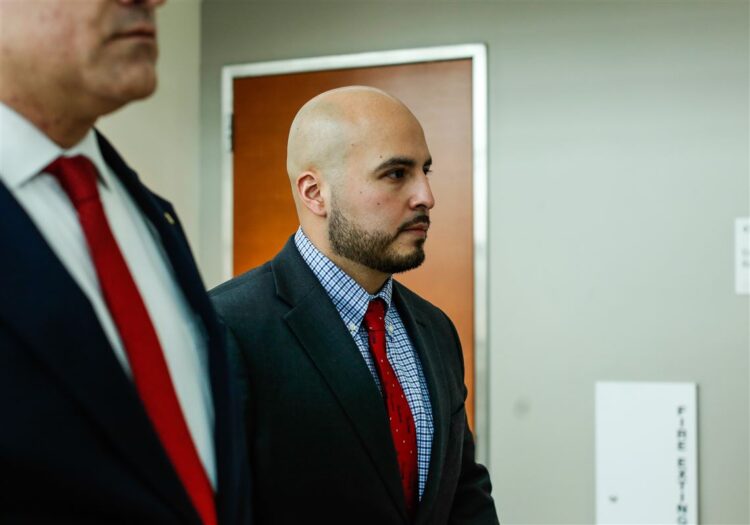
The officer, Erik Duran, was convicted of manslaughter for throwing a hard plastic cooler at a fleeing suspect in the Bronx in August 2023. The object struck 30-year-old Eric Duprey, who was riding a motorised scooter at the time. The impact sent Duprey careening into a tree, killing him almost instantly from head injuries.

AD: Capeesh Restaurant
The incident unfolded during what police described as a “buy-and-bust” narcotics operation. Prosecutors said Duprey had just completed a low-level drug sale to an undercover officer and attempted to flee when officers moved in. Surveillance footage later showed him riding along a sidewalk toward a group of people when Duran, who was not in uniform, grabbed a nearby cooler and hurled it into his path.
In court, Duran insisted he acted in a split second, believing the scooter posed a threat to fellow officers and bystanders. He testified that he had little time to react and was trying to stop what he perceived as a dangerous situation. But the judge rejected that argument, concluding that the use of force was neither justified nor proportionate.
Instead, the court found that Duran had other options and that his decision to throw the cooler reflected frustration rather than necessity. The judge emphasised that being a police officer did not place him above the law, a point underscored in the final ruling.

AD: Oysterian Sea Food Restaurant And Bar
Duprey’s death left behind a grieving family, including young children, and quickly became a flashpoint. His relatives disputed aspects of the police narrative, questioning whether the level of force used was warranted in the first place. In court, they listened as Duran apologized, but made clear that words alone could not undo the loss.
The sentencing marks a rare moment of criminal accountability for an on-duty New York police officer. Legal analysts note that such cases are uncommon, particularly when they involve split-second decisions made in the field. Yet the clarity of the video evidence and the fatal outcome made this case difficult to dismiss as a tragic accident.
The sentence has exposed deep divisions between those who see the ruling as overdue accountability and those who fear it may have unintended consequences for policing.
Supporters of the prosecution argue that the case sets an important precedent. Through the application of a jail sentence, the court signalled that officers can be held criminally responsible when their actions cross a line even in high-pressure situations.
The judge described the sentence as a necessary deterrent, aimed not just at punishing Duran but at reinforcing boundaries for law enforcement conduct.
Advocates for police reform say the ruling reflects a broader shift in how such incidents are handled. In recent years, prosecutors have faced increasing pressure to pursue charges in cases involving civilian deaths at the hands of officers, particularly when video evidence is available.
The reaction within law enforcement circles has been sharply critical. Police unions and rank-and-file officers have warned that the decision could create hesitation in moments where quick action is required. More than 11,000 officers signed a petition calling for leniency ahead of sentencing, arguing that Duran’s intent was to protect colleagues rather than cause harm.
Union leaders sharply criticised the ruling, calling it “one of the darkest days of our profession” and warning that the sentence sends a chilling message to officers nationwide. They argued that punishing a split-second decision in this way could leave officers second-guessing their actions in fast-moving situations, particularly when they believe they are acting to protect others.
Union officials said the outcome “puts in the back of a police officer’s mind that they can lose their freedom” for decisions made in moments of urgency. Critics of the ruling say that kind of hesitation could carry real consequences, raising concerns that officers may delay acting in dangerous situations, potentially putting both themselves and the public at greater risk.
Others reject that argument, saying accountability and effective policing are not mutually exclusive. Civil rights advocates contend that clearer limits on force ultimately strengthen public trust and reduce the likelihood of similar incidents.
The case also stands out historically because it is the first time in years that an NYPD officer has received a prison sentence for an on-duty killing, highlighting how unusual such prosecutions remain. That rarity has only amplified the case’s significance, turning it into a reference point in ongoing debates about justice and policing.
Duran’s legal team has indicated plans to appeal the conviction, ensuring that the case will continue to move through the courts. Meanwhile, the broader conversation it has sparked shows no sign of fading.
In New York and beyond, the questions raised by the case remain unsettled. How should officers balance urgency with restraint? What constitutes reasonable force in rapidly evolving situations? And where should the line be drawn when a decision made in seconds leads to irreversible consequences?

AD: Heritage And Restaurant Lounge Bar
The answers are secondary to the loss they continue to carry because in the company of Eric Duprey’s family, no sentence or courtroom deliberation can reverse the sudden, violent end of a loved one. Each hearing, each report, and each public discussion of the case is a reminder of the fragility of life and the irreversible consequences of a single moment’s action.
The grief they endure is ongoing, shaped not only by the absence of Duprey but also by the public scrutiny and debate that have surrounded his death.
Within the justice system, this case has emerged as a measure of accountability, signalling that even those sworn to protect and serve are not exempt from the law. The ruling underscores that professional authority does not grant immunity from consequences when judgement fails in a critical instant.