
By Charlotte Webster-
In a market where new vehicle prices have climbed steadily and used‑car values have remained elevated, savvy buyers are increasingly focused on depreciation how much value a vehicle loses over time.
A new analysis from automotive research firm Edmunds highlights which used SUVs buck the usual steep drop after three years of ownership. The findings offer clear guidance for anyone weighing the financial implications of buying a used SUV in 2026.

AD: Capeesh Restaurant
Depreciation is an inevitable part of car ownership, but it’s not uniform. Some SUVs retain a remarkable portion of their original price even after years of use, and this trend is driven by real‑world demand, reputation for reliability, and utility that appeals to both private buyers and trade‑in markets.
With transaction prices for 2023 model‑year SUVs, comparing them with the original manufacturer’s suggested retail price (MSRP) to determine which vehicles hold value best across five size segments. Data like this isn’t always easy for shoppers to access, but it can make a big difference in total ownership cost.
In today’s auto market, where inventory challenges and price shifts have kept used values up, understanding depreciation has become more than a financial footnote: it’s a key part of the purchase decision. That’s especially true for buyers who plan to trade in or resell their vehicles after a few years, because a strong resale value can substantially lower the total cost of ownership.

AD: Oysterian Sea Food Restaurant And Bar
In the extra‑small SUV category, the Toyota Corolla Cross leads the pack, retaining about 81.7% of its original value after three years. Its compact size, practical design and broad popularity among buyers looking for efficient daily transport help keep demand and resale prices strong. Tailing closely is the Honda HR‑V, another subcompact that has carved out a loyal following thanks to its versatile cargo space and steady reliability.
In the small SUV segment, hybrid models dominate the rankings. The Toyota RAV4 Hybrid and the Honda CR‑V both hold value exceptionally well, with the RAV4 Hybrid retaining around 81.4% of its original price after three years and the CR‑V not far behind.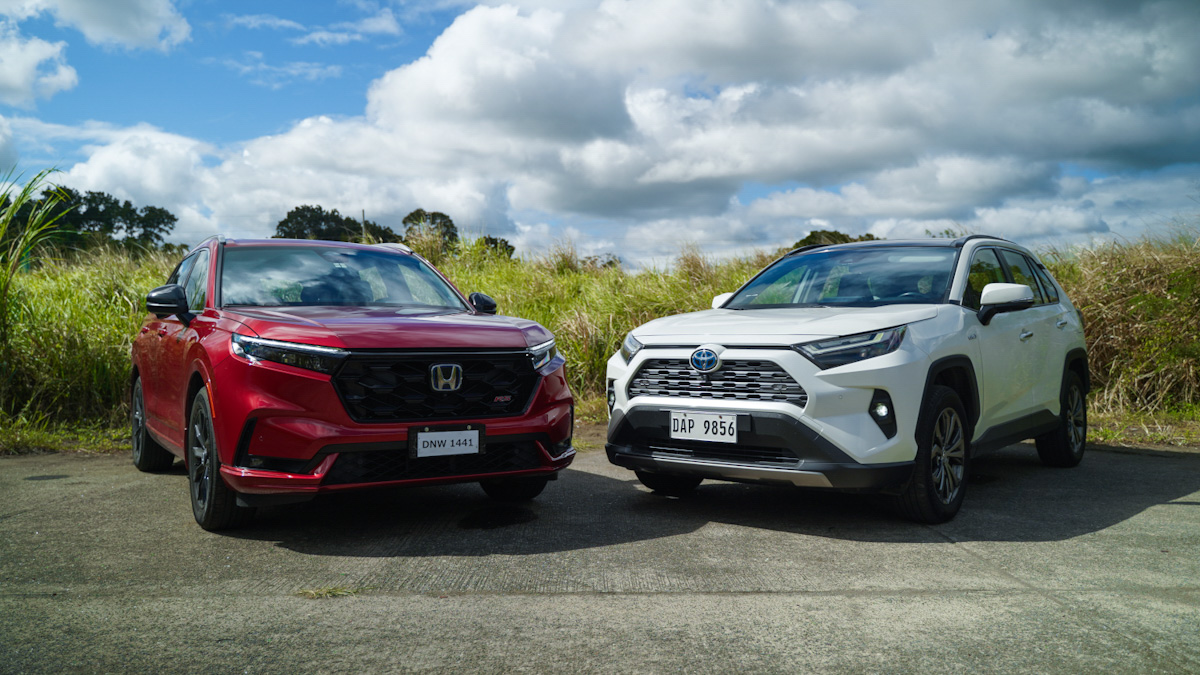
Honda CR-V Hybrid (Left), and Toyota RAV4 Hybrid (Right), (Credit: CHARLES BANAAG)
Expectations about fuel efficiency, interior comfort and a reputation for durability are pivotal factors that keep these models desirable on the used market. Many buyers today prioritize both real‑world fuel savings and long‑term value when choosing a compact SUV.
Midsize SUVs also show intriguing results. The Toyota 4Runner stands out with roughly 83% retained value, the highest among all SUVs studied by Edmunds. Its rugged, truck‑based platform and real off‑road capability continue to attract buyers who want a vehicle that’s equally at home in the city or on backcountry trails.
The Ford Bronco, with its recent redesign and nostalgic appeal, also retains value better than many rivals in the midsize segment. These vehicles draw buyers who seek both performance and resale strength, helping them maintain strong demand in the used market.
When it comes to three‑row SUVs a category dominated by family haulers the hybrid‑equipped Toyota Highlander Hybrid and the roomy Honda Pilot lead the way.
The Highlander Hybrid holds about 77% of its value, a notable performance for a bigger SUV, while the Pilot’s generous space and reputation for comfort help sustain its resale values. Families with growing transport needs often prioritise long‑term dependability, a preference reflected in the residual prices of these models.
Larger three‑row SUVs also demonstrate strong performance on the resale front. The Toyota Sequoia, especially in its hybrid guise, retains around 80% of its original price after three years, while the Chevrolet Tahoe known for towing capability and spaciousness remains among the best value retentions in this size class.
These vehicles typically appeal to buyers needing maximum cargo capacity or heavy‑duty performance without the steep depreciation that plagues many big SUVs.
Collectively, these findings highlight a broader trend that aligns with other recent automotive market reports: buyers today are highly sensitive to total cost of ownership, not just the sticker price. Experts point out that with new car prices averaging near record highs, second‑hand alternatives often offer better overall value provided depreciation doesn’t erode the investment too quickly.
Some industry analysts note that three‑year‑old used vehicles saw unusually high average prices in late 2025 and lingered longer on dealer lots, creating a landscape where depreciation isn’t as sharp as in historical norms.
The practical implications are significant. A vehicle that holds more of its value typically commands a higher trade‑in price or stronger private sale, reducing the “hit” owners take over time.
Edmunds’ insights show, choosing a model with strong residual value goes hand in hand with other criteria buyers have long considered reliability, efficiency, performance and reputation but adds a quantifiable financial advantage.
Moreover, the types of models that retain value best reflect broader consumer preferences: hybrid powertrains, practical daily usability and a track record of reliability remain powerful drivers of demand.
Many of the top‑performing SUVs hail from brands with longstanding reputations for durability, which tends to reassure both new and second‑hand buyers alike. That consistency can translate into stronger resilience against price drops even in uncertain market periods.
While the data focuses on three‑year‑old vehicles, the implications extend to today’s new SUV market as well. Buyers considering a new SUV but planning to sell within a few years can use these retention figures as a proxy for future resale expectations a strategy financial advisers often recommend when total cost of ownership is a priority.
Despite fluctuations in broader economic conditions, the used SUV market shows that well‑chosen models can outperform typical depreciation curves. With depreciation being unavoidable, but understanding which vehicles lose less of their value equips buyers with a clear advantage in a competitive used‑car landscape.
In summary, automotive market continues to change and adapt, data like Edmunds’ SUV value retention analysis serves as a practical tool for buyers seeking smarter, long‑term vehicle investments.
Whether shopping for a compact commuter SUV or a full‑size family hauler, recognising which models retain the most value can help car buyers stretch their dollars further an increasingly vital consideration in 2026.

AD: Heritage And Restaurant Lounge Bar