
By Theodore Brown-
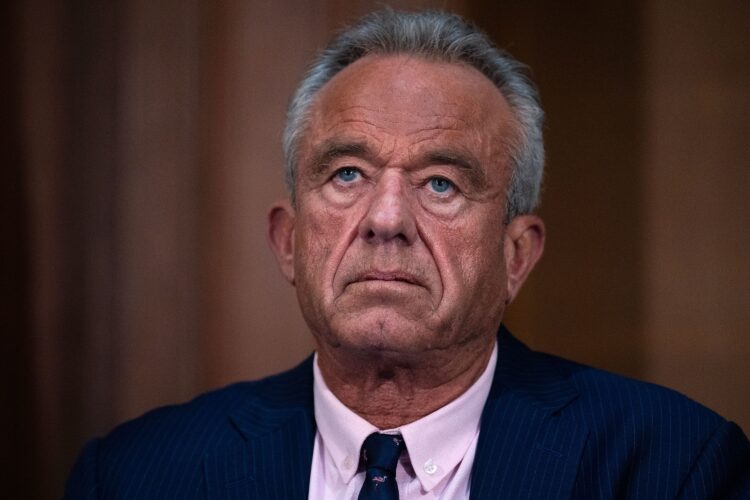
Health Secretary Robert F. Kennedy Jr. is launching a new podcast next week that he says will usher in “a new era of radical transparency in government” by exposing what he describes as corruption and lies that have contributed to poor health outcomes for Americans.
Titled The Secretary Kennedy Podcast, the series will feature Kennedy in conversations with doctors, scientists and officials from within the U.S. Department of Health and Human Services (HHS). In a teaser video released ahead of the debut, Kennedy promises to “name the names of the forces that obstruct the paths to public health,” setting an assertive tone for what could become one of the most closely watched federal media experiments in recent years.

AD: Capeesh Restaurant
Kennedy, a figure long associated with anti‑vaccine activism and alternative health advocacy, now holds one of the most powerful public health positions in the federal government. Before entering the Trump administration, he was known for hosting his own podcast and frequently participating in long‑form interviews where he challenged mainstream health narratives.
His supporters see the new show as a way to broaden discussion of topics such as chronic disease, nutrition, food quality and healthcare affordability issues that resonate with voters on both sides of the political aisle.
Critics warn that elevating a forum framed around uncovering “lies” by government institutions carries risks, particularly given Kennedy’s history of promoting views that mainstream scientists consider misinformation.

AD: Oysterian Sea Food Restaurant And Bar
Formerly a leading voice in the anti‑vaccine movement, he has repeatedly questioned established vaccine science and asserted a link between vaccines and neurodevelopmental disorders claims that public health experts have debunked but that persist in some of his past commentary.
Department officials describe the podcast as part of a broader communication strategy to reach Americans directly and deepen engagement on pressing health issues ahead of the November midterm elections.
The initiative comes at a moment when HHS has faced criticism over its vaccine policy changes, a federal court ruling recently blocked several of those policies, and political resistance to key leadership appointments within the department.
Critics say the podcast could be seen as a tool to shift focus away from contentious discussions and toward topics like food policy and chronic disease, which have broad popular appeal.
The show’s format is expected to blend audio and video elements common in modern podcasting, allowing it to be clipped and shared widely on social media an approach that department officials believe will extend its reach beyond traditional broadcast audiences.
The Secretary Kennedy Podcast will record in a department‑branded studio and is slated to host up to four participants per episode, enabling discussions that range from formal interviews to roundtable conversations.
Kennedy’s ascent to a cabinet position has been controversial. Throughout his career, he has challenged public health orthodoxy, most notably advocating against broad vaccine mandates and questioning components of federal immunisation schedules.
His prior work with anti‑vaccine groups and his longstanding critique of pharmaceutical and regulatory agencies have drawn both fervent support and sharp criticism.
Some public health experts argue his positions have eroded trust in vaccines and other evidence‑based interventions, while supporters contend he amplifies legitimate concerns about governmental transparency and accountability.
The podcast arrives at a time when public discourse around health policy is especially charged. A recent federal ruling blocked several of Kennedy’s proposed changes to vaccine policy, and political opposition has stalled appointments he supports within key federal health bodies.
In this environment, The Secretary Kennedy Podcast may serve as both a communication platform and a political instrument one designed to influence public opinion as much as to inform.
Public health experts warn that blending political messaging with health information can blur the lines between education and advocacy, potentially undermining trust in established science.
Studies have shown that exposure to health misinformation on social media is associated with lower levels of trust in the U.S. healthcare system, illustrating how misleading narratives can erode confidence in credible sources.
Research emphasises that misinformation contributes to vaccine hesitancy and complicates public health communication, highlighting the need for clear, evidence-based messaging to counter false claims.
Surveys and scoping studies on COVID‑19 misinformation further demonstrate that widespread false narratives significantly influenced vaccination decisions and health behaviours, making effective communication by public health authorities even more crucial.
Broader research confirms that misinformation and disinformation on social media can dampen trust in medical institutions and reduce confidence in proven interventions like vaccines, underscoring the real-world consequences of mixing politically charged messaging with health information .
Kennedy and his team, however, frame the project in broader terms. They emphasise that Americans are united in concerns about rising rates of chronic conditions, the high cost of healthcare, and the need for improved nutrition and food quality.
The podcast, they say, will tackle these subjects while encouraging open dialogue with scientists and practitioners who offer a range of perspectives, including some voices that are often marginalised in mainstream discourse.
Pushing a high‑profile federal official into the studio and out onto digital platforms, the podcast also reflects how modern political communication strategies have evolved. Conversations that once took place in academic journals or on television news can now unfold in more intimate, conversational formats that feel less formal and more accessible to listeners.
This evolution holds potential to bridge gaps between policymakers and the public but it also raises questions about editorial standards, fact‑checking and the responsibilities of government officials when communicating directly with citizens.
The launch of The Secretary Kennedy Podcast will be watched closely not only by those interested in public health, but by media analysts and political observers who see in it a test case for how government institutions can engage audiences in the digital age.
Whether it becomes a catalyst for productive discussion or a lightning rod for controversy remains to be seen. But there is no doubt that it marks a new chapter in how health policy debates are communicated and contested in the United States.
The first episodes are set to drop next week, with topics that span from chronic disease prevention to structural issues in American healthcare. While the conversation unfolds, the line between government messaging and public dialogue will likely become a focal point of scrutiny and debate, defining not just the podcast’s impact but its broader legacy in the national health discourse.

AD: Heritage And Restaurant Lounge Bar